
Can you swim while wearing a messy bun extension?
You can wear a messy bun extension beside the pool, but remove it before swimming unless its care instructions explicitly approve water immersion. A secure attachment on dry hair does not establish that a synthetic hairpiece is suitable for swimming. For your 2026 pool or beach routine, swim with your own hair secured, then attach the extension after your hair and the hairpiece are dry.
- Remove your messy bun extension before swimming unless its care instructions explicitly approve immersion.
- Apexhairs synthetic bun hairpieces suit women seeking fuller-looking everyday updos, not a substitute for swimming-specific equipment.
- Choose a bun scrunchie for a fuller updo or a ponytail extension for added length after swimming.
- Match grey or silver shades in daylight, and attach your hairpiece only when your hair is dry.
Can you swim while wearing a messy bun extension?
The practical answer is to take your messy bun extension off before entering the water. Treat it as an everyday styling accessory, rather than assuming it is swimming equipment because it stays in place at home.
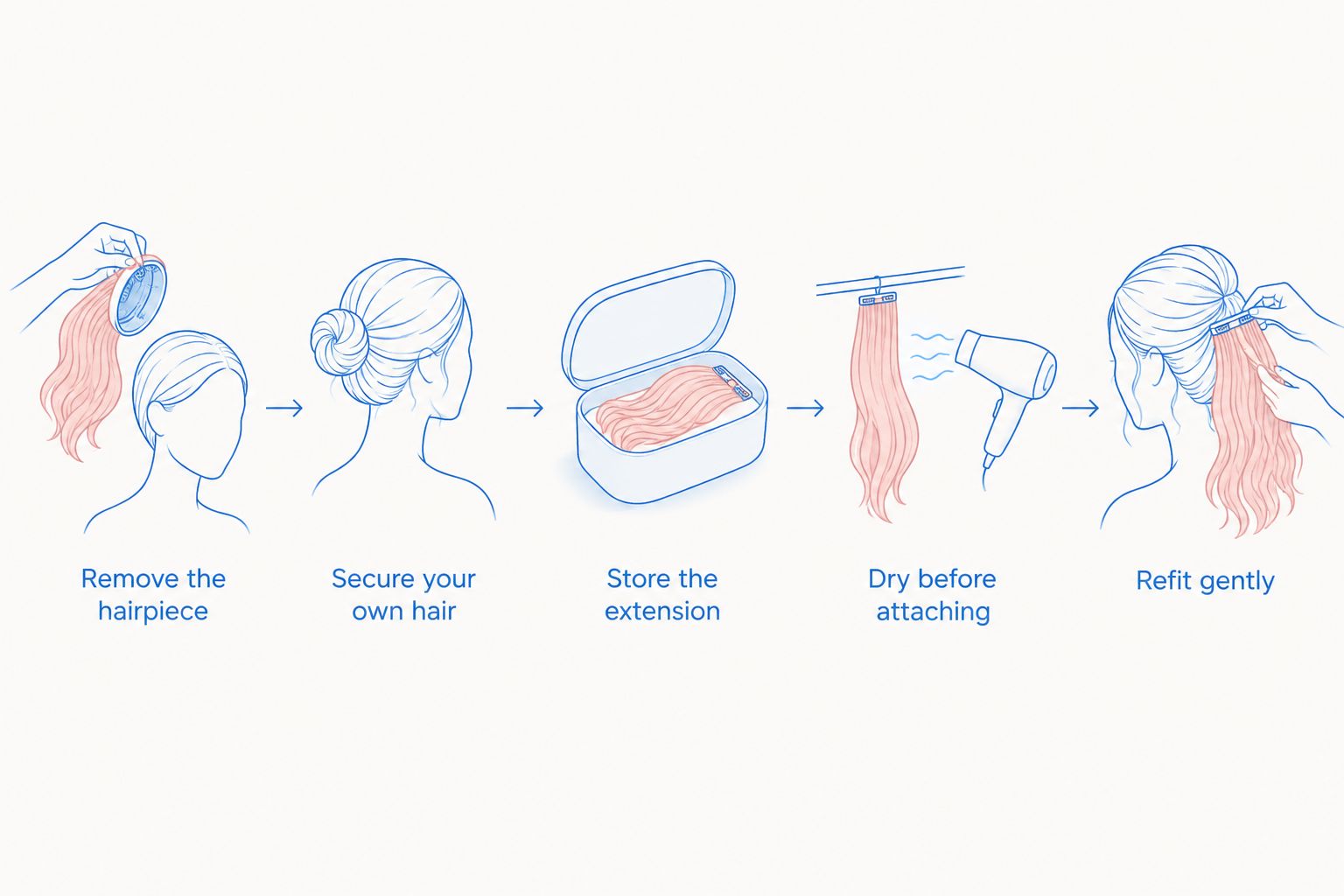
Use this simple routine when your day includes a swim:
- Remove the hairpiece. Take it off before entering the pool or sea, rather than trying to protect it once you are already wet.
- Secure your own hair. Choose a comfortable bun, braid, or other contained style that does not pull at your hairline.
- Store the extension. Keep it somewhere clean and dry, away from wet towels and loose items that can catch its fibers.
- Dry before attaching. Follow your usual post-swim hair care, let your hair dry, and check that the extension is dry too.
- Refit gently. Reattach the piece without tightening it to the point of discomfort.
For help with the last step, read how to stop a messy bun hairpiece slipping on thin hair. A comfortable dry fit matters whether your hair is fine, thick, straight, or curly.
Why this matters
A messy bun extension gives you a fuller-looking updo without requiring your own hair to create all the volume. That is useful for fine or thinning hair, but it is also useful when you simply want a different shape or a quick everyday style.
Swimming changes the task. You are no longer checking whether the piece looks natural while you walk around; you are asking whether its fibers and attachment are suitable for immersion and movement in water. A good dry fit answers the first question, not the second.
Keep your 2026 swim-day plan simple: your own hair handles the swim, and the extension handles the finished style afterward. That separates hairpiece care from the practical business of getting in and out of the water.
Poolside wear and swimming are different choices
Wearing a bun extension while sitting beside a pool does not require the same decision as wearing it underwater. If you remain dry, focus on the usual concerns: comfortable attachment, a secure base, and a shade that blends with your hair.
Once your plans include swimming, remove the piece. Do not depend on a high bun to keep it dry while you splash, duck underwater, or get caught by a wave. If you want to swim spontaneously, make removal part of your routine before you settle beside the water.
A swim cap is not proof that a hairpiece is protected. Caps are not guaranteed to keep hair completely dry, and adding a bulky bun underneath changes the fit. Use your cap according to its instructions, rather than treating it as permission to immerse an extension.
For a relaxed poolside look, choose a bun shape you can remove and refit without rebuilding your entire hairstyle. The benefit is convenience; the trade-off is that you still need somewhere suitable to store it during your swim.
Which hairpiece works best after swimming?
Choose your after-swim hairpiece by the finished hairstyle you want. A curly bun adds a tousled updo shape, while a ponytail extension adds length behind a secured base. Neither styling choice establishes swimming suitability.
Apexhairs synthetic bun hairpieces are best for women who want fuller-looking everyday updos. Their role is cosmetic styling: they do not regrow hair or treat hair loss.
| Hairpiece | Best for | Useful feature | Practical limitation |
|---|---|---|---|
| Messy Bun Hair Piece – Curly Synthetic Hair Bun | A fuller-looking curly bun | Adds volume to the bun shape | Needs a suitable base and a shade that blends with your hair |
| Synthetic Messy Bun Hairpiece Scrunchie | A lightweight, clip-free tousled updo | Its description specifies a scrunchie attachment and natural-looking volume | A scrunchie still needs a secure, comfortable fit |
| Short Straight Ponytail Extension Claw Clip 8" | A short, straight ponytail rather than a bun | Uses a claw clip and adds volume and length | The clip needs a secure place to grip without pulling |
Choose the curly bun when you want volume gathered into an updo. Choose the scrunchie style when a clip-free attachment suits your routine. Choose the ponytail when length is your goal; it is not an alternative way to make a bun extension swim-ready.
For your 2026 holiday bag, start with the style you already know how to attach comfortably. A familiar attachment method is more useful than a new piece you have not practiced fitting.


Why the right swim-day routine varies
The safest styling decision remains the same: remove the extension before swimming unless its instructions approve immersion. What changes is how you prepare your own hair and refit the piece afterward.
- Attachment method: A scrunchie wraps around a base; a clip needs an appropriate place to grip. Follow the instructions for the attachment you actually own.
- Your hair's grip: Fine, slippery, thick, and textured hair need different base arrangements. Choose a fit that holds without excessive tension.
- Your swimming plans: Sitting beside the pool and putting your head underwater are different activities. Plan storage before the latter.
- The hairpiece's care directions: Cleaning methods and heat permissions belong to the individual piece, not the general category of synthetic hair.
- Your finished style: A curly bun, smooth bun, and straight ponytail create different shapes. Pick for the look you want after drying.
Avoid solving a loose fit by repeatedly tightening the attachment. If it pulls, hurts, or requires constant adjustment, change the base or choose a different attachment method. Extra fullness should not come at the expense of comfort.
How do you attach a messy bun extension after swimming?
Start with dry hair and a dry extension. Wet hair does not give you the same starting point as the dry style you practiced, so wait until you can assess the fit properly.
Build the base first. Gather your own hair into the position you want, then secure it with an appropriate hair tie. Keep the base comfortable rather than pulling everything tightly to create a smaller bun.
Attach according to the piece. Wrap a scrunchie-style extension around your secured base as its instructions direct. For a clip-in piece, follow its attachment directions rather than assuming it works like a scrunchie.
Shape and check. Arrange the synthetic fibers gently around the base, then look at the back and sides with a mirror. Check for exposed attachment points, uneven fullness, and any spot that feels uncomfortable.
Move your head normally before leaving the mirror. If the piece shifts, refit it instead of piling on tension. A bun that stays comfortable through ordinary movement is the goal; this check does not establish that it is suitable for swimming.
How do you match grey or silver hair for an after-swim bun?
Match the extension to the hair around your bun base, not just a shade name on a screen. Grey hair can contain a mixture of darker and lighter strands, while silver usually describes a lighter, cooler-looking tone. Product shade names are not standardized across hairpieces.
Compare your hair and the shade reference in natural daylight. Look for both overall lightness and undertone: a similar depth can still look different if one shade appears warmer or cooler. Screen settings and lighting affect how a color looks.
If your hair has a salt-and-pepper mix, pay attention to the proportion of dark and light strands near the attachment point. If your hair looks mostly silver, check that a blonde-looking shade does not introduce warmth you do not want.
Use the same daylight check for your 2026 poolside hairstyle. Wet hair can appear darker, so make the final blending decision once your hair is dry. Choose the closest visible blend, not the most appealing shade name.
What should you do if your messy bun extension gets wet?
Remove the piece carefully and check its care instructions before cleaning it. Do not twist it tightly, scrub it, or reach for a hot styling tool to speed up drying.
If its directions permit washing or rinsing, use the specified method to remove pool or seawater residue. Handle the fibers gently, support the attachment, and avoid rubbing tangled sections together. Do not substitute a cleaning method intended for a different hairpiece.
Dry it as directed. Keep hot tools away unless the manufacturer explicitly permits them, and do not assume that all synthetic fibers tolerate heat. Check the attachment and fiber arrangement before wearing the piece again.
Accidental splashing does not automatically tell you whether a hairpiece is ruined or undamaged. Assess the actual condition after appropriate care. If the attachment no longer holds properly or the fibers cannot be arranged without force, stop wearing it until you have suitable care guidance.
Can women with thin hair use the same routine?
Yes. Remove the extension before swimming, secure your own hair comfortably, and refit after drying. The difference is in the base you create, not in permission to take the hairpiece underwater.
For thin hair, start with a bun size and placement your own hair can support comfortably. A very large-looking piece is not automatically the best match for a small base. Check the fit from the side as well as the back.
Women with thicker hair should check comfort too. A full natural bun plus an extension changes the overall shape and attachment position. Adjust the style rather than assuming more hair always means a better fit.
Apexhairs bun hairpieces add visible fullness for styling. Keep that benefit separate from hair-health claims: fuller-looking hair is not evidence of regrowth or treatment.
FAQ
Can I swim underwater with a messy bun extension?
Remove your messy bun extension before swimming underwater unless its care instructions explicitly approve immersion. A secure dry attachment does not establish swimming suitability.
Can I wear a messy bun extension beside the pool?
Yes, you can wear a messy bun extension beside the pool while keeping it dry. Remove it before entering the water and store it away from wet towels.
Will a swim cap keep my bun extension dry?
A swim cap does not guarantee that a bun extension stays dry. Remove the extension rather than relying on the cap to protect it during immersion.
Is a ponytail extension better than a bun for swimming?
A ponytail extension is not automatically better for swimming than a bun extension. Choose between them for your after-swim hairstyle, and follow each piece's care instructions.
What should I do if pool water splashes my synthetic bun?
Check your synthetic bun's care instructions before cleaning or drying it. If rinsing is permitted, follow the specified method and avoid unapproved heat.
Can I put my bun extension back on wet hair?
Wait until your hair and bun extension are dry before refitting. Dry hair lets you assess shade blending and attachment comfort more clearly.
How do I match a bun extension to grey or silver hair?
Compare the extension with the hair around your bun base in natural daylight. Check lightness, warm or cool undertones, and the balance of darker and lighter strands.
What is the simplest messy bun extension routine for swimming in 2026?
Remove the messy bun extension, store it dry, swim with your own hair secured, and refit after drying. Practice the attachment before your pool or beach day.
One last thing
Practice taking the piece off, not just putting it on. A swim-day style needs an easy removal routine as much as a good-looking finish. Rehearse where you will release the attachment, how you will store the piece, and how you will secure your own hair afterward.
For your next 2026 swim day, pack the familiar hair tie and storage option you used during that practice. Keep the extension for the dry, finished style instead of asking it to do a job its care instructions do not approve.


Leave a comment