
How to hide the band of a messy bun hair extension
To hide the band of a messy bun hair extension, spread the hairpiece fibers over the elastic, tuck your own bun underneath, and pin a small section across any exposed edge. For your 2026 styling routine, start with a secure, comfortable base: extra fluff will not fix a band that keeps slipping out of position.
- Hide a messy bun hair extension band by covering the elastic with fibers, not by tightening it against your scalp.
- Apexhairs offers synthetic bun hairpieces for fuller-looking updos; choose the texture you want before adjusting the finish.
- Match the hair beside your bun, especially when blending grey, silver, or mixed shades.
- Check underneath and behind your bun before adding more pins or more volume.
How do you hide the band of a messy bun hair extension?
Build a compact base, position the attachment underneath the decorative hair, and cover the visible edge with small sections. Work around the bun rather than pulling all the fibers upward. That upward pull can leave a bare ring around the bottom.
Texture changes how you finish the style. These Apexhairs options suit different looks, but neither removes the need to cover the attachment carefully.
| Hairpiece | Best for | Helpful feature | Styling trade-off |
|---|---|---|---|
| Synthetic Messy Bun Hairpiece Scrunchie | A tousled, fuller-looking updo | Synthetic scrunchie construction adds volume without clips | You still need to spread the fibers over exposed elastic |
| Straight Synthetic Hair Bun Scrunchie | A smoother bun finish | Straight synthetic hair adds fullness with a smooth finish | A tidy outline leaves less room to disguise gaps with loose texture |
Apexhairs bun hairpieces are best for women seeking fuller-looking updos rather than loose ponytail length. Choose the finish you like, then use the attachment instructions supplied with your hairpiece.
Why this matters
A visible band draws attention to the join between your hair and the hairpiece. Adding more height on top does not cover that join; placing a little hair directly over it does.
For an everyday updo in 2026, aim for a covered attachment and a comfortable fit, not perfect symmetry. This works whether your hair is thin, thick, straight, or wavy. Hair thickness changes the base you build, but it does not change where the band needs coverage.
Prepare your hair before adding the bun
Start with your usual hair tie, suitable hairpins, and a mirror that lets you check the back. Keep the hairpiece nearby so you can compare its shade with the hair around your chosen bun position.
Gather your hair into a ponytail where you want the finished bun to sit. Fold or twist the lengths into a compact base, securing loose ends underneath rather than leaving them sticking out around the perimeter.
For thin hair, avoid pulling the ponytail tighter just to make it feel substantial. Use a smaller base and keep the surrounding hair comfortably arranged. If securing the style hurts, take it down and start again with less tension.
For thick or long hair, focus on containing your own lengths. A wide, uneven base can push the hairpiece away from your head and expose its underside. Tuck bulky loops inward before adding the extension.
Follow these steps to cover the band
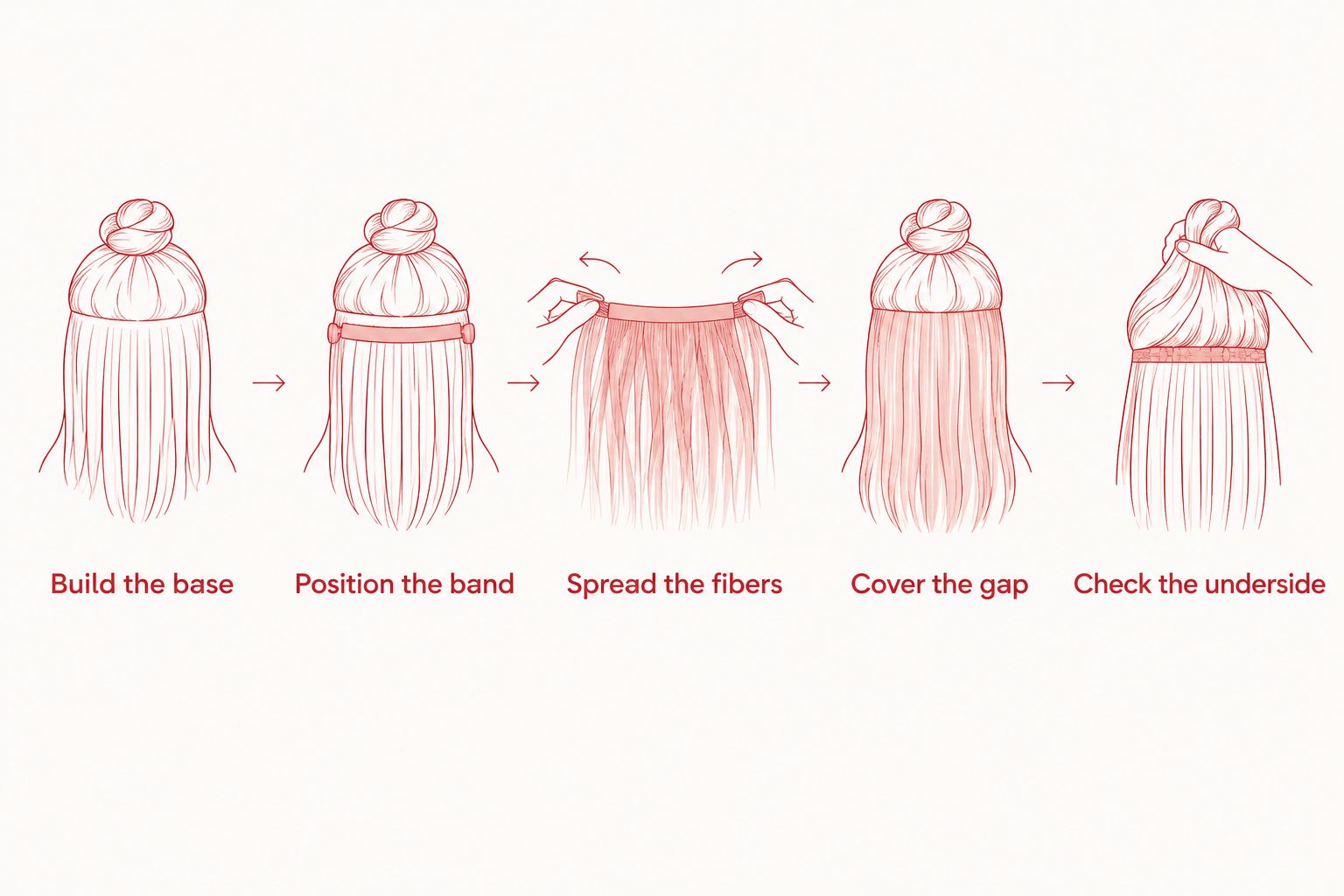
1. Build the base
Make sure your own bun stays in place before adding the hairpiece. Gently turn your head and check that the base does not immediately loosen.
Your base should support the style without needing the extension to hold everything together. If loose ends are already escaping, secure them now rather than hiding them beneath extra synthetic hair.
2. Position the band
Follow the attachment directions for your particular hairpiece. For a scrunchie-style bun, arrange the elastic around your base so the decorative fibers sit outside it rather than getting trapped underneath.
Do not add another wrap simply because you can stretch the elastic farther. If the extra wrap distorts the hairpiece, pulls uncomfortably, or exposes more of the band, undo it and reassess the fit.
3. Spread the fibers
Use your fingertips to separate small sections and fan them outward over the elastic. Start wherever the band is most visible, then continue around the perimeter.
Keep some fibers low around the bottom edge. Pulling every section toward the crown creates height but removes the curtain of hair that should hide the attachment.
4. Cover the gap
Lay a small section of hairpiece fibers across the exposed area. If your own hair is long enough and blends well, you can use a loose section of it instead.
Secure the covering section with a suitable hairpin into your own base, avoiding your scalp. Place the pin beneath the visible hair rather than across the outside of the bun, and stop if it scratches or pulls.
5. Check the underside
Look at the back, both sides, and underneath the bun. Tilt your head as you normally would while talking or looking down; a band hidden from the front can still show from below.
Adjust the specific gap you see. Move coverage to the exposed edge before adding more overall volume. Then check that the style remains comfortable when you move.
Why the band stays visible
If the elastic keeps reappearing, identify the cause before adding more pins. These are different styling problems, so they need different adjustments.
- Your base spreads too wide. Fold your own hair inward so the hairpiece can sit around it without stretching across an uneven shape.
- Fibers are caught underneath. Lift the trapped sections gently and reposition them over the band.
- All the volume sits on top. Bring some fibers down around the lower edge instead of lifting every curl upward.
- The attachment shifts. Rebuild a stable base and check the fit rather than repeatedly covering a moving band.
- The shade changes sharply at the join. Compare your hair and the hairpiece in daylight before trying to hide the mismatch with extra volume.
- Your own ends poke through. Tuck those ends into the base so they do not push the covering fibers apart.
Change one thing, then check the result. If you adjust the base, attachment, and outer shape all at once, it becomes harder to tell which change solved the problem.
Choose a texture that suits your everyday finish
For your 2026 hairpiece choice, start with the updo you actually want to wear. A relaxed bun and a smooth bun need the same covered attachment, but their finishing steps differ.
A tousled texture gives you loose sections to arrange across the perimeter. Keep those sections separated rather than brushing them into a flat sheet. The drawback is that concentrating the curls in one place can create bulk while leaving another area uncovered.
A straight texture suits a more controlled outline. Smooth small sections over the join and tuck the ends neatly. The trade-off is that a gap interrupts the clean shape, so check the underside carefully.
Apexhairs sells both messy and straight synthetic bun scrunchies. Choose based on the finish you prefer, not on an assumption that a fuller hairpiece automatically hides its band better.


Match grey or silver hair at the attachment edge
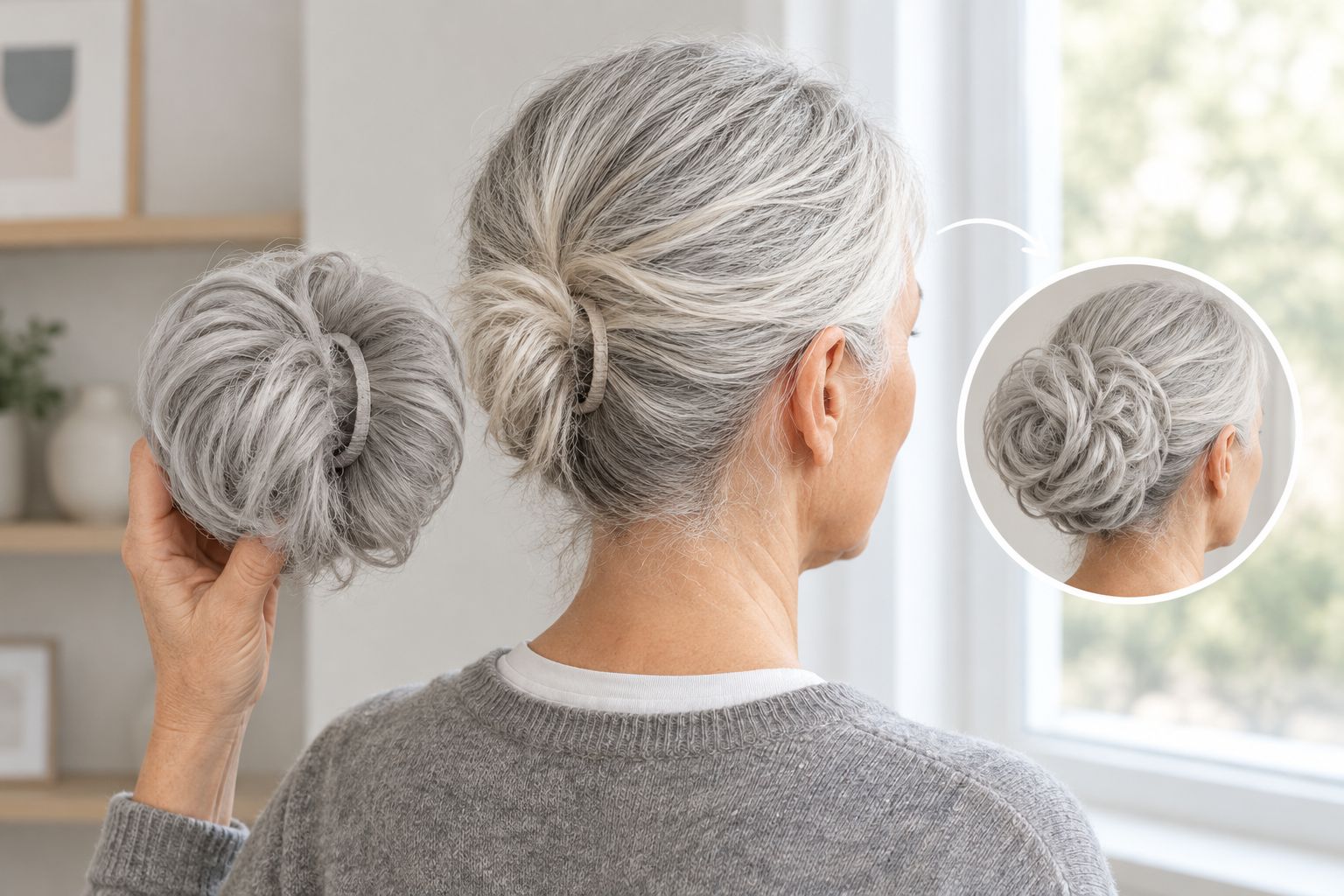
Compare the hairpiece with the hair immediately surrounding the bun, not just a loose strand from the front. Your temples, lengths, and back sections can look different, especially when your hair mixes lighter and darker strands.
Grey can describe a blend of pigmented and white hairs, while silver often describes a lighter, cooler-looking finish. Shade names alone do not establish a match. Look at both the lightness and the balance of warm or cool tones.
Check the join beside a window without direct glare. Hold the hairpiece near your intended bun position and look for a sharp change in tone. If the contrast is obvious before attachment, covering the elastic will not remove that color difference.
Can you hide the band if your hair is thin?
Yes—use the hairpiece fibers as the main covering layer instead of relying on your own hair to wrap around the band. Keep your base compact, arrange the extension around it, and move small sections across exposed areas.
Do not pull hair from a sparse area just to create a wrapping strand. If the base cannot hold the attachment comfortably, choose a different style rather than tightening it repeatedly. A hairpiece changes the appearance of your updo; it does not regrow hair or treat hair loss.
Should you switch to a ponytail extension instead?
Choose a ponytail extension if you want loose length rather than an updo. It changes the finished shape, not the basic need to cover the attachment and match the surrounding hair.
For a bun, fix the base and fiber placement first. Switching attachment types does not automatically solve an exposed join, and a longer style is not a substitute for a comfortable fit.
FAQ
Why can I still see the elastic on my messy bun hair extension?
The elastic remains visible when fibers sit above it, get trapped underneath it, or move away from an unstable base. Reposition the fibers over the exposed edge, then check whether the attachment stays put.
Can I cover a bun hairpiece band without wrapping my own hair around it?
Yes, you can use the hairpiece fibers to cover the band. Spread small sections across the exposed area and secure them to your base where needed, without pulling against your scalp.
Should I wrap a bun scrunchie tighter to hide the band?
Do not tighten a bun scrunchie solely to hide its band. Follow its attachment instructions and stop if another wrap distorts the hairpiece or creates discomfort; coverage comes from fiber placement.
How do I make a grey messy bun blend with my own hair?
Match the grey bun to the hair surrounding the attachment point in daylight. Compare lightness and warm or cool tones, then arrange small sections across the join rather than leaving a hard edge.
Can I use heat to reshape synthetic hair over a visible band?
Use heat only if the specific hairpiece instructions explicitly permit it. Otherwise, arrange the fibers with your fingers and secure the covering section without heated tools.
What's the best final check for a natural-looking bun in 2026?
Check the back, sides, and underside while moving your head normally. A covered band, contained loose ends, and a comfortable base matter more than making every curl identical.
One last thing
Before you redo the entire bun, lower a small section of fibers over the bottom edge. The missing coverage can be underneath, even when the top already looks full.
Make that your final check for every Apexhairs bun you style in 2026: look below the volume, not just at it. If the attachment is covered and comfortable, stop adjusting.


Leave a comment