
How to position a messy bun with bangs for a natural fringe
For a natural-looking messy bun with bangs, position your bun so the fringe rests comfortably across your forehead without pulling the hairpiece forward. Secure your own hair first, then adjust the hairpiece and separate the bangs with your fingers. If the fringe is attached to the bun, moving the bun changes where the bangs fall, so check the fit before trimming anything.
- Position a messy bun with bangs around the fringe fit first, then soften the bun’s shape.
- Apexhairs synthetic bun hairpieces suit women seeking fuller-looking updos without changing their haircut.
- Check grey and silver shade matches against the hair beside your bun, not just your roots.
- Skip trimming until you have checked the attachment, bun position, and fringe from several angles.
How do you position a messy bun with bangs for a natural fringe?
Start with the fringe resting where you want it, then find a bun position that supports that placement without tension. Your forehead, existing bangs, and attachment method determine the fit; copying someone else’s bun height is less useful than checking your own profile.
The Messy Curly Hair Bun Scrunchie with Bangs – Synthetic Hairpiece combines a bun and bangs in one synthetic hairpiece. For this 2026 styling guide, the priority is a comfortable attachment and a fringe that sits against your forehead rather than hanging away from it.
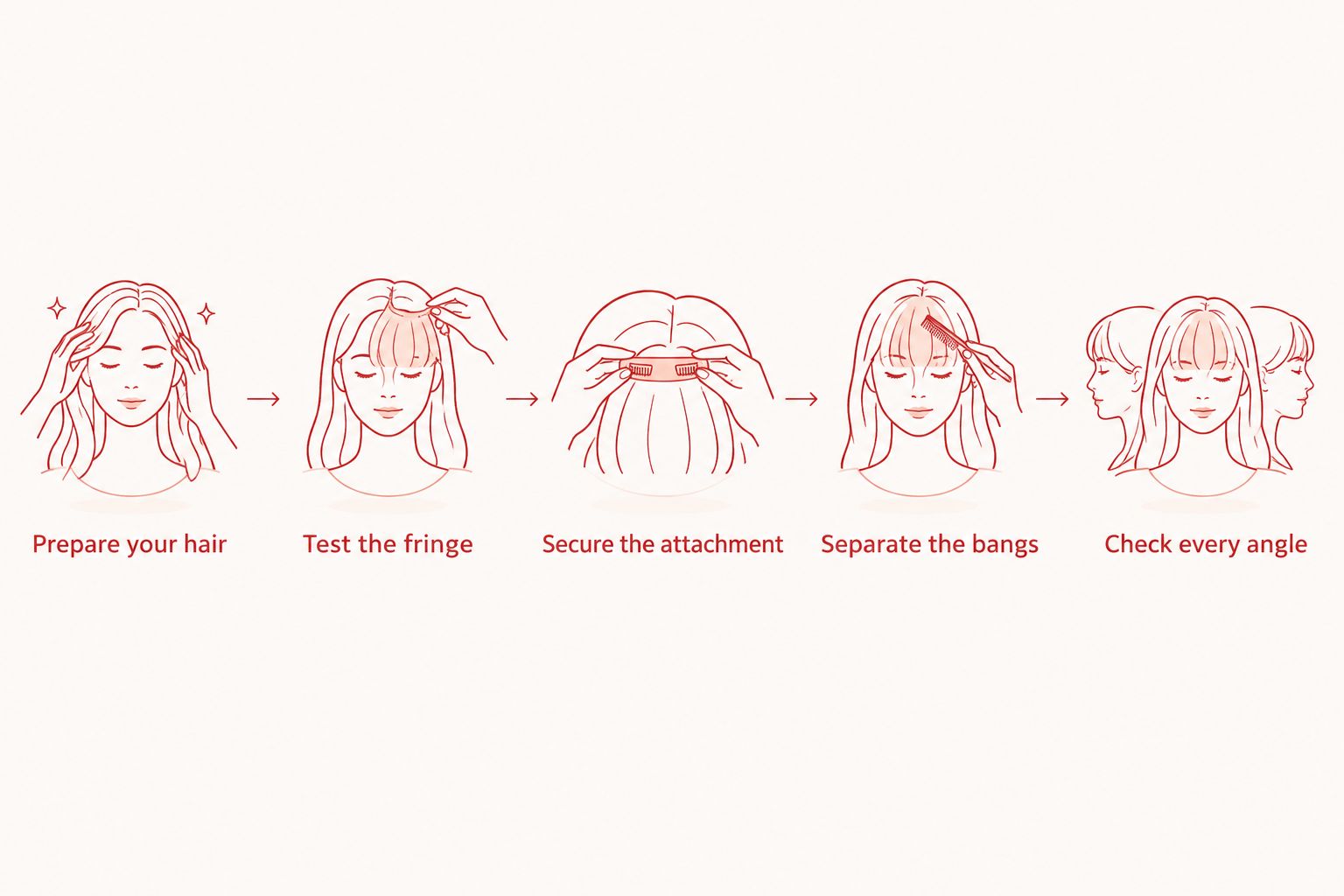
Prepare your hair
Separate any natural bangs or face-framing pieces you want to keep visible. Gather the remaining hair into a ponytail, then form a compact base that fits beneath your chosen hairpiece.
Keep the base secure without pulling tightly at the hairline. If you have thin hair, avoid spreading it so widely that the attachment area becomes exposed; if you have thick hair, tuck away loose ends that would push the hairpiece outward.
Test the fringe position
Hold the hairpiece over the base before securing it fully. Let the bangs fall naturally, without stretching them down or pushing them flat against your forehead.
Check whether the fringe clears your eyes and whether its upper edge blends into the hairstyle. Choose the bun position that gives you a comfortable fringe, not the tallest possible updo. If you already have bangs, decide whether they will remain visible or sit beneath the added fringe.
Secure the attachment
Follow the instructions for the attachment on your particular hairpiece. A scrunchie-style bun and a clip-in bun do not attach in the same way, so do not substitute instructions from a different product type.
Keep your natural base stable while you secure the piece. If the fringe shifts during attachment, loosen and reposition the hairpiece rather than pulling the bangs back into place while the bun stays fixed.
Separate the bangs
Use your fingers to loosen any strands that have gathered into a solid block. Let the fringe follow its existing shape, and keep its edges soft where they meet your temples.
For a less rigid finish, avoid pressing every strand into the same line. You can blend visible natural bangs with the added fringe if their lengths and textures work together, but do not force short pieces into a position they cannot hold comfortably.
Check every angle
Check 3 viewing angles: front, side, and back. The front shows the fringe, the side shows whether the bun projects awkwardly, and the back reveals exposed attachment areas or loose natural ends.
Turn your head and look down before calling the style finished. If the bun moves or the fringe drops into your eyes, revisit the base and attachment instead of adding more styling products.
Why this matters
A fuller bun and a natural-looking fringe need different checks. The bun needs a stable base; the bangs need a comfortable position that works with your forehead and the hair around your face.
Pulling the whole style tighter does not solve both problems. It can move the fringe while making the attachment less comfortable. This 2026 styling checklist puts fit before finishing touches, whether your natural hair is thin, thick, straight, or curly.
Which bun style works best with bangs?
Choose an attached fringe when you want the bun and bangs together; choose a bun without bangs when you want to keep your own fringe visible. Neither choice guarantees a natural finish on its own. Shade, texture, and placement still need to work with your hair.
| Hairpiece or styling option | Best for | Useful feature | Trade-off |
|---|---|---|---|
| Messy Curly Hair Bun Scrunchie with Bangs – Synthetic Hairpiece | A fuller updo with an added fringe | Combines synthetic bun volume and bangs | Bun placement also affects the attached fringe’s position |
| Synthetic Messy Bun Hairpiece Scrunchie | Keeping your own bangs visible | Adds volume and a tousled updo without an added fringe | You style your natural bangs separately |
| Ponytail extension with your own bangs | Keeping length visible behind the head | Creates a different silhouette from a bun | It does not create the same compact updo |
Apexhairs synthetic bun hairpieces are best for women who want fuller-looking updos without changing their haircut. The limitation is fit: an attached fringe gives you less independent control over the bun and bangs than styling your own fringe separately.
If your existing bangs already sit well, a bun without an added fringe keeps that familiar shape. If you want both bun volume and bangs, check that the combined piece can sit comfortably before committing to a particular bun height.


Why does messy bun placement vary?
There is no single bun height that suits every fringe. Use these factors to decide where your hairpiece belongs:
- Fringe attachment: When the bangs connect to the bun, moving the bun changes their reach and direction.
- Your natural base: A bulky or uneven base changes how the hairpiece sits. Tuck away loose ends before judging the fit.
- Existing bangs: Natural bangs need space if you want them visible. Avoid trapping them beneath the attachment unintentionally.
- Hair thickness: Thin hair and thick hair need different base preparation, but neither requires a painfully tight ponytail.
- Texture: A curly bun and a straight fringe create contrast. Keep that contrast intentional rather than trying to flatten every curl.
- Shade match: A visible difference beside the attachment can draw attention to the join, even when the fringe fits well.
Make 1 placement adjustment at a time. Change the bun position, check the fringe, and then decide whether the base needs attention. Changing everything together makes it harder to identify what improved the fit.
How do you match grey or silver hair?
Match the hairpiece to the hair that will sit beside it in the finished updo. If your roots, lengths, and ends differ, comparing only the roots can give you the wrong impression of how the bun will blend.
Grey and silver are useful descriptions, not interchangeable shade guarantees. Grey can describe a mix of darker and lighter strands, while silver generally describes a lighter, cooler-looking tone; individual product shades still need a visual check.
For your 2026 shade choice, make 2 shade checks: color depth and undertone. Ask whether the piece looks lighter or darker than your exposed hair, then whether it looks warmer or cooler. A suitable depth with the wrong undertone can still look disconnected.
Use daylight when checking the piece against your hair. Keep the hairpiece beside the area you will actually expose, and compare both the bun and the fringe rather than assuming they look identical from every angle.
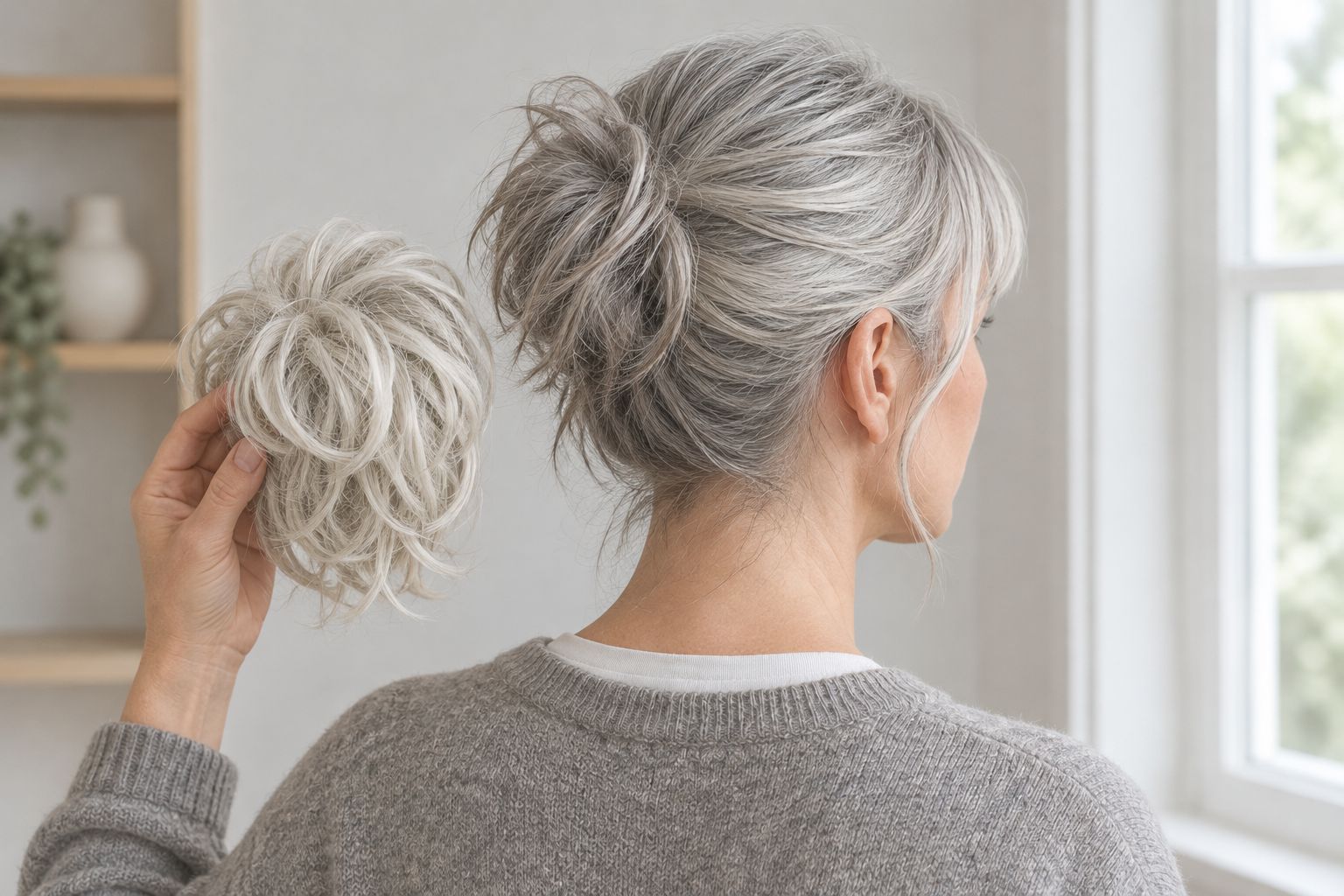
Keep texture in the comparison, too. A smooth fringe and a curly bun reflect light differently, so judge the overall hairstyle rather than expecting every strand to look the same.
How do you stop the bangs from looking too heavy?
Separate the fringe gently before changing its length. A section that has gathered together can look heavier than the same hair spread naturally across the forehead.
Check for overlap with your own bangs. If both fringes sit in the same place, choose which one you want visible instead of stacking them automatically. Keep the sides tidy without plastering them flat.
Do not use heat unless the specific hairpiece’s care instructions permit it. Synthetic does not automatically mean heat-safe. Your 2026 styling routine should start with finger placement and attachment checks, not a hot tool.
If the bangs remain too long after you have corrected the fit, seek help from a stylist familiar with synthetic hairpieces. Cutting is permanent, and changing the attachment position afterward can leave the fringe shorter than you intended.
Can you wear a messy bun with bangs if your hair is thin?
Yes—start with a comfortable, stable base rather than trying to make your natural bun large. The hairpiece supplies the fuller-looking shape, so you do not need to tease your own hair simply to imitate its volume.
Check whether the attachment grips securely without pulling at sparse areas. Reposition or remove the piece if it feels uncomfortable. A cosmetic hairpiece changes the appearance of your hairstyle; it does not regrow hair or treat hair loss.
The same fitting principle applies to thicker hair. Keep the natural base compact enough for the piece to sit properly, and avoid leaving loose ends that compete with the added bun.
What should you do if the bun looks good but the fringe does not?
Correct the fringe fit before reshaping the bun. With attached bangs, a pleasing bun silhouette is not enough if the fringe hangs into your eyes or leaves a visible gap at the forehead.
Loosen the piece, adjust its position, and secure it again. If you cannot achieve both a comfortable fringe and a stable bun, choose a bun without attached bangs and style your natural fringe separately.
FAQ
Where should I put a messy bun with bangs?
Position a messy bun with bangs where the fringe rests comfortably across your forehead and the attachment stays secure. Test the fringe before fastening the hairpiece fully, then check the front, side, and back.
Should a messy bun with bangs sit high or low?
Choose the height that lets the fringe sit correctly without pulling. An attached fringe moves with the bun, so neither a high nor a low placement is automatically the right fit.
Can I wear my own bangs with a bun hairpiece?
Yes, you can keep your own bangs visible with a bun hairpiece. Separate them before gathering the rest of your hair, and choose a bun without an added fringe if you do not want overlapping layers.
How do I make synthetic bangs look less bulky?
Separate synthetic bangs gently with your fingers and check whether they overlap your natural fringe. Reposition the hairpiece before deciding that the bangs need cutting.
Is a grey bun hairpiece the same as a silver one?
Grey and silver shade names do not guarantee the same color. Compare color depth and undertone against the hair that will remain visible beside the bun.
Can I use a straightener on synthetic bun bangs?
Use a straightener only if the specific hairpiece’s care instructions permit heat styling. Do not assume that all synthetic fibers are heat-safe.
Why does my bun hairpiece pull at the front?
Check the natural base and attachment when a bun hairpiece pulls at the front. Loosen and reposition the piece rather than tightening the hairstyle further, and remove it if discomfort continues.
One last thing
A fringe can look too long because of placement, not just because of its cut. Before reaching for scissors, loosen the attachment and see how the bangs fall when the hairpiece sits differently.
For your 2026 everyday updo, keep the fit comfortable and the finishing touches simple. An Apexhairs bun hairpiece should support the hairstyle you want—not require you to pull your own hair tighter to make it work.


Leave a comment