
Hair bun styling during the transition from dyed hair to grey
For women growing out dye, hair bun styling is a way to arrange incoming grey and colored lengths into a deliberate, fuller-looking updo. The challenge is matching the hair visible around the bun—not making every strand on your head the same color.
- Match your hair bun to the gathered hair beside it, not automatically to your newest grey roots.
- Apexhairs hair bun scrunchies suit women seeking added updo volume without a full wig.
- Compare grey, silver, and salt-and-pepper tones in daylight before choosing a synthetic hairpiece.
- Choose a comfortable attachment first; a fuller bun should not require a tighter ponytail.
Why hair bun styling matters during your grey transition
Growing out dye creates different color zones: new growth at the scalp, older color through the lengths, and sometimes lighter ends. Gathering those zones changes how they sit together. A shade that matches loose hair can look different once you twist that hair into a bun.
Match the finished hairstyle, not an isolated strand. A low bun gathers your lengths near the nape, while a higher bun brings a different section into view. Neither position is automatically better for grey hair; choose the one whose surrounding color and attachment feel easiest to manage.
For your 2026 routine, focus on repeatable placement rather than hiding every root. The guide to matching a grey hair bun to salt-and-pepper hair is a useful companion when your natural color contains both dark and light strands.
Apexhairs hair bun scrunchies are best for women who want added updo volume without a full wig. They add hair around the bun; they do not replace coverage across the scalp or treat hair loss.
Build your 2026 grey-transition styling routine
1. Map the colors in your gathered hair
Start without a hairpiece. Gather your hair into the position you normally wear, then look at the crown, sides, and bun separately. This free check shows which color actually meets the attachment.
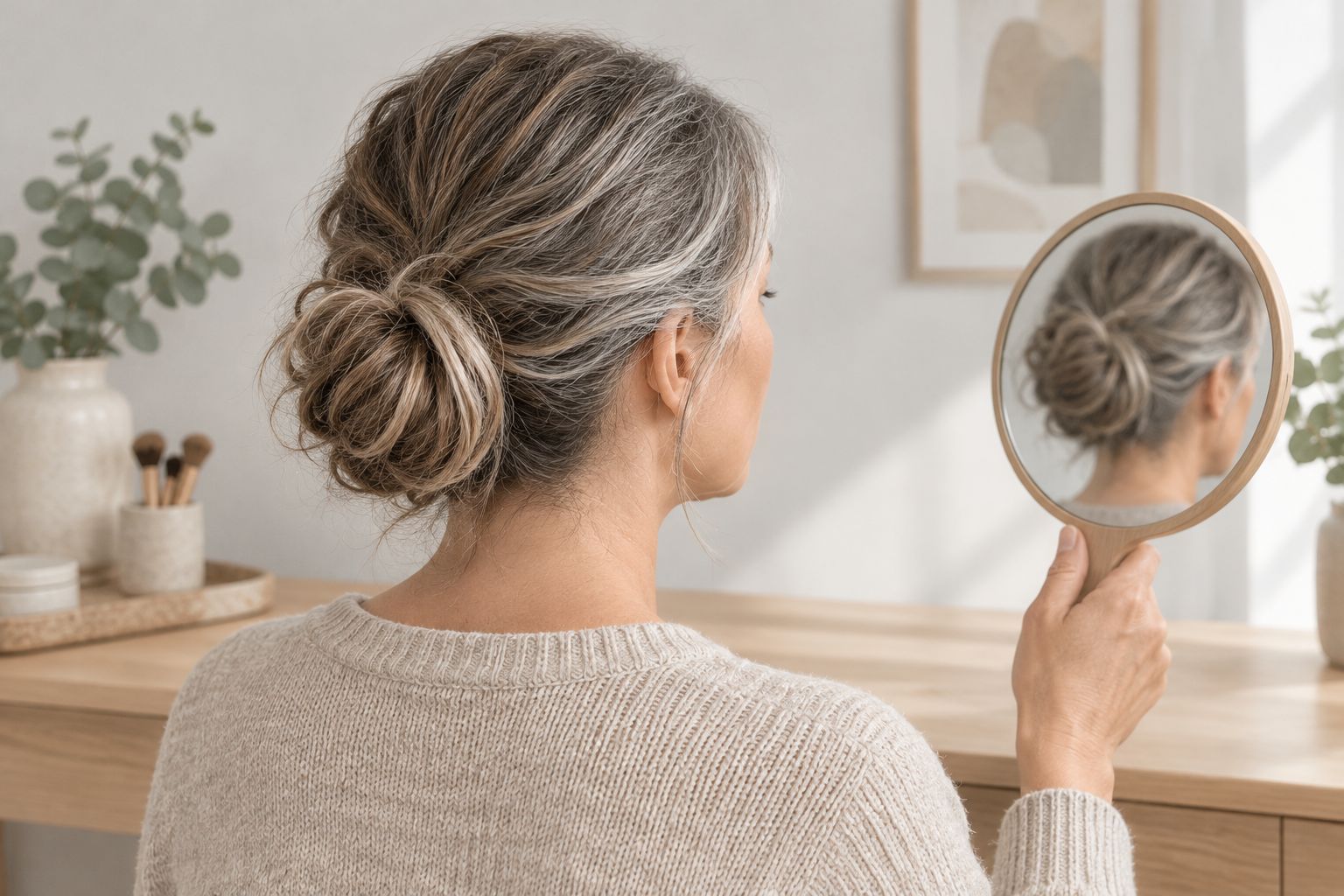
Use 2 mirrors to see the back without twisting your head. If your roots look silver but your gathered lengths still look brown, a bright silver bun will create a visible contrast. That contrast is a styling choice, not a mistake—but decide whether you want it before choosing a piece.
Take 2 reference photographs, one with your hair loose and one with it gathered, in the same indirect daylight. Keep filters off so the comparison stays useful.
- Identify the dominant color beside the planned bun.
- Check whether the ends look warmer than the roots.
- Photograph the back as well as the front.
- Note where a sharp color boundary appears.
- Choose blending or intentional contrast as your goal.
2. Compare grey, silver, and mixed shades
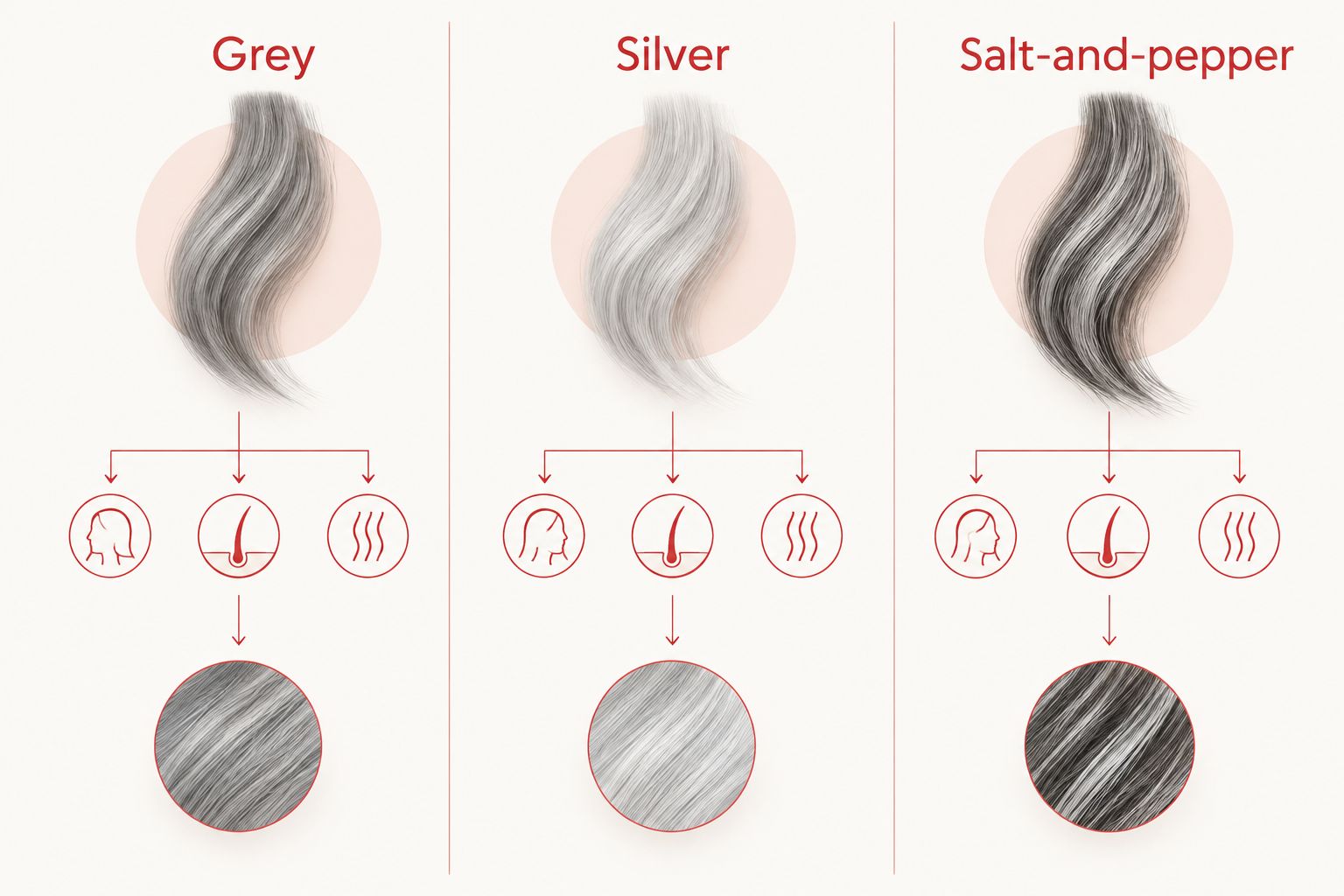
Shade names are a starting point, not a universal color standard. Grey often describes a softer or deeper neutral appearance; silver usually suggests a lighter, cooler look. Salt-and-pepper describes a visible mixture of dark and light strands rather than one flat grey.
Compare the hairpiece with the gathered hair under the same light whenever possible. A screen photograph helps you shortlist a shade, but screen settings and lighting affect what you see. Do not choose solely because a shade name includes the word grey.
If blonde dye remains through your lengths, inspect whether it looks golden or cool beside the new growth. A pale cool piece against warm ends creates contrast even when both look light.
- Grey: compare depth as well as lightness.
- Silver: check for a cooler, brighter appearance.
- Salt-and-pepper: compare the balance of dark and light strands.
- Check the attachment area before matching the ends.
- Reassess your choice as more natural color grows through.
3. Choose a shape your own hair can support
Try your intended style with your own hair first. Make a small bun, then loosen and reset it until it feels secure without pulling. This tells you whether you need extra fullness, a different position, or simply a tidier finish.
Apexhairs offers synthetic bun scrunchies for adding volume without building the entire shape from your own hair. Treat the hairpiece as an addition to a comfortable base, not a reason to make that base tighter. Fine hair and thick hair both need an attachment that feels comfortable.
A ponytail extension is a different choice: it leaves length hanging instead of concentrating the finished shape around a bun. Choose that format when you want a ponytail, rather than assuming any extension should be twisted into an updo.
- Build a comfortable base before adding a piece.
- Choose a smaller-looking shape if a large bun overwhelms your style.
- Prefer a tousled finish for a deliberately loose look.
- Choose a smooth finish when you want a defined outline.
- Follow the instructions for the attachment you actually have.
4. Attach the hairpiece without tightening your roots
Secure your own hair with a suitable hair tie, then form the base required by the hairpiece instructions. For a scrunchie-style bun, arrange the piece around that base as directed. For a clip attachment, follow its fastening instructions rather than treating it like an elastic.
Stop and reset if you feel pulling, pinching, or discomfort. Do not solve movement by repeatedly tightening the same area. Remove the piece, check whether your base is secure, and reconsider its placement or suitability.
Use a mirror to check that the attachment is covered before spreading the decorative strands. Extra fluffing cannot correct an exposed fastening underneath.
- Secure your natural hair before adding the hairpiece.
- Keep loose strands clear of the fastening.
- Cover the band or clip with the intended hair sections.
- Check the back and both sides before leaving the mirror.
- Remove and refit the piece if it pulls.
5. Blend the join rather than covering every grey strand
Start at the boundary between your own hair and the added bun. Arrange a small section of your gathered hair across the join if its length allows. Keep the attachment concealed without dragging short new growth toward it.
A tousled finish gives you separate strands to arrange around that boundary. A smooth finish creates a clearer outline, so inspect the join carefully. Neither texture corrects a large color mismatch; styling and shade choice solve different problems.
Check 3 viewing angles: front, side, and back. Your front view can look balanced while a dark base remains visible behind a pale bun.
- Spread the hairpiece evenly around its base.
- Keep some natural color visible for continuity.
- Tuck suitable loose ends without pulling short hairs.
- Check the join against a plain background.
- Leave contrasting roots visible if you like the effect.
6. Refresh the finish and remove it gently
Before wearing the bun again, check the attachment and arrange any displaced strands according to its care instructions. A synthetic hairpiece needs its own care routine; do not assume the products or hot tools you use on natural hair are suitable.
Remove the hairpiece before trying to untie the base underneath it. Support your natural hair near the fastening and work slowly when strands catch. Pulling the whole piece away at once makes it harder to see what is tangled.
Keep a simple note of the placement and shade combination you liked. As your grey grows through, repeat the gathered-hair check instead of automatically repeating an old match.
- Follow the piece's washing and drying instructions.
- Use heat only when its instructions explicitly allow it.
- Release the attachment before undoing your own bun.
- Separate caught strands gently rather than tugging.
- Store the piece without crushing its shape.
Compare hair bun options for 2026
Choose by the finished shape and the hair you want to leave visible. These options solve different styling needs; none makes a mismatched shade disappear.
| Option | Best for | Main benefit | Key limitation |
|---|---|---|---|
| Natural-hair bun | Practicing placement before choosing a hairpiece | Shows how your current colors gather together | Fullness depends on your own hair |
| Synthetic Messy Bun Hairpiece Scrunchie | Adding a tousled shape to fine or thinning hair | Adds natural-looking volume with a clip-free design | Does not conceal roots elsewhere on the scalp |
| Straight Synthetic Hair Bun Scrunchie | Creating a smoother, fuller-looking bun | Adds fullness with a smooth finish and clip-free design | A smooth join still needs careful shade matching |
| Ponytail extension | Wearing added length loose rather than in a bun | Creates a different silhouette from a compact updo | Is not automatically suitable for wrapping into a bun |
The Apexhairs choices below match the two finishes compared above. Choose the texture you want, then check the current shade details against your gathered hair. A product name alone does not confirm that its shade matches your stage of growing out dye.


Common grey-transition styling mistakes in 2026
Matching only the newest roots
Silver roots do not mean every visible part of your updo is silver. Match the area surrounding the bun first, then decide whether a contrasting crown feels intentional. Recheck after changing from a low placement to a higher one.
Treating every pale shade as interchangeable
Light blonde, grey, and silver can have visibly different tones. Compare the remaining dye with the proposed hairpiece rather than assuming similar lightness means a close match. Pay particular attention to warm ends beside cool new growth.
Adding fullness by adding tension
A fuller appearance should come from the shape or added hair, not a painfully tight base. This applies whether your hair is fine, thick, or somewhere between. Reset an uncomfortable style rather than hiding the problem under more hair.
Trying to disguise the whole transition with one bun
A bun hairpiece changes the updo area, not your entire head of hair. Leave the crown and hairline as part of your look instead of expecting a bun to provide scalp coverage. Synthetic pieces create a styling effect; they do not regrow hair.
FAQ
What's the best hair bun style while I'm growing out grey hair?
The best hair bun style is one that feels comfortable and blends with the gathered hair beside it. Try a low bun and a higher placement with your own hair before choosing a hairpiece.
Should my bun hairpiece match my grey roots or my dyed ends?
Match the hair immediately surrounding the bun first. If your gathered lengths remain dyed, matching only the roots creates contrast at the attachment.
Is silver the same as grey when choosing a hairpiece?
Silver and grey are not interchangeable shade descriptions. Silver usually suggests a lighter, cooler appearance, but naming varies, so compare the actual shade with your gathered hair.
Can I wear a messy bun hairpiece if my hair isn't thin?
Yes, a messy bun hairpiece is also a styling option for hair that is not thin. Choose it for the shape or added fullness you want, and check that your base supports it comfortably.
Is a ponytail extension better than a bun scrunchie during the grey transition?
A ponytail extension suits hanging length, while a bun scrunchie suits a compact updo. Neither format is automatically better for growing out grey; shade matching and comfortable attachment matter for both.
Can I use a curling iron on my synthetic bun?
Use a curling iron only if the specific hairpiece instructions explicitly allow heat. Synthetic construction alone does not confirm heat compatibility.
Will a bun hairpiece cover thinning at my crown?
A bun hairpiece adds hair around the bun rather than providing general crown coverage. Do not tighten or reposition it painfully to cover an area it was not designed to cover.
One last thing
Before replacing a hairpiece that suddenly looks mismatched, move your bun and check again. Placement changes which natural strands sit beside it, so a different position can change the contrast without changing the piece.
For your next 2026 styling update, change just one thing: placement, texture, or shade. Keeping the other choices steady makes it easier to see what actually improves the blend.


Leave a comment