
Does a curly bun hairpiece work on straight hair?
Yes, a curly bun hairpiece works on straight hair when you tuck your own ends out of sight and cover the attachment with the curls. You do not need to curl your whole head; the key is a secure, comfortable base and a shade that blends where the bun meets your hair.
- Does a curly bun hairpiece work on straight hair? Yes—hide straight ends and blend the attachment.
- Apexhairs synthetic bun hairpieces suit women seeking fuller-looking updos without changing their own hair texture.
- Match grey or silver hairpieces beside your gathered hair, not against roots alone.
- Choose a straight ponytail extension instead when you want visible length rather than a curly updo.
Does a curly bun hairpiece work on straight hair?
Yes. A smooth crown and curly bun can look intentional because the curls form a separate updo rather than continuing along loose straight lengths. The join needs to look tidy, but every strand does not need the same texture.
The Messy Bun Hair Piece – Curly Synthetic Hair Bun from Apexhairs is a synthetic option for adding fullness to a bun. As with any curly hairpiece, visible straight ends or an exposed attachment can interrupt the finished look.
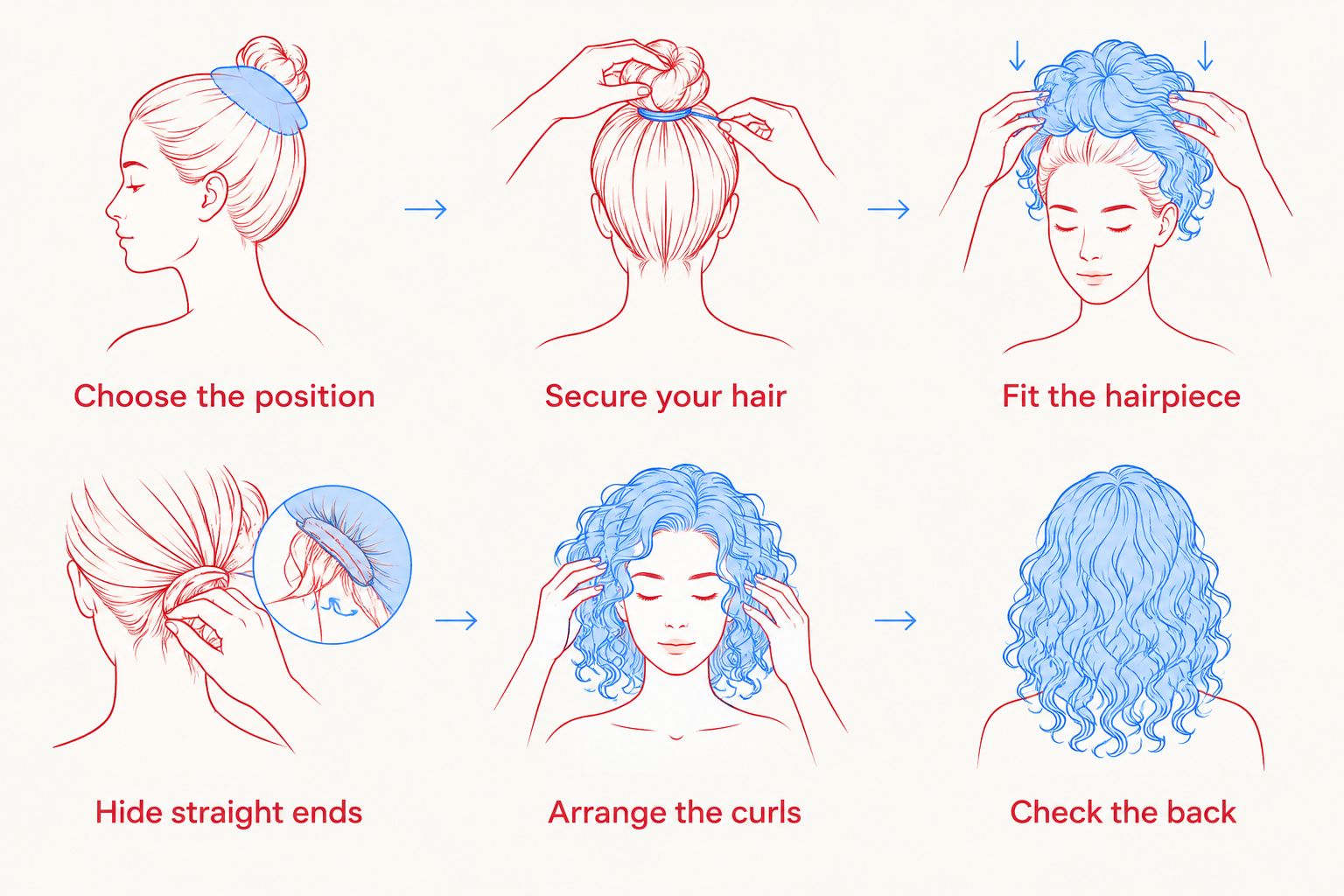
Use these 6 steps for your 2026 everyday styling routine:
- Choose the position. Gather your hair where you want the finished bun to sit. Check that the position feels comfortable before adding anything.
- Secure your own hair. Make a ponytail, then tuck or coil the ends into a compact base. Use an attachment method your hair can comfortably support.
- Fit the hairpiece. Follow its instructions for the scrunchie, clip, or other fastening. Do not assume different attachments fit the same way.
- Hide straight ends. Tuck your natural ends beneath the bun rather than leaving them sticking through the curls. Reposition loose sections without pulling the base tighter.
- Arrange the curls. Use your fingers to spread the hairpiece around the join. Keep the attachment covered without flattening all the texture.
- Check the back. Use a second mirror or a phone photo to inspect the outline, shade match, and exposed fastenings. Turn your head gently and check for slipping or pulling.
Why this matters
Buying a curly bun does not mean committing to curls everywhere. You can keep your usual smooth front and add texture only at the back, whether your hair is fine, thick, thinning, or somewhere between.
The useful distinction is texture contrast versus an exposed join. Straight hair leading into curls is a styling choice; a visible band, protruding ends, or an uncomfortable fastening is something to fix.
For a 2026 everyday hairpiece choice, start with the finish you want rather than a promise of a dramatic transformation. A compact curly bun and a long ponytail create different shapes, even when both add fullness.
Curly bun, straight bun, or ponytail: which suits your goal?
Choose a curly bun for a textured updo, a straight bun for a smoother finish, or a ponytail extension for hanging length. None requires you to have thinning hair, and none treats hair loss.
| Styling choice | Best for | Main benefit | Main trade-off |
|---|---|---|---|
| Curly bun hairpiece | A fuller-looking, textured updo | Keeps the added curls concentrated around the bun | Straight ends need to stay tucked beneath the curls |
| Straight bun hairpiece | A smooth, gathered finish | Keeps the overall texture closer to straight natural hair | The join still needs careful coverage |
| Straight ponytail extension | Visible length with a straight finish | Leaves the added hair hanging rather than gathered into a bun | Your natural ends and the attachment still need blending |
You do not need the biggest bun to get a useful change. Choose a shape that looks balanced against your head and feels stable on your own base.
If you prefer a sleek crown, keep it sleek. If you prefer a softer outline, gently loosen the surface hair without disturbing the fastening; the choice is about your preferred finish, not a rule that straight hair must look tousled.
Why the finished result varies
The curl pattern alone does not decide whether a hairpiece blends. These 5 factors deserve attention before you blame the difference between straight and curly hair:
- Shade match: Compare the hairpiece with the hair surrounding the bun. A noticeable color boundary remains noticeable even when the attachment is hidden.
- Visible ends: Straight tips projecting through curls reveal the transition. Tuck them beneath the piece rather than trying to curl them automatically.
- Base size: A bulky natural bun leaves less room to position the hairpiece around it. A loose base can also make placement harder to control.
- Attachment fit: Scrunchies and clips need different handling. Follow the specific fastening instructions and stop if the fit pulls or pinches.
- Bun placement: Your chosen position changes what you can see from the front, side, and back. Inspect the actual position you plan to wear.
Fix the visible problem, not your entire hairstyle. If the shade looks right but the band shows, work on coverage; changing the color will not hide an exposed fastening.
How do you match a curly bun to grey or silver straight hair?
Match the hairpiece beside your gathered hair in daylight, paying attention to both lightness and the mix of tones. Grey, silver, and salt-and-pepper names describe different appearances, but shade names alone do not guarantee a match.
A grey blend can contain a visible mixture of darker and lighter strands. Silver generally describes a lighter, cooler-looking effect, while salt-and-pepper describes a contrast between dark and pale strands; individual product labels still need checking against their photos.
Use these 3 checks when comparing shades in 2026:
- Lightness: Does the piece look much lighter or darker than the hair beside the attachment?
- Tone: Does it look warmer, cooler, or more neutral than your gathered hair?
- Blend: Does the balance of dark and light strands resemble the area around your bun?
If you are growing out dyed lengths, your roots and gathered ends can look quite different. Compare against the hair that will actually surround the bun, then check the whole hairstyle from the side.
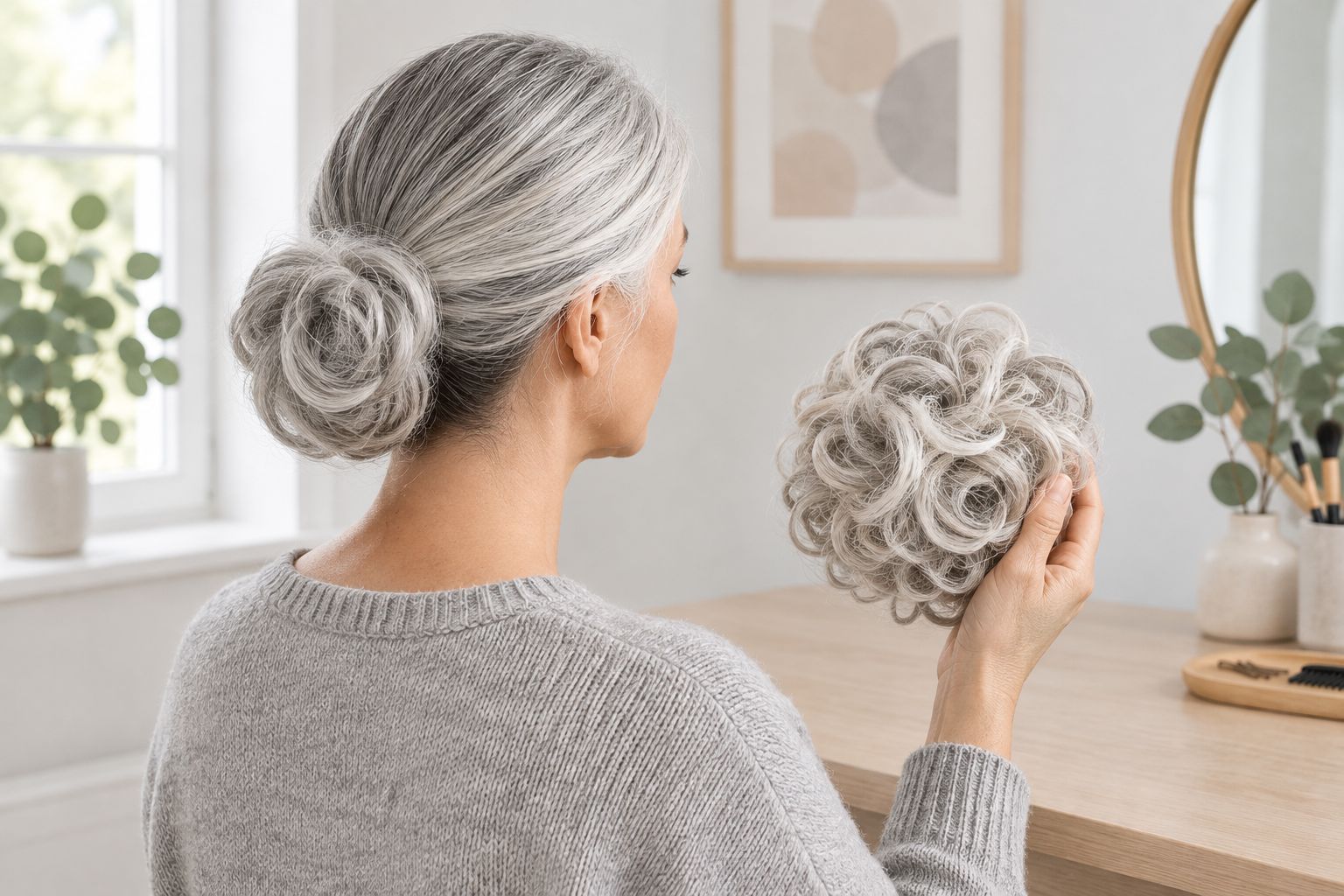
A photograph is useful for seeing the overall effect, but lighting and screens affect color appearance. Compare views rather than deciding from one brightly lit image, and check the product's shade information before choosing.
What if your straight hair is fine or thinning?
You can use a curly bun to create a fuller-looking updo without making your natural bun large. The hairpiece provides the visible shape, so concentrate on a comfortable base rather than stretching your own hair into a bigger one.
Apexhairs synthetic bun hairpieces are best for women seeking added updo fullness, not a treatment for thinning hair. A bun hairpiece adds styling volume; it does not regrow hair or automatically cover thinning elsewhere on the scalp.
If a fastening pulls, feels unstable, or requires you to gather fragile hair tightly, remove it and reconsider the fit. Do not keep adding tension simply to make a particular attachment work.
The same comfort check applies to thick hair. Keep your natural base compact enough for the hairpiece to sit around it, but do not force a fastening over more hair than it can comfortably accommodate.
Do you need to curl your own hair first?
No, you do not need to curl your own hair first when its ends are hidden beneath the bun. Keep the crown straight if that is the look you like.
Curling loose face-framing sections is optional, not a requirement for blending. For a simpler routine, tuck short pieces neatly or leave them straight as a deliberate contrast.
Do not use heat on a synthetic hairpiece unless its care instructions explicitly permit it. Synthetic construction alone does not establish heat compatibility, and instructions for your natural hair do not apply automatically to the added fibers.
Why does the curly bun look separate from your hair?
A curly bun looks separate when the join draws attention through exposed ends, a visible attachment, or a shade mismatch. Check those issues before deciding the curls themselves are wrong for straight hair.
Inspect from 3 views: the back and both sides. This gives you a clearer picture than looking only in the front mirror, where the bun's base can remain hidden.
If the curls look crowded on one side, redistribute them gently with your fingers. If the base shows all the way around, remove the piece and check its placement rather than stretching the curls until they lose their shape.
What should you check before choosing a synthetic curly bun?
Make your 2026 buying checklist about fit and finish, not an assumed match between your natural texture and the hairpiece. Straight hair is compatible with a curly updo, but the attachment still has to suit your base.
Check the fastening type, product photos, shade description, and care instructions. Look for views that show how the piece sits around the attachment, not just an isolated front-facing image of the curls.
If you want hanging length instead of an updo, consider a ponytail extension rather than trying to make a bun behave like one. Choose the product type for the finished hairstyle you actually want.
FAQ
Does a curly bun hairpiece work on straight hair without curling it?
Yes, a curly bun hairpiece works on straight hair without curling your natural hair. Tuck straight ends beneath the piece and arrange the curls over the attachment.
Will a curly bun look fake with a straight crown?
A curly bun does not automatically look fake with a straight crown. A visible fastening, protruding straight ends, or a noticeable shade mismatch needs more attention than the texture contrast alone.
Can I wear a curly bun hairpiece if my hair is thin?
Yes, you can wear a curly bun hairpiece on thin hair if your hair comfortably supports its attachment. Remove it if it pulls or pinches rather than tightening your base further.
Should I choose grey or silver for my bun hairpiece?
Choose the shade that matches the hair surrounding your gathered bun, not the shade name alone. Compare lightness, warm or cool tone, and the mixture of darker and lighter strands.
Is a curly bun better than a straight ponytail extension?
A curly bun is better for a textured updo, while a straight ponytail extension suits hanging length with a straight finish. Choose by the hairstyle you want rather than assuming one type suits every wearer.
Can I straighten a synthetic curly bun if I change my mind?
Do not straighten a synthetic curly bun unless its care instructions explicitly allow the heat and method you intend to use. Choose a straight hairpiece if a smooth finish is your main goal.
What should I check when choosing an Apexhairs bun in 2026?
Check the Apexhairs bun's attachment, shade information, product photos, and care instructions. Choose for your preferred finish and a comfortable fit rather than assuming every synthetic bun attaches or handles heat the same way.
One last thing
Before changing your straight hair, photograph the finished bun from behind. A neat front view does not show whether your own ends or the attachment are visible at the back.
Keep the straight crown if you like it. The useful finishing step is hiding the join, not making every strand curly.


Leave a comment