
How do you match a bun hairpiece without a hair sample?
Match a bun hairpiece without a sample by comparing your gathered hair with product photos in indirect daylight, checking depth, undertone, and the color around the bun’s base. For your 2026 shade search, use several unfiltered views rather than one selfie; screen settings and lighting prevent a photo-only comparison from guaranteeing an exact match.
- How to match a bun hairpiece without a sample: compare gathered hair, not roots alone, in indirect daylight.
- Match depth first, then warm or cool undertone; shade names alone do not establish a match.
- Grey and silver hair need comparisons of lightness, darker strands, and warmth around the bun base.
- Apexhairs synthetic bun hairpieces suit women seeking fuller-looking updos; choose texture and attachment separately from shade.
How do you match a bun hairpiece without a hair sample?
Match the hair that will touch the hairpiece, in the hairstyle you actually plan to wear. Loose hair around your face can look different from the lengths gathered into an updo. A match based only on your front hairline can therefore miss the area that matters most.
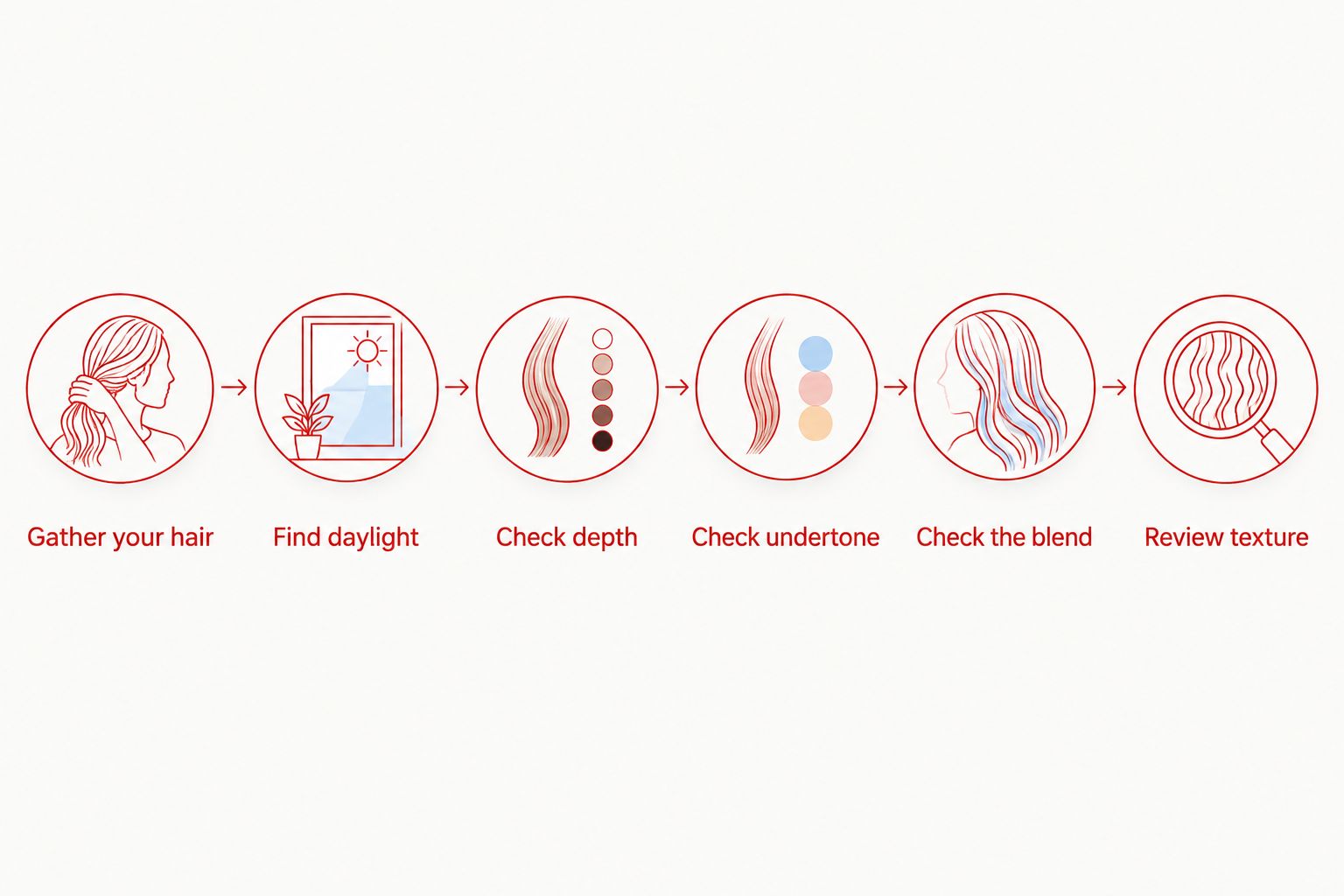
When comparing Apexhairs bun hairpieces, keep your reference photos beside the product images. Follow this sequence before choosing a shade:
- Gather your hair. Make a loose version of your usual bun, leaving the attachment area visible.
- Find daylight. Stand near a window with indirect light rather than under a warm bathroom bulb.
- Check depth. Decide whether the candidate looks lighter, darker, or similar to your gathered hair.
- Check undertone. Compare golden, reddish, neutral, or cooler-looking tones.
- Check the blend. Look at the balance of light and dark strands, especially with highlights or grey hair.
- Review texture. Choose a finish that works with your intended updo, then revisit the color comparison.
Do not let an appealing hairstyle distract you from an obvious shade difference. The right curl pattern cannot correct a bun that looks distinctly warmer or darker than the hair surrounding it.
Why this matters
A bun places your own hair and the added hair next to each other. That meeting point deserves more attention than whether the product photo resembles your overall hair color at first glance.
For a 2026 online purchase, treat the shade name as a starting point, not proof. Names such as ash blonde, silver, and brown-grey do not provide a standardized color measurement across listings. Your job is to compare the visible shade, its description, and your own gathered hair together.
This applies whether you have thin hair, thick hair, or something in between. A hairpiece changes the appearance of your updo; it does not regrow hair or treat hair loss.
How should you photograph your hair for shade matching?
Make a reference set of 3 photos: the back, the side, and a close-up of the bun base. These are practical comparison views, not a requirement for a particular camera or phone. Keep the hairstyle and lighting consistent across the set.
Start with the back view
Gather your hair at the height where you normally wear a bun. Ask someone to photograph the back, or use a timer with the camera positioned behind you. Include enough surrounding hair to show how the gathered lengths meet the head.
Avoid photographing only a small, isolated strand. A strand can show an undertone, but it does not show how your full updo reads from behind.
Add the side view and close-up
Use the side view to check whether your roots and lengths create noticeably different bands of color. Then photograph the hair immediately around the planned attachment point. This close-up is especially useful when your crown is silver but your gathered lengths retain brown or blonde.
Turn off beauty filters and avoid changing the photo’s warmth or saturation. If one image looks surprisingly orange, blue, or pale compared with what you see in the mirror, retake it before using it as your reference.
Keep the comparison consistent
Open your reference photo and the product photo on the same screen. Turn off night-mode display tinting while you compare them, and avoid judging one image on a phone against another on a different display.
Use photos to narrow your choice, not to promise an exact match. A screen comparison cannot show you the actual fibers beside your hair.
How do you compare depth, undertone, and mixed shades?
Work through the color questions separately. Trying to decide whether something is simply “the same color” makes it easy to overlook why the match feels wrong.
| Color check | What to compare | What a mismatch looks like | Best for |
|---|---|---|---|
| Depth | Overall lightness or darkness | The bun forms a noticeably pale or dark patch | Narrowing your initial shortlist |
| Undertone | Golden, reddish, neutral, or cooler appearance | The bun looks yellow beside cool hair, or cool beside warm hair | Comparing similar-depth shades |
| Mixed strands | Distribution of lighter and darker strands | The bun looks solid beside visibly blended hair | Highlights, grey, and salt-and-pepper hair |
| Placement | Color immediately around the bun base | The shade matches your fringe but not your updo | Grown-out color or uneven grey patterns |
A candidate can pass one check and fail another. Two blondes can have similar depth but different warmth; two grey shades can look equally cool while containing very different amounts of dark hair.
Keep a short note beside each candidate: “too dark,” “too golden,” or “closer blend.” Those observations are more useful than repeatedly comparing names that sound almost identical.
How do you match grey, silver, and salt-and-pepper hair?
Match the visible mixture, not just the word grey. Grey hair can contain white, darker, and still-pigmented strands in different proportions. The relevant mixture is the one around your bun, not necessarily the one at your temples.
Use these distinctions when reading 2026 listings, while checking the photographs rather than assuming every seller uses the same terminology:
- Silver-looking hair: Look for a cool, light appearance, then check whether the candidate is equally light.
- White-looking hair: Check for unwanted dark strands or a yellow-looking difference beside your own hair.
- Salt-and-pepper hair: Compare both the darker strands and the lighter strands, not their average impression alone.
- Brown-grey hair: Check whether the remaining brown looks warm or cool and how strongly it shows through.
If your hair is transitioning from dye to grey, photograph the style gathered. A silver root area does not automatically mean a silver bun will blend with darker lengths folded around it.
Try the same shade comparison with a low bun and your usual higher placement. Choose the position you actually enjoy wearing, then match that position rather than buying for a hairstyle you will rarely use.
Does a messy or smooth bun make shade matching easier?
A messy finish offers a textured look; a smooth finish creates a more continuous surface. Neither makes color matching optional. Choose the finish for your intended hairstyle, then assess its shade independently.
These Apexhairs bun hairpieces illustrate the texture choice. Best for textured updos is different from best for smooth updos; neither label means a guaranteed color match.
| Hairpiece | Best for | Supported benefit | Limitation to consider |
|---|---|---|---|
| Synthetic Messy Bun Hairpiece Scrunchie | A fuller-looking, tousled updo | Synthetic, lightweight, clip-free scrunchie that adds volume | Its tousled finish is not the choice for a deliberately smooth bun |
| Straight Synthetic Hair Bun Scrunchie | A smooth, fuller-looking bun | Synthetic, lightweight, clip-free scrunchie with a smooth finish | Its straight finish is not a substitute for a curly updo |
For your 2026 shortlist, settle the finish before making the final shade comparison. Recheck the selected product’s own photos and description rather than transferring a shade judgment from a different hairpiece.


Why does a bun hairpiece’s apparent color vary?
A photo-only match involves several separate variables. Keep these in mind when a shade seems right in one image and wrong in another:
- Lighting: Warm indoor light and indirect daylight can give the same hair different-looking warmth.
- Camera processing: Automatic exposure and color adjustments influence how a photo represents hair.
- Display settings: Screen brightness and color tinting affect the images you compare.
- Hair placement: Gathered lengths can show a different color mixture from loose hair or roots.
- Texture and shine: Curls, straight sections, and highlights reflect light differently across their surfaces.
- Color distribution: A blended shade can look different depending on which strands are visible in the photograph.
Change one comparison condition at a time. If you change the room, hairstyle, screen, and product image together, you lose track of what caused the difference.
How should you attach and check the bun after choosing?
Start with a base your own hair can support comfortably. Secure your natural bun without pulling it painfully tight, then follow the hairpiece’s attachment instructions. A scrunchie-style piece and a clip-attached piece require different handling; do not force either attachment to compensate for an unstable base.
For your first fitting, use 2 mirrors or a rear-view phone photo to inspect the result. Check the meeting point between your hair and the piece, not just the fullness in the center.
Look for exposed attachment areas, an obvious color boundary, or tension at the base. Rearrange your own hair gently where needed. If you have fine hair, avoid repeatedly tightening the style to chase a fuller appearance; added volume should not require discomfort.
Finally, inspect the finished updo in daylight and your usual indoor setting. A comfortable fit and a believable blend matter more than maximum fullness.
Can you use the same method for a ponytail extension?
Yes, use the same depth, undertone, and mixed-strand checks for a ponytail extension. Compare against the hair at the ponytail base and any natural lengths that remain visible alongside the extension.
A bun gathers the lengths into a compact shape, while a ponytail leaves length hanging below the attachment. That changes where you inspect the blend. Do not assume a shade that works beside tucked-away ends will look identical beside exposed lengths.
Should you choose lighter or darker when you are unsure?
Neither lighter nor darker is a reliable default. Identify whether the disagreement is actually depth, undertone, or the balance of mixed strands before making a choice.
If the photos still leave you unable to distinguish the candidates, keep comparing rather than choosing a darker shade simply because it feels safer. Look for additional views of the exact candidate, and check the seller’s stated policies before ordering.
FAQ
How can I match a bun hairpiece without sending a hair sample?
Compare product photos with unfiltered daylight photos of your gathered hair. Match overall depth first, then undertone and the mixture of lighter and darker strands around the attachment point.
Should my bun hairpiece match my roots or my ends?
Your bun hairpiece should match the hair visibly surrounding its attachment point. Gather your hair into the planned style before deciding whether roots, lengths, or a mixture provides the right reference.
Can I match a hairpiece using just one selfie?
One selfie is a weak reference because it often leaves out the bun area. Use a back view, side view, and close-up in consistent indirect daylight instead.
Is silver the same shade as grey for a bun hairpiece?
Silver and grey are not interchangeable shade guarantees. Compare lightness, warmth, and darker strands in the actual listing photos rather than relying on the shade name.
Is a messy bun better than a straight bun for hiding a color mismatch?
A messy bun does not correct a color mismatch. Choose messy or straight texture for the hairstyle you want, then compare the shade separately.
Can I use a bun hairpiece if my hair is not thin?
Yes, bun hairpieces can add fullness or change an updo’s texture regardless of hair thickness. Choose an attachment and size your own hair supports comfortably.
Can I dye a synthetic bun if the shade is wrong?
Do not assume a synthetic bun can be recolored with ordinary hair dye. Follow its specific care instructions and choose the closest supported shade before buying rather than planning a color correction.
One last thing
Before your 2026 purchase, check your reference photo without focusing on your face. Look only at the back of the gathered style: is the attachment area warmer, darker, or more mixed than the color you usually call your hair?
Apexhairs synthetic bun hairpieces are best for women seeking fuller-looking everyday updos without changing their own hair’s length. Choose the shade for the hair beside the bun, and the texture for the hairstyle you want to wear.


Leave a comment