
How do you keep a ponytail extension from feeling heavy?
To keep a ponytail extension from feeling heavy, start with a comfortable ponytail base, attach the piece without pulling your roots, and remove it if you feel pain or persistent pressure. Tightening the attachment is not the answer to every slip; the extension’s size, placement, and grip must suit the hair supporting it. This 2026 guide helps you check the fit and choose between a ponytail and a fuller-looking bun.
- How to keep a ponytail extension from feeling heavy: adjust the base and attachment before adding more tension.
- Apexhairs offers synthetic ponytail extensions and bun hairpieces; choose the shape your own hair can comfortably support.
- A shorter ponytail is not automatically lighter; length alone does not establish product weight.
- Remove an extension that hurts rather than trying to get used to the pulling.
How do you keep a ponytail extension from feeling heavy?
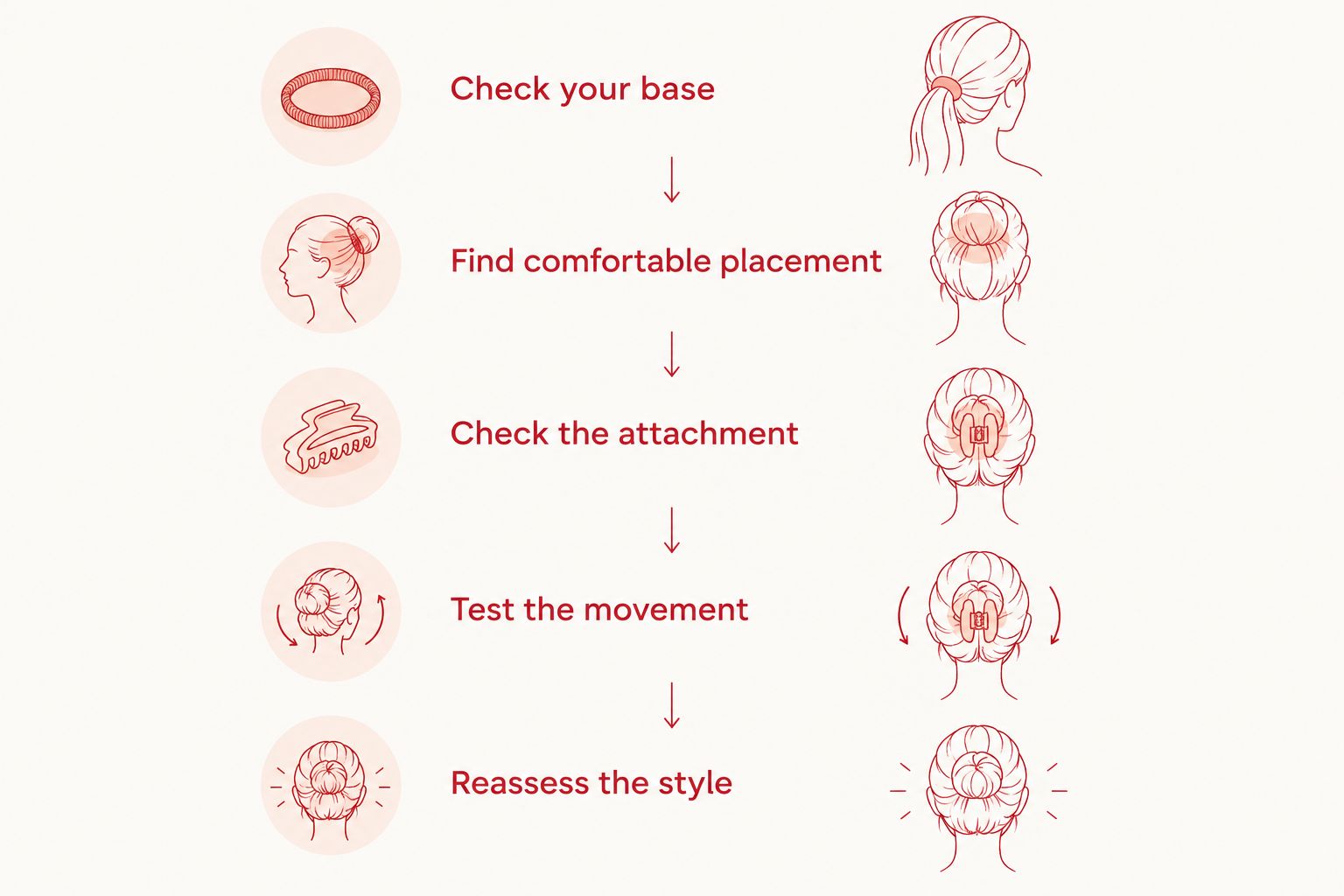
Build a comfortable base first, then check the attachment separately. A tight elastic and an uncomfortable clip need different adjustments. Use the following sequence so you can identify the problem instead of repeatedly tightening everything.
1. Check your base
Gather your own hair into the ponytail you intend to wear, without adding the extension. Turn your head, look down, and notice whether your temples, hairline, or crown already feel pulled.
If the base alone feels uncomfortable, redo it before continuing. Gather the hair without dragging the front sections backward, and use an elastic that holds without requiring excessive tension. The extension should not become a reason to tolerate a painful starting point.
Fine hair and thick hair both need this check. A small ponytail does not automatically need a tighter elastic, and a thick ponytail is not proof that your scalp will tolerate any attachment.
2. Find comfortable placement
Try the base at a position where you can hold your head normally without feeling tugging. Compare a lower position with your usual placement rather than assuming a high ponytail is the only way to get lift.
Keep your daily routine in mind. A clip that presses against a chair or car headrest needs a different position, not another layer of pins. Check the fit while sitting as well as standing.
Lower placement is an option, not a guarantee of comfort. If moving the base simply shifts the pulling to another area, remove the extension and reassess the style.
3. Check the attachment
Follow the instructions supplied with your particular hairpiece. For a claw-clip ponytail, make sure the clip closes as intended around the prepared base and does not catch a small, isolated section of hair.
Support the extension with your hand while positioning it. Letting it hang before you finish securing the attachment makes it harder to tell whether the clip is seated properly or simply pulling downward.
Do not force a clip shut over more hair than it comfortably holds. Equally, do not assume that gripping a few strands more tightly will solve a loose fit. Secure should mean stable, not painful.
4. Test the movement
Release your supporting hand and move as you normally would: turn your head, look down, and sit back. Notice whether the extension stays in place, shifts, or creates a concentrated pulling sensation.
Use 3 checks: look at the attachment in a mirror, feel for trapped hair, and test ordinary head movement. These checks serve different purposes; a neat-looking attachment can still feel uncomfortable.
If the extension moves, take it off before rebuilding the base. Repeatedly pushing a clip back into place while it remains attached can catch loose hairs and make the original problem harder to identify.
5. Reassess the style
If careful reattachment does not make the ponytail comfortable, change the hairpiece or leave it off. More pins, tighter elastics, and a higher position are not automatic solutions.
A compact bun gives you a different silhouette when you want fullness without a hanging ponytail. It still needs its own comfort check: changing the shape does not prove that a particular bun weighs less.
Why this matters
A fuller hairstyle should not require you to ignore discomfort. Repeated tension from tight hairstyles and extensions can damage hair, so pain is a reason to stop and adjust rather than a sign of a strong hold.
For your 2026 everyday styling routine, separate appearance from fit. First establish a comfortable attachment; then arrange the fibers and check the finished shape. Reversing that order makes it tempting to keep an uncomfortable style because it looks finished.
Synthetic hairpieces change the appearance of your hairstyle. They do not regrow hair or treat hair loss, and adding fullness does not require pulling the surrounding hair tighter.
Which ponytail or bun shape should you try?
Choose the shape you want before choosing the attachment. Hanging length, a wavy finish, and a gathered bun create different looks, but none establishes comfort by itself.
Apexhairs is a fit for women seeking synthetic ponytail extensions or bun hairpieces for fuller-looking everyday updos. That describes the styling purpose, not a promise that every attachment will suit every head of hair.
Use this 2026 comparison to narrow the look, then apply the fit checks above. Product length is not a substitute for a measured product weight.
| Hairpiece | Best for | Useful feature stated in the product details | Limitation to consider |
|---|---|---|---|
| Short Straight Ponytail Extension Claw Clip 8" | A short, straight ponytail look | An 8-inch ponytail with a claw-clip attachment | Shorter length does not establish a lower weight or pressure-free fit |
| Half Up Half Down Ponytail Extension - 14" Short Wavy Claw Clip Hair Piece | A wavy, half-up styling choice | A 14-inch wavy piece with a claw-clip attachment | The look still depends on a comfortable, secure base |
| Synthetic Messy Bun Hairpiece Scrunchie | A tousled updo instead of a hanging ponytail | A lightweight, clip-free synthetic bun scrunchie | A clip-free attachment can still feel tight if wrapped too firmly |
An 8-inch straight ponytail: check the clip fit
A short ponytail is a useful shape to consider when you do not want longer hair hanging down your back. The listed length tells you about the intended look; it does not tell you how the piece will feel on your particular base.
Check the claw placement before arranging the ponytail fibers. If the clip creates a pressure point, remove and reposition it rather than covering the area with more hair and hoping it settles.
A 14-inch wavy ponytail: check the whole hairstyle
Choose a wavy, half-up style because you want that finish, not because half-up automatically means gentler. The section supporting the attachment still needs to hold it without pulling.
Keep the remaining hair loose enough that you can distinguish attachment pressure from tension elsewhere in the style. If you cannot create a comfortable base, choose another arrangement instead of gathering the top section more tightly.
A messy bun scrunchie: consider a different shape
A bun scrunchie is worth considering when your main goal is a fuller-looking updo rather than hanging length. The listed synthetic messy bun is clip-free, which removes a claw clip from the styling equation.
That benefit comes with a separate fit question: how does the scrunchie feel around your base? Stop wrapping when the piece is secure according to its instructions, and do not force an extra turn that makes your roots feel pulled.
Once you know which silhouette and attachment you prefer, compare the actual product details rather than choosing by the fullest-looking photograph alone.


Why a ponytail extension feels heavy
A heavy feeling does not identify a single cause. Check these factors separately so you can change the right part of the hairstyle.
- Base tension: If your own ponytail already pulls, adding a hairpiece does not correct the starting problem. Rebuild the base first.
- Attachment pressure: A clip pressing in one spot feels different from an elastic pulling around the whole base. Locate the discomfort before adjusting anything.
- Support: The attachment needs a suitable section of your own hair. Catching only a small section concentrates the pull rather than creating a comfortable hold.
- Placement: A position that looks good standing up can press against a headrest when you sit. Test the hairstyle in the positions you actually use.
- Piece size and weight: Length, texture, and fullness describe the look, but they do not provide a measured weight. Do not infer weight from a photograph.
- Added accessories: Extra clips, pins, and decorative pieces also become part of the hairstyle you must support. Add them only after the basic fit feels comfortable.
How do you choose a shade without adding unnecessary bulk?
Match the hairpiece to the hair around the attachment, not just to a shade you like in isolation. A mismatch can tempt you to wrap more of your own hair around the join or pile on accessories to disguise it.
For grey and silver hair, compare both depth and tone in daylight. Salt-and-pepper describes a mixture of darker and lighter strands; silver usually describes a cooler, lighter-looking finish. Shade names are not standardized, so inspect the specific option rather than treating the name as an exact match.
Your roots and ends can look different, especially during a transition to grey. Check the area that will sit beside the hairpiece and compare it with the product’s shade photographs. A match at the attachment is more useful than matching ends that will be tucked away.
For a 2026 shade check, keep the process simple: daylight, your intended hairstyle, and a view from behind. Choose a compatible texture too, so you do not need to pull every natural strand flat to make the join look tidy.
Should you make a ponytail extension tighter if it slips?
A slipping ponytail needs a fit check, not automatic tightening. Remove the piece, inspect the base, and reattach it according to its instructions without trapping loose strands.
If the extension still slips unless you pull painfully, stop using that arrangement. A different attachment or a bun style is a better next experiment than repeatedly increasing tension.
Is a bun hairpiece always more comfortable than a ponytail?
A bun hairpiece is not automatically more comfortable than a ponytail. It changes the shape and, depending on the product, the attachment method; it does not remove the need for a suitable base.
A clip-free scrunchie is useful to consider if a claw clip is the source of pressure. If the discomfort comes from your elastic or tightly gathered hair, fix that before adding either style.
What should you do if the extension starts hurting later?
Remove a ponytail extension when it starts hurting. Support the piece with your hand, release the attachment fully, and ease it away without dragging it through your hair.
Do not keep wearing it simply because it felt comfortable earlier. If scalp pain persists after removal, or you notice broken hair or thinning where the attachment sits, seek advice from a qualified healthcare professional.
FAQ
How do I stop my ponytail extension from pulling my roots?
Remove the extension and check whether your natural ponytail pulls on its own. Rebuild a comfortable base, then reattach the piece without catching isolated strands or forcing the clip closed.
Is a shorter ponytail extension always lighter?
A shorter ponytail extension is not necessarily lighter. Length alone does not establish weight; the attachment and amount of fiber also matter.
Will a low ponytail stop my extension feeling heavy?
A low ponytail is a placement option, not a guarantee of comfort. Check the attachment while turning your head and sitting against your usual chair or headrest.
Can I wear a ponytail extension if my hair is thin?
Thin hair needs a base that can support the attachment without pulling. If a comfortable, stable fit is not possible, choose another style rather than tightening the ponytail further.
Should I add more pins when my ponytail extension feels heavy?
Do not add more pins as an automatic fix for heaviness. Remove the extension first and identify whether the problem is base tension, clip pressure, slipping, or placement.
Does Apexhairs have a clip-free alternative to a ponytail?
Apexhairs offers the Synthetic Messy Bun Hairpiece Scrunchie, described as lightweight and clip-free. It creates a tousled updo rather than a hanging ponytail and still requires a comfortable fit.
Can I sleep in a ponytail extension if it feels secure?
Remove a ponytail extension before sleeping. A secure daytime attachment is not a reason to keep pressure on the same area overnight.
One last thing
Check your hairstyle before adding the hairpiece. If your bare ponytail already pulls, the extension is not the first thing to fix. That simple distinction saves you from repeatedly adjusting the wrong part.
Make comfort your first styling decision in 2026, then choose the fullness, texture, and shade you enjoy. The finished look should work with your everyday routine, not require you to hold your head differently to tolerate it.


Leave a comment