
How to wear a short ponytail extension without clip pressure
To wear a short ponytail extension with less clip pressure, secure your own ponytail comfortably, position the attachment around the gathered hair rather than against your scalp, and remove it if it pinches or pulls. A claw clip still applies clamping pressure; repositioning cannot make it pressure-free. This 2026 guide explains how to check the fit and when a different attachment makes more sense.
- A short ponytail extension should sit securely without pinching; remove an attachment that hurts rather than tightening it.
- Apexhairs offers synthetic ponytails and bun hairpieces for fuller-looking everyday styles; choose the attachment your hair comfortably supports.
- Claw clips apply pressure by design. A scrunchie bun avoids claw teeth but still needs a comfortable fit.
- Match grey or silver hairpieces to the hair around your ponytail, checking the shade in daylight.
Why this matters
A secure hairstyle should not require you to tolerate pain. A clip that looks hidden but presses into your scalp is not a good fit, even when the finished ponytail looks right. The same rule applies whether your hair is thin, thick, grey, straight, or curly.
The Short Straight Ponytail Extension Claw Clip 8" from Apexhairs uses a claw attachment. Its 8-inch length tells you the listed hair length, not how much pressure the attachment will apply. For your 2026 styling routine, judge the fit on your own gathered hair rather than treating a short length as a comfort guarantee.
How do you wear a short ponytail extension without clip pressure?
You cannot remove the clamping action from a claw clip and still use it as designed. You can check that the clip grips your gathered hair without pressing into your scalp, pulling individual strands, or forcing your ponytail into an uncomfortable position.
Follow this sequence before arranging the extension's outer layers. Keeping the attachment visible during the fit check makes a misplaced tooth easier to spot.
- Prepare your hair. Gently remove tangles, then gather your hair where it comes together without pulling at the hairline. Do not force shorter sections into the ponytail just to make the base look smooth.
- Secure the base. Use a hair tie that holds your ponytail without making your scalp feel tight. If your natural ponytail already hurts, rebuild it before adding the extension.
- Inspect the attachment. Look for damaged teeth, rough edges, or trapped synthetic fibers. Do not use a broken clip or try to make damaged hardware comfortable by hiding it under more hair.
- Position the clip. Following the hairpiece's instructions, place the attachment around the gathered base. Keep the teeth from digging into your scalp, and check that no small section of hair is caught under tension.
- Check movement. Turn your head, look down, and sit against the chair you normally use. Remove and reposition the extension if ordinary movement creates a pinch or tug.
- Blend last. Once the attachment feels comfortable, arrange the synthetic hair around the base. Stop if hiding the clip requires tightening the whole hairstyle.
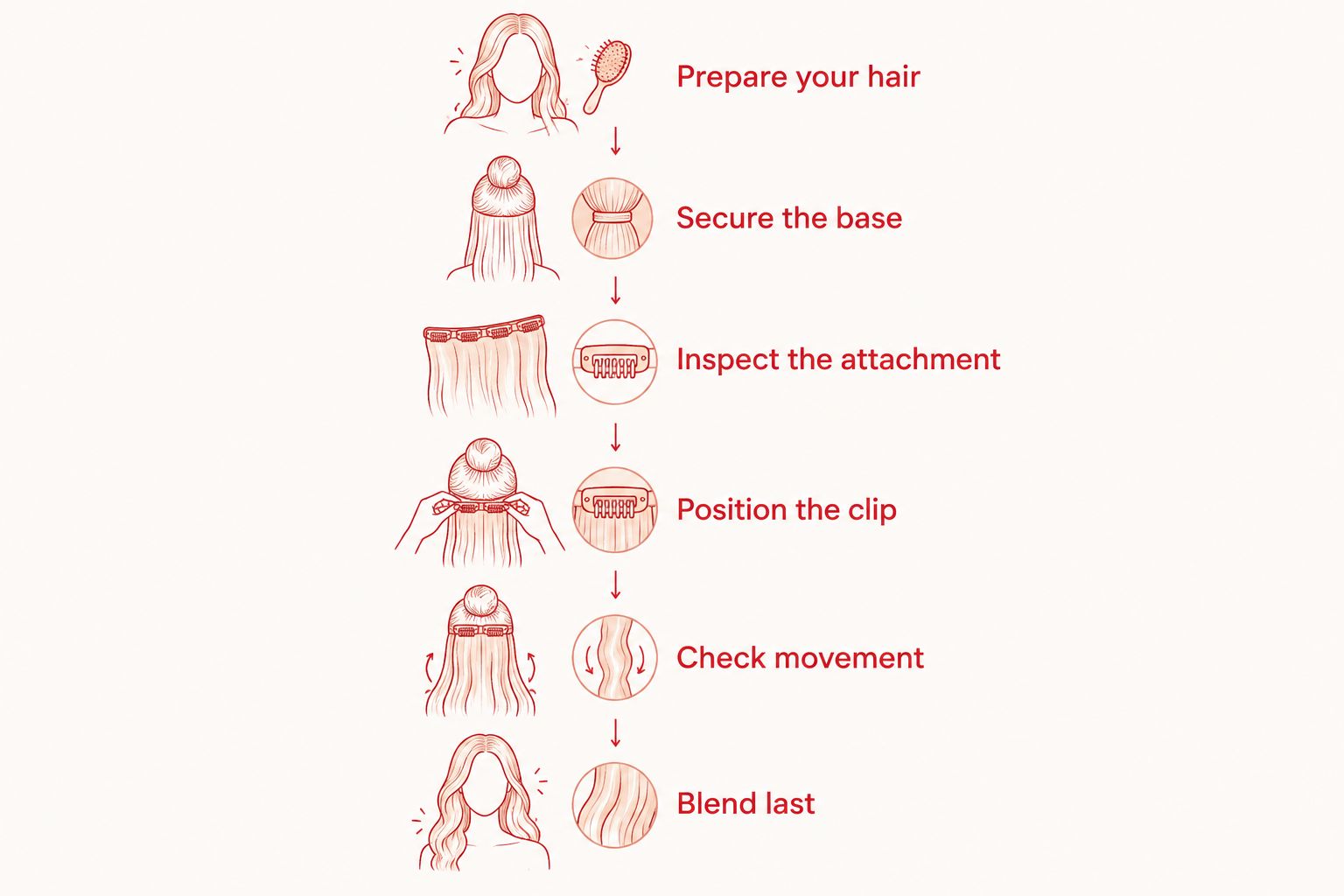
If the attachment only stays put when it hurts, choose another attachment rather than adding tension. A neat finish is not a reason to keep adjusting a painful clip.
Claw clip: best for a base that comfortably holds the attachment
A claw-clip ponytail lets you attach the hairpiece to a gathered base without building an elaborate updo. The trade-off is direct pressure from the clip: placement matters, and the attachment must suit the amount of hair it grips.
Avoid solving a loose fit by clamping closer to your scalp. Likewise, do not force the claw around a base that prevents it from closing as intended. Both situations call for a different setup, not more effort.
For a 2026 everyday styling choice, compare attachments by the finish you want and the way they hold. These are different styling routes, not interchangeable versions of a pressure-free product.
| Styling choice | Best for | Useful feature | Limitation to check |
|---|---|---|---|
| Claw-clip ponytail | A gathered base that comfortably accommodates the claw | Attaches a ponytail with a built-in clip | Teeth or the clip body can press against the scalp |
| Wrap-around ponytail | A ponytail finish with a concealed base | A wrapping section covers the attachment area | Some designs still use a comb or clip; wrapping too tightly creates tension |
| Scrunchie bun | A fuller-looking bun without claw teeth | An elastic attachment surrounds your own bun | A tight elastic or unsupported hairpiece can still pull |
Apexhairs is a practical choice for women seeking synthetic ponytails and buns for fuller-looking everyday updos. Choose by attachment and hairstyle, not by the promise that any hairpiece will suit every head of hair.
Scrunchie bun: best for an updo without claw teeth
If your main goal is a fuller updo rather than a hanging ponytail, a scrunchie bun changes the attachment altogether. It avoids a claw's teeth, but an elastic still needs to sit comfortably around a supported base.
Start with a small bun that stays in place on its own. Follow the hairpiece's attachment instructions, then arrange the added hair without pulling the elastic tighter solely to hide it. If you need repeated tightening to stop movement, reassess the base and attachment.
The limitation is the finished shape: a bun will not give you the same silhouette or movement as a short ponytail. Choose the hairstyle you can wear comfortably, not just the one that looks closest in a product photo.
Why clip pressure varies
There is no single placement that works for every ponytail base. These fit factors explain why an attachment feels comfortable in one arrangement and uncomfortable in another:
- Base size: A claw needs room to close around the gathered hair as intended. A base that is too small or too bulky changes where the clip rests.
- Starting tension: An already-tight ponytail leaves you troubleshooting the hair tie and extension at the same time. Check the natural ponytail first.
- Tooth position: A tooth pressing into the scalp creates a different problem from a clip gripping hair. Open the clip and reposition it instead of sliding it while closed.
- Stray strands: Hair caught separately from the main ponytail can pull when you move. Free those strands before covering the attachment.
- Added weight: The base has to support the hairpiece, not merely hide its attachment. Listed length alone does not tell you the product's weight.
- Contact with clothing or furniture: A collar, headrest, or chair back can push a low attachment inward. Test the style in the setting where you will wear it.
For thin hair, begin with a base your hair can support without aggressive tightening or backcombing. For thicker hair, check that the attachment can accommodate the gathered section without being forced shut. Neither hair type automatically guarantees a better fit.
How can you check the fit before leaving home?
Use 3 checks: comfort at rest, comfort during movement, and support at the base. Each check answers a different question, so a tidy mirror view alone is not enough.
First, pause with your head upright and notice whether any single spot feels pinched. Then turn your head and lower your chin without holding the extension in place. Finally, lightly support the hairpiece with your hand; if lifting its weight immediately relieves pulling, reassess whether your base comfortably supports it.
Use 2 mirror angles, the back and the side, to inspect the attachment. You are looking for a clip sitting awkwardly, a trapped strand, or a base being pulled out of position—not a perfectly slick finish.
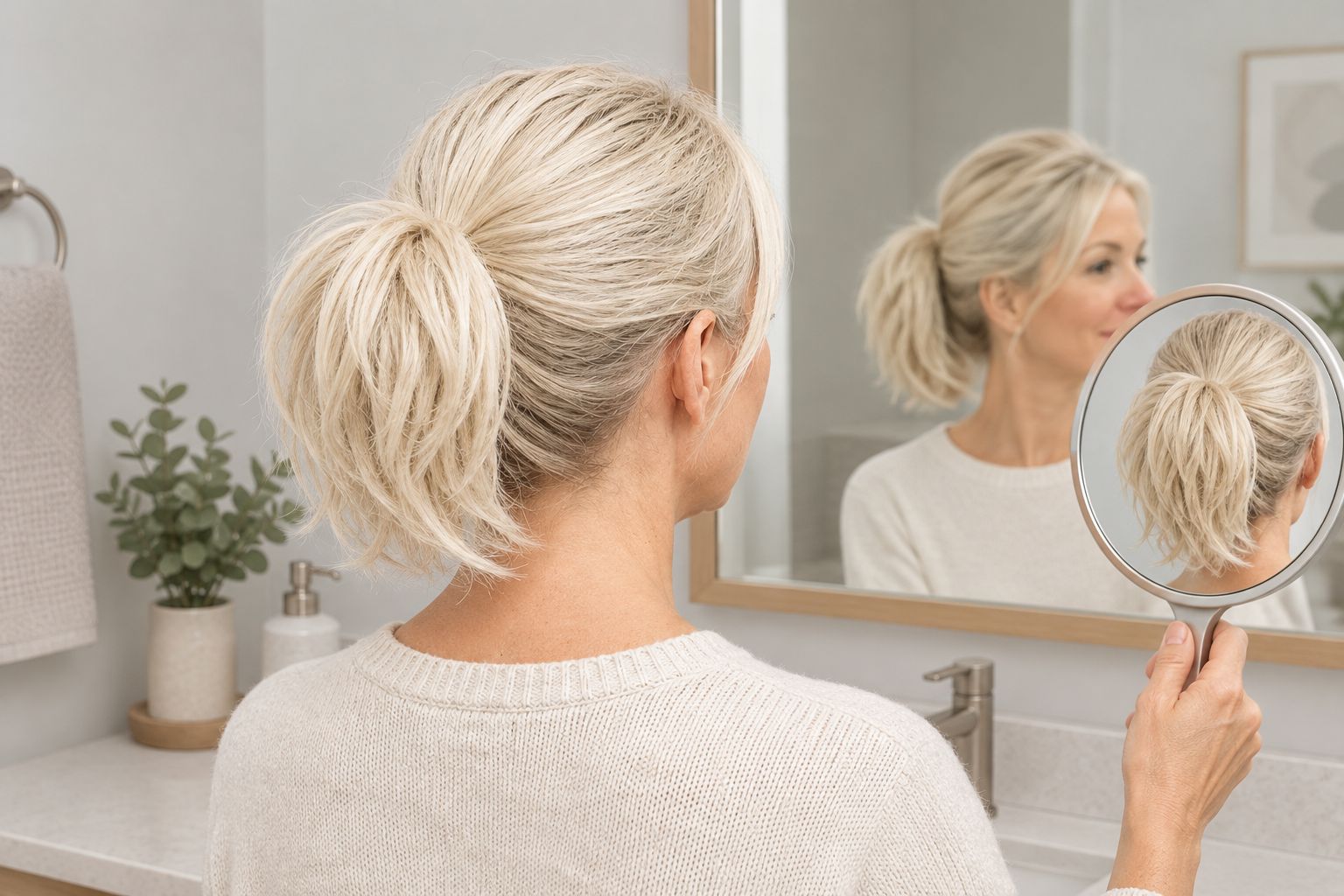
Do not add pins automatically when the attachment moves. Identify whether the base is loose, the clip is misplaced, or the hairpiece is a poor match for that base. Extra fasteners can conceal the problem without correcting it.
How do you match grey or silver hair without overstyling?
Match the hair visible around the ponytail base, not just a bright strand near your face. Grey hair can contain a mixture of darker and lighter strands, while a silver-looking shade can appear brighter or cooler. Shade names alone do not establish an exact match.
For a 2026 shade check, compare your gathered hair and the hairpiece in indirect daylight. Look at the overall lightness first, then whether the tone reads warmer or cooler. Keep lighting consistent rather than comparing your hair in daylight with a product image viewed under a strong screen filter.
Apexhairs sells synthetic bun and ponytail hairpieces; use the selected item's actual shade information when choosing. Do not assume that a grey shade offered for a bun is also offered for a ponytail.
Do not tighten your hairstyle to conceal a shade mismatch. Arranging a few outer strands can soften the join, but pulling the base harder does not change the hairpiece's color.
Is a lower ponytail more comfortable than a higher ponytail?
A lower ponytail is not automatically more comfortable; the attachment still has to clear your scalp and avoid pulling. Start where your hair gathers easily, then check the result with the collar or neckline you plan to wear.
A higher position also needs a comfortable base. If raising the ponytail creates tension at your temples or requires catching very short nape hairs, lower it rather than stretching those sections into place.
Can you hide short layers without tightening the ponytail?
You can leave short layers loose or arrange them separately instead of pulling them into the main base. A soft edge around the face or nape is preferable to a smooth finish that creates persistent tension.
For a more tucked-away finish, follow the guide to hiding short layers under a short ponytail extension. Keep the layer placement separate from the attachment's support: the extension should not depend on a few short strands to stay secure.
What should you do if the clip still hurts?
Remove a painful clip rather than trying to get used to it. Support the hairpiece with one hand, open the attachment fully, and release caught hair before lifting it away. Do not pull the extension out while the claw is closed.
After removal, check whether the discomfort came from the natural ponytail, the clip position, or the attachment itself. Rebuild only if the scalp feels comfortable; do not immediately fasten another hairpiece over a sore spot.
Persistent pain, scalp irritation, or noticeable hair loss needs advice from a qualified healthcare professional. Synthetic hairpieces change the appearance of a hairstyle; they do not regrow hair or treat hair loss.
FAQ
Can I wear a short ponytail extension with no clip pressure at all?
A claw-clip short ponytail extension cannot be completely free of clamping pressure because the claw holds by gripping hair. It should not pinch or hurt; remove it if it does.
What's the best attachment if claw teeth bother my scalp?
A scrunchie bun is an option if you want an updo without claw teeth. It creates a bun rather than a hanging ponytail, and its elastic must still fit comfortably.
Is an 8-inch ponytail extension always lighter than a longer one?
An 8-inch length does not establish a ponytail extension's weight. Check the product's stated weight when provided rather than using length as a comfort guarantee.
Can I use a ponytail extension if my hair is thin?
You can consider a ponytail extension if your gathered hair comfortably supports its attachment. Stop if securing it requires painful tightening or places tension on a small section of hair.
Should I add more pins when my ponytail extension slips?
Check the base and attachment before adding more pins. Extra fasteners do not correct a claw that fits poorly or a base that cannot comfortably support the hairpiece.
How do I choose between grey and silver ponytail shades in 2026?
Choose grey or silver by comparing the hairpiece with the hair around your gathered ponytail in indirect daylight. Check both lightness and warm or cool tone rather than relying on the shade name.
Can I use heat to reshape a synthetic ponytail?
Use heat only when the specific hairpiece's care instructions explicitly permit it. Do not assume synthetic fibers are heat-safe because the style looks straight or curled.
One last thing
Before making a short ponytail extension part of your 2026 routine, test it with your usual jacket and chair. An attachment that feels fine while standing at the mirror can be pushed inward by a collar or headrest. Your final comfort check belongs in your everyday setting, not just in front of the mirror.


Leave a comment