
How to match a grey hair bun to salt-and-pepper hair
Match a grey hair bun to the hair immediately around your planned updo, not just the silver strands near your face. Compare the balance of dark and light strands, the warm or cool tone, and the texture in indirect daylight. Then check the hairpiece against your gathered hair: a bun that matches your loose lengths can still contrast with the darker hair at its base.
- Match a grey hair bun to the gathered hair surrounding your updo, rather than your brightest silver strands.
- Salt-and-pepper hair needs a dark-and-light balance check; a silver shade name alone does not establish a match.
- Apexhairs synthetic bun hairpieces suit women seeking fuller-looking everyday updos without changing their own hair color.
- Choose a messy bun for a tousled finish or a straight bun for a smoother outline.
Why this matters
Salt-and-pepper hair has several colors within the same head of hair. Your temples can look bright silver while the back remains darker, so the best match depends on where you wear your bun.
Match the attachment area first, then judge the whole hairstyle. That keeps your shade decision tied to the finished updo rather than an isolated strand. For texture ideas, the guide to messy, curly, and sleek hairpiece buns gives you another starting point.
Your 2026 shade checklist is simple: tone, dark-and-light balance, and placement. A color label helps you narrow the search, but the comparison against your own gathered hair decides the match.
How do you match a grey hair bun to salt-and-pepper hair?
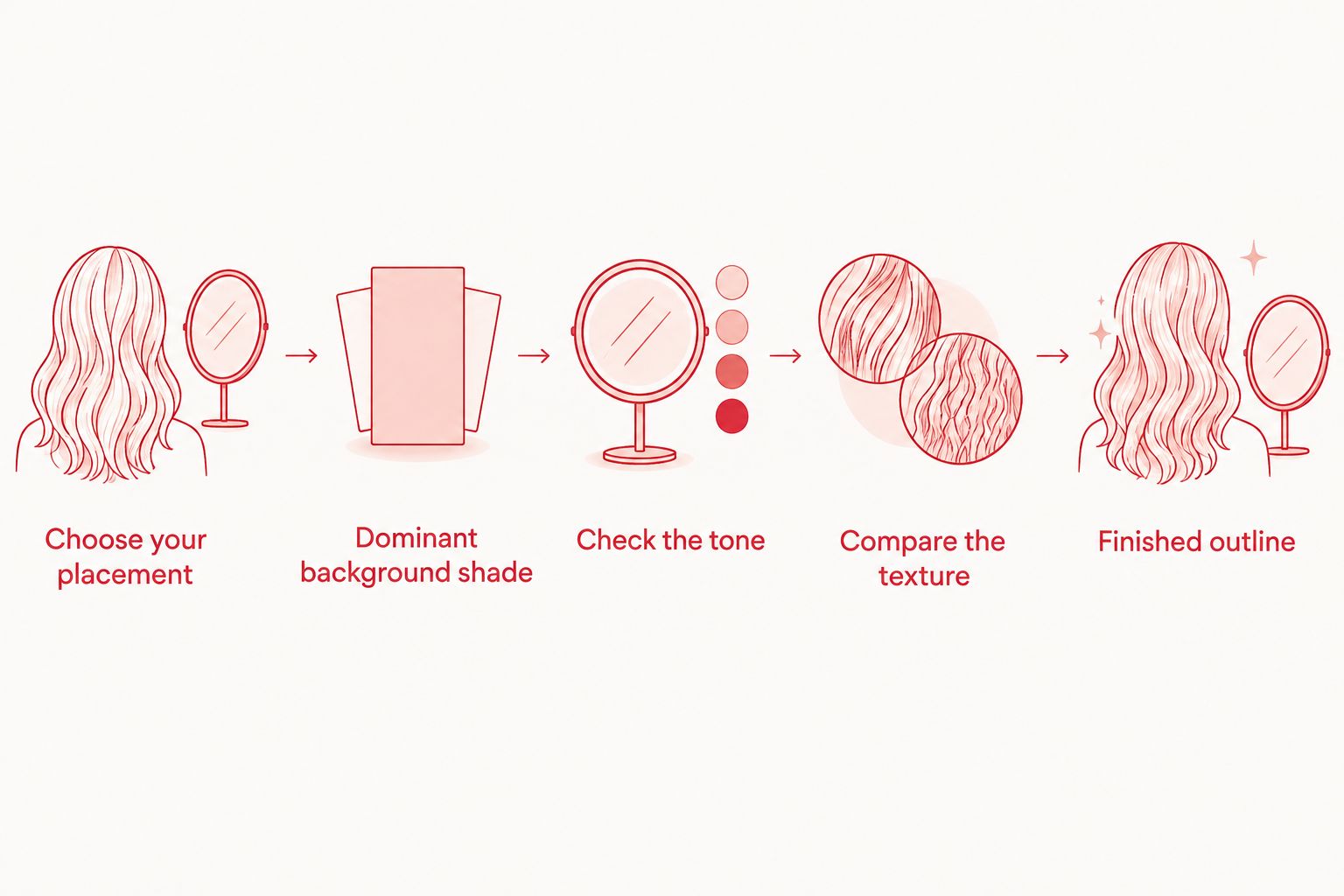
Use this sequence before choosing a synthetic bun. You do not need perfectly uniform hair color; you need a hairpiece that sits comfortably within the color pattern of your updo.
- Choose your placement. Gather your hair where you actually want the bun: low at the nape, at the middle of the back of your head, or higher. Leave it arranged while you assess the color.
- Find the dominant background shade. Look at the hair directly surrounding the gathered base. Decide whether that area reads mostly dark, evenly mixed, or mostly light.
- Check the tone. Notice whether your lighter strands look cool and silvery or warmer and creamier. Compare the darker strands too; brown-grey and charcoal-grey create different overall impressions.
- Compare the texture. Look for a smooth finish if you want a neat outline, or a tousled finish if you want visible movement. Texture does not correct a color mismatch, but it changes how the join looks.
- Check the finished outline. Hold the hairpiece beside the planned base before attaching it. Compare the join, the outer edges, and the back view rather than judging only the front.
Take 2 photos: one from the side and one from the back. Keep your gathered hair and the hairpiece in the same frame, without a color-changing filter. These views let you inspect the boundary that is difficult to see in a front-facing mirror.
A useful stopping rule is to check whether the bun looks noticeably warmer, lighter, or darker than the hair touching it. If the boundary draws your eye before the hairstyle does, compare another shade rather than trying to hide the difference with extra fluffing.
Grey, silver, and salt-and-pepper: what should you compare?
Grey and silver are shade descriptions, not a universal color standard. In 2026, use the actual shade images and product details rather than expecting the same name to mean the same color across different hairpieces.
Salt-and-pepper describes a mixture of darker and lighter strands. A pale silver bun can match the lightest strands but still look separate from a darker gathered base.
| Shade direction | Best for | What to check | Main drawback |
|---|---|---|---|
| Dark-and-light grey blend | Hair with a visible mixture around the bun base | Whether the darker strands resemble your own background color | The blend can be too dark beside mostly silver hair |
| Cool silver or pale grey | Hair that looks predominantly cool and light at the attachment area | Whether the hairpiece looks much brighter than the gathered hair | A pale bun can contrast sharply with a dark base |
| Warmer grey or silver-blonde | Hair with creamy or warmer-looking light strands | Whether the warmth matches rather than adding a yellow-looking contrast | Warmth can stand out against cool charcoal and silver |
Do not choose silver simply because you have some silver hair. Choose the overall color impression that appears where the hairpiece will sit.
If your hair changes noticeably from front to back, prioritize the back for a low bun. For a higher bun, gather your hair into that position first: lifting it changes which strands surround the attachment point.
Choose a bun texture that supports your shade match
A messy bun and a straight bun solve different styling problems. Neither is automatically the better color match, and neither should be chosen on texture alone.
A tousled shape gives you separated strands and a less uniform outline. A straight shape gives you a smoother finish, making the transition between your hair and the hairpiece easier to inspect.
| Hairpiece | Best for | Supported benefit | Trade-off to consider |
|---|---|---|---|
| Messy Bun Hair Piece – Curly Synthetic Hair Bun | A fuller-looking, textured updo | A synthetic curly bun designed to add volume | A curly finish is not the right choice if you want a smooth outline |
| Straight Synthetic Hair Bun Scrunchie | A smoother-looking everyday bun | A lightweight, clip-free synthetic scrunchie that adds fullness | A smooth finish does not disguise a strong shade mismatch |
Apexhairs synthetic bun hairpieces are best for women who want fuller-looking everyday updos without changing their own hair color. The benefit is styling volume; these hairpieces do not regrow hair or treat hair loss.
Choose your texture, then confirm the exact shade shown for that selection. The product names below identify the bun styles, not a guarantee that a particular grey blend matches your hair.


Why a grey hair bun looks different once you put it on
A shade that looks promising on its own needs another check against your actual hairstyle. These factors explain what to inspect when the match changes after attachment:
- Placement: A low bun sits beside different strands than a high bun. Judge each position separately.
- Dark-and-light balance: Matching the silver strands alone leaves the darker background out of the comparison.
- Warmth: A creamy light shade and a cool silver shade can have similar brightness but different tones.
- Texture: Curls create a different pattern of highlights and shadows than a smooth bun.
- Lighting and photography: Colored indoor light, filters, and screen settings make photographs an imperfect shade reference.
For your 2026 comparison, keep the lighting consistent. Compare your hair and the hairpiece together near a window, away from direct sun, instead of comparing a bathroom selfie with a product photo viewed elsewhere.
If you are choosing online, inspect the selected shade rather than relying on the first image. A photograph of another color shows the shape but does not establish what your chosen shade will look like.
How do you attach and blend a synthetic bun?
Build a comfortable base before adding fullness. The hairpiece should sit securely without requiring you to pull your own hair painfully tight.
For a scrunchie-style bun, use the following sequence, checking the item's instructions for its intended attachment method. A clip-in bun or claw-clip ponytail needs its own attachment instructions, not the same wrapping process.
- Gather your hair gently. Make a ponytail at the position you chose during shade matching. Adjust the tension until the base feels secure but comfortable.
- Arrange your own lengths. Tuck or shape them so they do not protrude unevenly through the intended bun outline.
- Position the hairpiece. Follow its instructions for wrapping or securing the scrunchie around your base. Stop and reposition if it pulls.
- Shape the finish. Separate a messy bun gently with your fingers, or arrange a straight bun into a smoother outline. Avoid forcing the fibers into a texture they do not have.
- Check the join. Look from the side and back, then turn your head gently. Reposition a visible gap rather than tightening everything further.
Use 2 mirrors if you cannot comfortably see the back of your head. One shows the front; the other lets you inspect the attachment area and the boundary between your own hair and the bun.
For thin or fine hair, start with a compact base and avoid pulling it tighter simply to make it look larger. The hairpiece supplies the fuller outline. If your hair is thick, the same shade checks apply, but make sure your own gathered lengths fit neatly within the finished style.
Do not use hot tools unless the specific hairpiece instructions permit them. Synthetic construction alone does not establish heat tolerance, and a familiar styling routine for your natural hair is not automatically suitable for the bun.
Should a grey hair bun match your roots or your ends?
A grey hair bun should match the hair touching it most closely. For a low updo, that usually means checking the gathered back section rather than making the decision from your front roots or loose ends alone.
Gather your hair first. Then compare 3 features: tone, dark-and-light balance, and texture at the planned attachment area.
Is a messy bun better than a smooth bun for salt-and-pepper hair?
A messy bun is better for a deliberately tousled finish; a smooth bun is better for a neat outline. Neither texture corrects an obvious color mismatch.
Start with the shade match, then choose the finish you prefer. You do not need to wear your hair messy just because it contains several grey tones.
Can you wear a grey bun if your hair is not thin?
You can wear a grey bun with fine, medium, or thick hair. Choose it for the updo shape you want, then check that the attachment accommodates your gathered hair comfortably.
A fuller-looking style is not only for thinning hair. The same placement and shade checks work when your goal is simply easier everyday styling.
FAQ
How do I match a grey hair bun to salt-and-pepper hair?
Match a grey hair bun to the hair surrounding your gathered updo. Compare the dark-and-light balance, warm or cool tone, and texture in indirect daylight before attaching it.
Should I choose silver or a mixed grey bun?
Choose silver when the attachment area looks predominantly cool and light; compare a mixed grey when darker strands remain prominent. The shade name alone does not establish a match.
Can I wear a grey bun with dark roots?
You can wear a grey bun with dark roots, but check the hair directly beside the bun. A very pale hairpiece creates a visible contrast if the surrounding gathered hair is much darker.
What should I check before choosing a grey bun online in 2026?
Check the selected shade images, attachment method, and care instructions before choosing a grey bun online in 2026. Compare the pictured blend with your gathered hair rather than relying on the product's first image.
Are Apexhairs bun hairpieces only for women with thinning hair?
Apexhairs bun hairpieces are also suitable for women seeking an everyday updo or added styling volume. Choose the shape and attachment for your own hair, whether it is fine, medium, or thick.
Can I use a curling iron on a synthetic grey bun?
Use a curling iron only when the specific hairpiece instructions explicitly permit heat styling. Synthetic hair is not automatically heat-safe.
Why does my grey bun look different indoors?
Indoor lighting changes how you see the bun's warmth and brightness. Compare your hair and the hairpiece together in indirect daylight, then check the finished style in the lighting where you will wear it.
One last thing
The lightest strand is not always your best matching reference. A bright silver strand near your face can pull your choice toward a bun that looks too pale at the back.
For your final 2026 check, gather your hair, look away briefly, and then judge the whole updo rather than searching strand by strand. If your eye goes straight to a color boundary, revisit the shade before changing the styling.


Leave a comment