
How to match a blonde bun to ash, honey or highlighted hair
Match a blonde bun to the hair surrounding your updo: choose a cool, muted tone for ash blonde, a golden tone for honey blonde, and a blend that echoes both light and dark strands for highlighted hair. Compare your hair and the hairpiece in daylight before choosing; matching the ends alone can leave a visible color change where the bun attaches.
- Match a blonde bun to the hair around its attachment point, not just your lightest ends.
- Ash blonde needs cool tones; honey blonde needs golden tones; highlighted hair needs a balanced blend.
- Apexhairs synthetic bun hairpieces suit women seeking fuller-looking updos without permanent extensions.
- Compare grey and silver separately from blonde: similar lightness does not guarantee a matching undertone.
Why this matters
A bun can look right beside loose hair and look different once you pull that hair back. Your roots, darker underneath layers, and lighter ends do not necessarily contribute equally to an updo. Judge the shade with your hair arranged the way you plan to wear it.
Color is only part of the result. If your base moves, the join becomes harder to hide; use this guide to stop a messy bun hairpiece slipping on thin hair alongside your shade check.
Apexhairs synthetic bun hairpieces are best for women who want fuller-looking updos without permanent extensions. The right shade helps the added hair blend, but it does not replace a secure, comfortable attachment.
How do you match a blonde bun to ash, honey or highlighted hair?
Start with undertone, then compare lightness, then check how the colors sit together in an updo. A pale golden bun is not the same match as a pale ash bun, even when both look equally light.
Use this 2026 shade checklist as a starting point. Shade names help narrow your search; the actual color beside your gathered hair decides the match.
| Your hair color | Best for your starting comparison | What to look for | Main limitation |
|---|---|---|---|
| Ash blonde | Cool, muted blonde tones | Beige-grey or subdued blonde without a strong golden cast | An overly silvery piece can look separate from beige-blonde hair |
| Honey blonde | Warm, golden blonde tones | Gold that resembles the warmth around your bun base | A cool ash piece can look grey beside warm hair |
| Highlighted blonde | Blended blonde tones | Light strands and darker strands that echo your gathered hair | Matching only the brightest highlight can make the bun look too pale |
| Blonde mixed with grey | Blonde-grey blends | A balance of blonde warmth and visible grey | A solid blonde can miss the grey running through your hair |
| Predominantly silver hair | Cool silver or grey tones | A similar balance of brightness and coolness | A yellow-toned blonde can create an obvious contrast |
Follow this shade-matching sequence
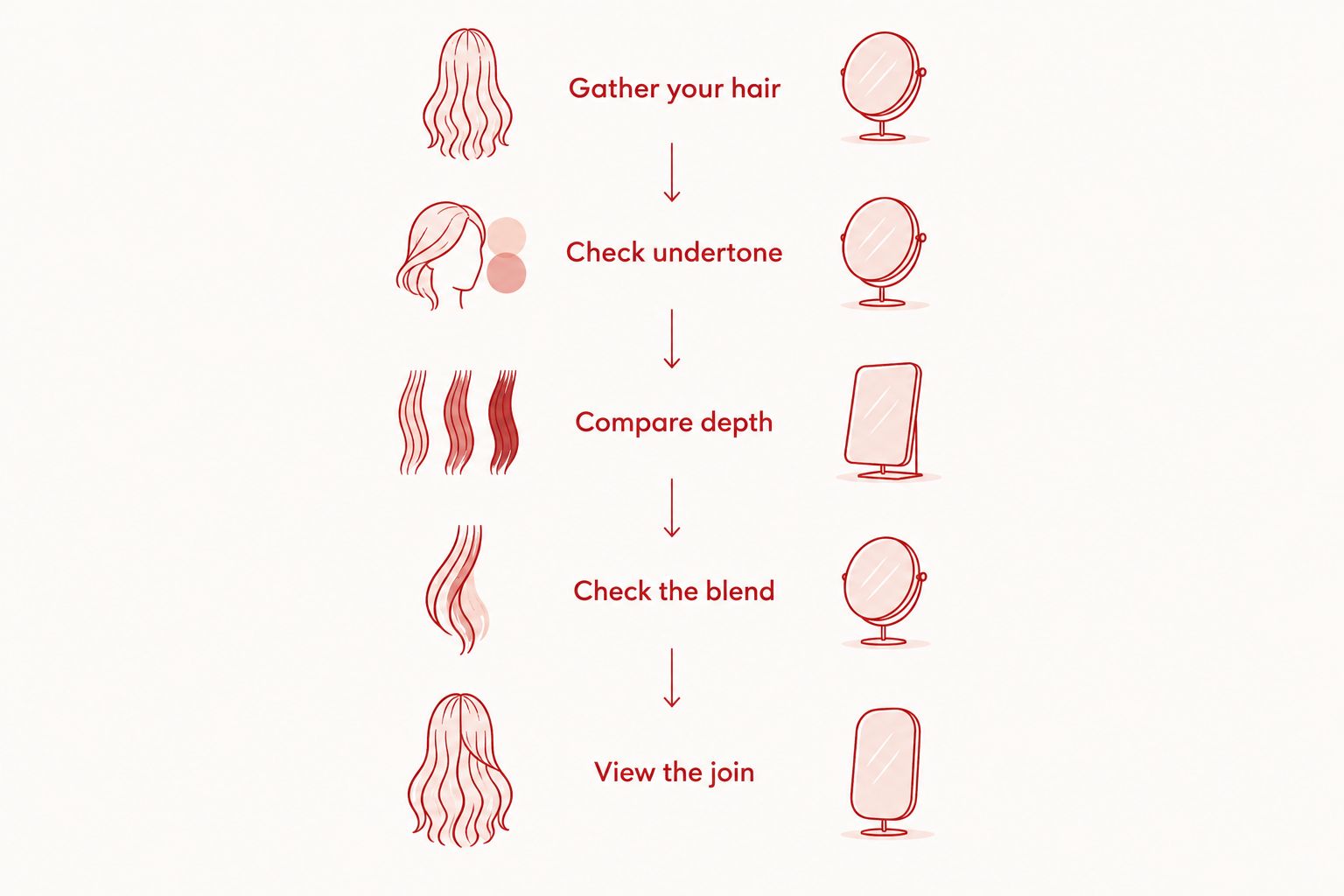
- Gather your hair. Put your hair into your intended ponytail or bun position. Look at the hair immediately above, below, and beside the base.
- Check undertone. Decide whether that area looks cool and muted, warm and golden, or mixed. Ignore the shade name until you have made this comparison.
- Compare depth. Look for a piece that is similarly light or dark overall. A matching undertone does not compensate for a bun that is much brighter than the surrounding hair.
- Check the blend. For highlighted hair, compare the balance of lighter and darker strands rather than searching for a single perfect blonde.
- View the join. Hold the piece beside the gathered hair and check from the back and both sides. Keep your own hair and the hairpiece under the same light.
Take 2 reference photos if you are comparing shades online: one of your loose hair and one of your gathered hair in daylight. Keep filters off. The gathered-hair photo is the more useful reference for an updo because it shows the area the hairpiece must blend with.
Matching a bun to ash blonde hair
Ash blonde has a cool, muted appearance rather than an obvious golden glow. Start by comparing cool blonde descriptions, but do not assume every product labeled ash will match your hair.
Check the hair at your bun base against the piece. If your hair looks beige and the piece looks distinctly grey, the difference still matters. Choose the cool tone that resembles your hair, not the coolest tone you can find.
For a softer everyday finish, compare the texture too. Loose, irregular strands break up the outline of a bun, while a smoother finish creates a more defined boundary. Neither fixes the wrong shade; texture is a styling choice after the color check.
Matching a bun to honey blonde hair
Honey blonde calls for visible warmth. Look for a golden appearance that belongs beside your pulled-back hair, rather than choosing the palest blonde because it seems close in brightness.
Hold the hairpiece near the nape as well as the top of your ponytail. If your underneath layers are darker, those layers can make a very light bun stand out. Match the overall updo, not one bright strand near your face.
When reviewing photos in 2026, compare the candidate shade across the available product images instead of relying on a single thumbnail. Screens and lighting affect what you see, so use the images to narrow your choice rather than treating them as an exact color sample.
Matching a bun to highlighted blonde hair
Highlighted hair contains contrast. Your best starting point is a blended piece whose lighter and darker strands resemble the mix visible around your bun.
Pull your hair back before deciding which color dominates. Face-framing highlights can look much brighter than the back of your head, and those bright sections are not always beside the hairpiece. A bun matched only to those highlights can look disconnected from darker roots.
Use 3 viewing angles for your final check: back, left side, and right side. Look for a consistent transition at the attachment point, not a perfect match to every individual strand. If the contrast stays obvious from each angle, reconsider the shade before trying to hide it with extra styling.
Matching blonde hair that includes grey or silver
Grey and silver are not interchangeable with pale blonde. Grey describes hair that has lost pigment; silver usually describes its bright, cool-looking appearance. Blonde can still carry noticeable beige or yellow warmth.
For mixed blonde and grey hair, compare how much warmth remains near the bun base. A blended shade is a useful starting point when both colors are visible. For predominantly silver hair, focus on coolness as well as brightness.
Do not choose a blonde-grey piece solely because grey appears in the name. Check the pictured blend and the selected shade details. The same product type can be offered in different colors, and a product title does not establish the exact shade you are viewing.
Choose the bun texture after you choose the shade
Apexhairs bun hairpieces include synthetic scrunchie styles with different finishes. The product types below help you compare shape and texture; confirm the selected color separately before making your choice.
| Hairpiece | Best for | Useful feature stated in the product information | Trade-off to consider |
|---|---|---|---|
| Small Messy Bun Hair Piece – Curly Synthetic Scrunchie | A small, curly bun style | Synthetic scrunchie construction and a curly finish | Curly texture will not create the same finish as a straight bun |
| Straight Synthetic Hair Bun Scrunchie | A smoother-looking updo | Straight synthetic hair designed to add volume and fullness | A smooth outline makes a shade difference harder to disguise |
| Synthetic Messy Bun Hairpiece Scrunchie | A tousled updo with added volume | A synthetic scrunchie described as lightweight and clip-free | A deliberately tousled finish is not the same as a sleek bun |
If you want a loose ponytail rather than an updo, compare ponytail extensions separately. More length does not solve a bun shade mismatch, and a ponytail places the added hair against different parts of your own hair. Choose the hairstyle first so you can assess its actual blending area.
Attach and style your blonde bun without hiding a bad match
Build a secure base with your own hair before adding the hairpiece. Follow the attachment instructions for the particular piece; a scrunchie and a clip-in bun do not attach in the same way.
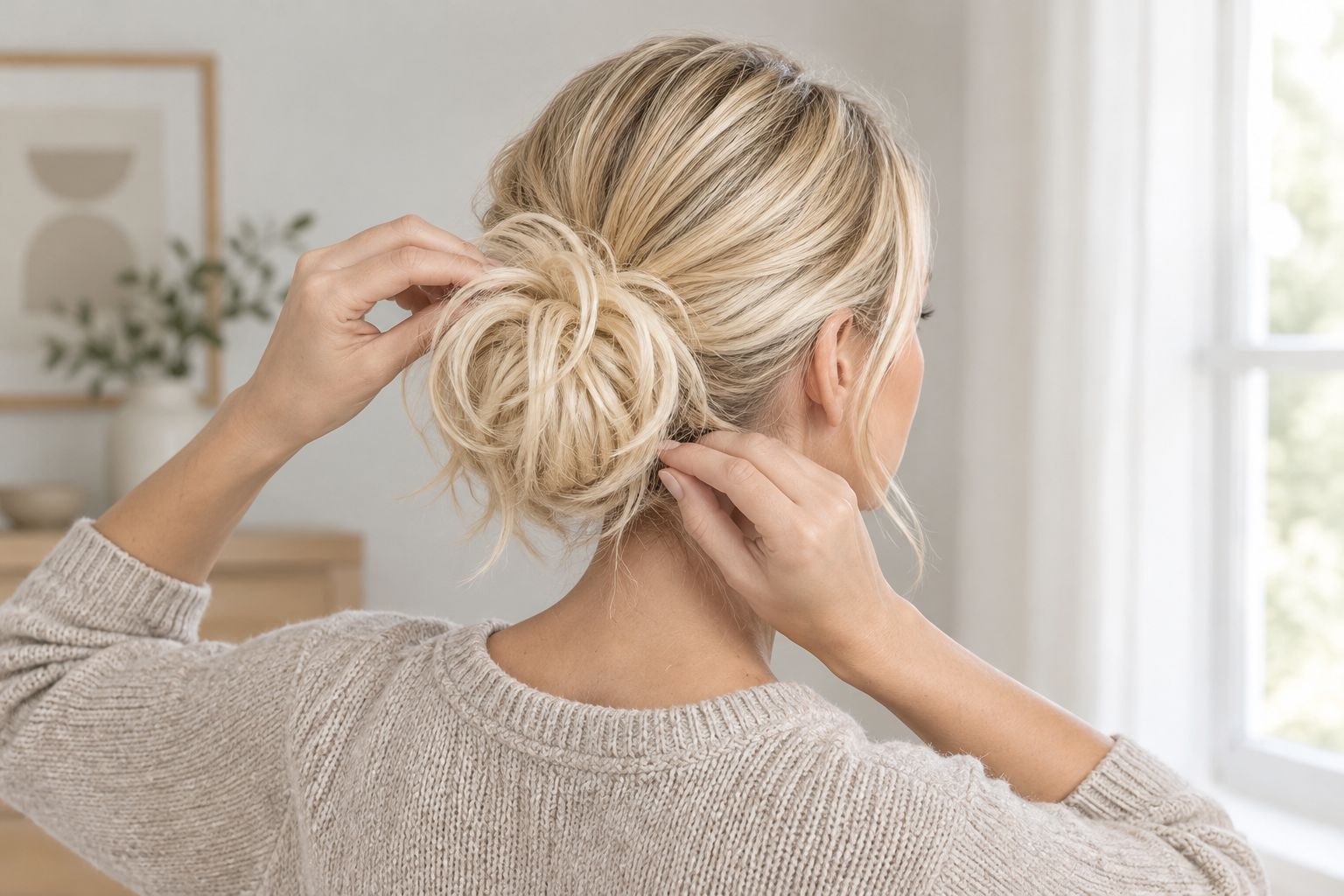
- Set the position. Choose a low, middle, or high placement and gather your hair there. Confirm the shade again at that position.
- Secure your base. Tie your own hair comfortably. For a bun style, arrange it into a compact base that the hairpiece can sit around.
- Attach the piece. For a scrunchie-style bun, fit it around the base according to its instructions. For a clip-in style, follow the stated fastening method rather than copying a scrunchie technique.
- Arrange the strands. Spread the added hair around the base and position loose strands where they soften the join. Keep the attachment covered without pulling hard on your own hair.
- Check comfort. Turn your head and inspect the style with a mirror. If it tugs or feels unstable, remove it and reset the base rather than tightening everything repeatedly.
If you have thin hair, favor a comfortable base over a very tight one. If your hair is thick, keep the base compact enough for the attachment to sit as intended. In either case, stop if the hairstyle pulls or hurts.
These synthetic scrunchie options give you a curly-versus-straight comparison after your shade and attachment checks. Their styling benefits are cosmetic: fuller-looking hair does not mean hair regrowth or treatment for hair loss.


Why a blonde bun match varies
Your 2026 shade check should account for more than the word blonde. These factors explain why a piece can look convincing in one comparison and noticeably different in another:
- Undertone: Cool ash and warm honey remain different even at similar lightness levels.
- Color depth: A noticeably lighter or darker bun creates contrast at the join.
- Highlight balance: The proportion of bright and dark strands changes the overall appearance.
- Grey content: Blonde warmth and cool grey need separate attention in mixed hair.
- Lighting: Daylight and indoor lighting can change how you perceive warmth and brightness.
- Bun placement: Moving the bun changes which parts of your own hair surround it.
Check under 2 lighting conditions: daylight and the indoor lighting where you expect to wear the style. Keep both the piece and your hair in the same light so you are comparing them fairly.
Should your blonde bun match your roots or your ends?
Your blonde bun should match the visible hair around its attachment point. Roots matter when they surround the base; ends matter when they form the visible bun or wrap around it. Neither is automatically the right reference for every hairstyle.
Can you use a silver bun with ash blonde hair?
A silver bun suits ash blonde hair only when the coolness and brightness blend beside your gathered hair. Silver can look much greyer than beige ash blonde, so compare the actual tones rather than assuming both belong to the same shade family.
Can you change a synthetic bun's color after buying it?
Do not use regular hair dye or bleach to correct a synthetic bun's shade. Synthetic fibers differ from human hair, and chemical coloring is not a dependable matching method. Choose a closer shade instead, and follow the product's care instructions for any styling treatment.
Keep the shade and texture looking consistent
For your 2026 everyday routine, follow the hairpiece's washing and detangling instructions and store it without crushing its shape. Separate tangled strands gently rather than pulling through the attachment.
Before using a hot tool on an Apexhairs synthetic bun hairpiece, check its specific care guidance. Synthetic does not establish heat compatibility, and a color mismatch is not a reason to experiment with heat or chemicals.
FAQ
What's the easiest way to match a blonde bun to my hair?
Match a blonde bun to the hair around your gathered bun base in daylight. Compare undertone first, then overall lightness and the mix of lighter and darker strands.
How do I know whether my blonde hair is ash or honey?
Ash blonde looks cool and muted, while honey blonde looks warm and golden. Check your hair in daylight without a filter, especially around the area where the bun will attach.
What's the best blonde bun shade for highlighted hair?
A blended blonde bun is the best starting point for highlighted hair when its light and dark strands resemble your gathered hair. Matching only your brightest highlight can leave the bun too pale beside darker sections.
Will a blonde-grey bun match silver hair?
A blonde-grey bun matches silver hair only when its warmth and brightness blend with your hair. A blend containing noticeable golden blonde can contrast with a cool silver base.
Is a messy bun better than a straight bun for blending?
A messy bun creates a less defined outline, while a straight bun gives a smoother finish. Neither corrects a strong color mismatch, so choose the shade before choosing the texture.
Can I wear a bun hairpiece if my hair isn't thin?
You can wear a bun hairpiece for everyday styling even if your hair isn't thin. Make a compact, comfortable base and choose an attachment that fits your intended hairstyle.
How do I stop a blonde bun from looking separate from my hair?
Check the shade at the attachment point and arrange the strands to cover the join. If the color difference remains obvious, choose a closer shade instead of tightening the style or adding more styling products.
One last thing
Before choosing an Apexhairs bun hairpiece in 2026, compare the shade with your hair pulled back—not just with a favorite photo of your loose hair. The most useful match is the one beside the bun base. That small change in your checking routine helps you judge the hairstyle you will actually wear.


Leave a comment