
Why do fake hair buns look too bulky, and how can you fix it?
Fake hair buns look too bulky when the hairpiece adds more width or height than you want, sits over a large natural bun, or has curls pushed outward instead of arranged around the base. Fix the shape by making your own bun flatter, positioning the hairpiece close to your head, and tucking excess strands inward without pulling the attachment tighter. If the outline still looks oversized, choose a smaller or smoother hairpiece rather than cutting synthetic fibers or applying unapproved heat.
- Fake hair buns look less bulky when you flatten the natural bun underneath and tuck excess strands inward.
- Apexhairs synthetic bun hairpieces suit women seeking added volume for everyday updos; choose the shape before the shade.
- Curly bun hairpieces add a fuller outline; straight bun scrunchies offer a smoother finish.
- Match grey or silver hair at the attachment area, then check the finished bun from the side.
Why do fake hair buns look too bulky, and how can you fix it?
Fix the foundation before replacing the hairpiece. Your natural bun and the added hair form the finished shape together. A large bun underneath a full curly piece creates more projection than either would alone.
The Messy Bun Hair Piece – Curly Synthetic Hair Bun is described as adding volume to thin, flat hair. That added fullness is useful when you want a bigger updo; it needs careful placement when your goal is a compact bun.
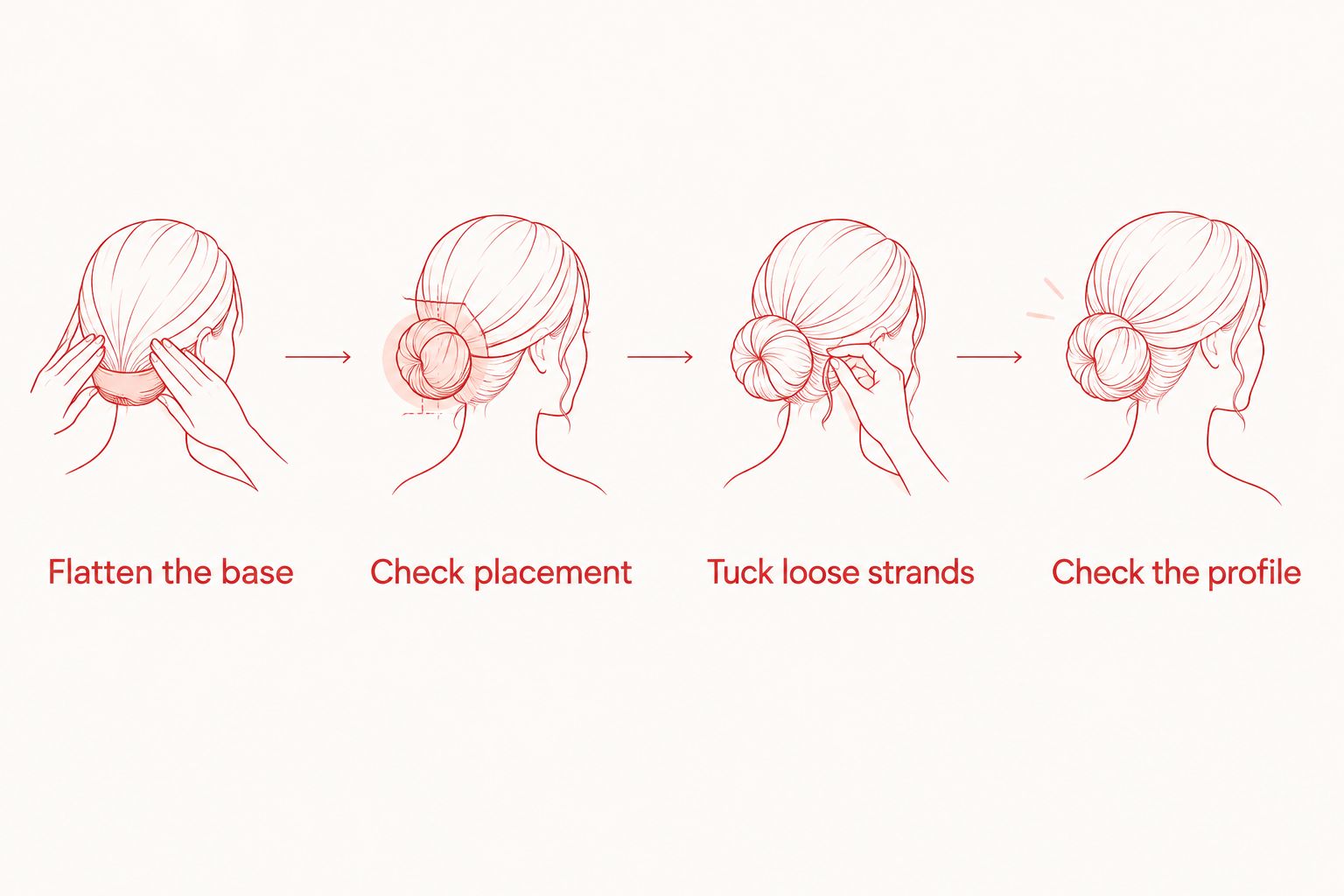
Use this practical troubleshooting order for your 2026 styling routine:
- Flatten the base. Remove the hairpiece and rebuild your natural bun closer to your head, without tightening it until it pulls.
- Check placement. Reattach according to the hairpiece's instructions, making sure the base sits against your natural bun rather than above it.
- Tuck loose strands. Guide the longest or widest sections around the base and secure them with suitable hairpins if needed.
- Check the profile. Look from the side and back, not just straight ahead.
- Reconsider the shape. If the piece remains larger than you want, switch to a smaller bun or smoother texture.
Stop if you feel pulling or discomfort. A tidy outline does not require a tight attachment.
Why this matters
A fuller-looking updo and an oversized updo are different styling goals. You can want extra volume without wanting a bun that dominates your hairstyle, whether your natural hair is thin, medium, or thick.
The useful question in 2026 is not simply whether a hairpiece adds volume. It is whether that volume sits where you want it. Shape, placement, and blending matter more than repeatedly tightening the base.
Apexhairs synthetic bun hairpieces are best for women seeking added volume for everyday updos. The trade-off is that added hair changes the outline, so choose a shape you can arrange comfortably around your own bun.
Choose a bun shape that matches your goal
Do not choose only by color. Check whether you want a compact curly bun, a smooth outline, or loose texture before you compare shades.
The options below suit different styling goals. These are shape comparisons, not claims that one hairpiece works better for every woman.
| Option | Best for | Useful feature | Trade-off |
|---|---|---|---|
| Small Messy Bun Hair Piece – Curly Synthetic Scrunchie | A smaller curly-bun option | Identified as a small, curly synthetic scrunchie | Curly texture still needs arranging if you want a close outline |
| Straight Synthetic Hair Bun Scrunchie | A smoother-looking bun | Described as lightweight and clip-free, with a smooth finish | A smooth texture needs blending if your natural hair is visibly curly |
| Curly bun hairpiece | A fuller, textured updo | Adds visible texture around the bun | Outward-facing curls can make the outline wider |
| Ponytail extension | A hanging style rather than a rounded updo | Changes the silhouette instead of building a bun | Does not provide the same tucked-up shape as a bun hairpiece |
A ponytail extension is a different styling choice, not a guaranteed lighter or smaller substitute. Check the individual attachment and shape before choosing one.
Smaller curly bun: keep the texture, reduce the outline
A smaller curly bun is the practical choice when you like a messy finish but do not want a large rounded shape. Start by arranging the curls around the base rather than lifting every strand outward.
The Small Messy Bun Hair Piece – Curly Synthetic Scrunchie fits that smaller-bun brief by its stated product type. Do not assume a particular shade from the page address; check the shade selection and product photos before choosing.
Straight bun scrunchie: choose a smoother finish
A straight bun scrunchie suits you when loose curls are what make the hairstyle feel too wide. Smooth the visible sections around the base rather than fluffing them into a larger shape.
The Straight Synthetic Hair Bun Scrunchie is described as adding fullness with a smooth, natural-looking finish. It still adds hair, so flattening your natural bun remains part of the styling process.
Once you know which outline you want, compare the relevant hairpieces rather than buying another full bun and hoping tighter wrapping will solve the problem.


How to make a bulky bun look smaller without cutting it
Work on the shape while the hairpiece is attached loosely enough to adjust comfortably. If the attachment itself needs changing, remove the piece first rather than dragging it across your hair.
Flatten the base
Gather your hair into the position you want, then form a compact bun instead of a tall mound. Keep the base comfortable; pulling harder does not remove the volume of the hair inside it.
For thin hair, avoid building extra padding underneath when the hairpiece already supplies the fullness you want. For thicker hair, spread the natural bun into a flatter shape rather than stacking its coils on top of each other.
Check placement
Attach the hairpiece using the method intended for that particular piece. A scrunchie attachment and a clip attachment need different handling; do not treat them as interchangeable.
Look for a visible gap between the hairpiece and your natural bun. Reposition the piece if it appears perched on top, and check that the attachment remains covered after adjustment.
Tuck loose strands
Find the sections that extend farthest beyond your preferred outline. Curve them around the bun and tuck their ends beneath neighboring strands, using suitable hairpins where needed without pinning against your scalp.
Keep some texture visible if you want a messy finish. The goal is a smaller shape, not a rigid ball with every curl pressed flat.
Check the profile
Use a handheld mirror with your main mirror to see the side and back. Notice whether the bulk comes from the hairpiece itself, the natural bun underneath, or a gap between them.
Check the outline again after gently turning your head. A shape that looks balanced only while you hold still needs another placement adjustment.
Why the finished bun shape varies
The same styling approach does not produce the same outline on every head of hair. For a useful 2026 fit check, separate these factors instead of treating every bulky-looking bun as a size problem:
- Natural bun size: The hair underneath contributes to the final height and width.
- Hairpiece shape: A smaller bun and a fuller curly bun create different outlines.
- Texture direction: Curls arranged outward look wider than curls tucked around the base.
- Attachment position: A piece sitting above the base projects farther than one positioned close to it.
- Shade contrast: A contrasting hairpiece looks more separate from your natural hair, drawing attention to its outline.
- Finish preference: A loose, textured updo needs more visible irregularity than a smooth, tucked bun.
Change the factor causing the problem. If the shade is wrong, flattening the bun will not improve the color match; if the base is tall, buying the same shape in another shade will not reduce its height.
How do you match grey or silver hair without making the bun stand out?
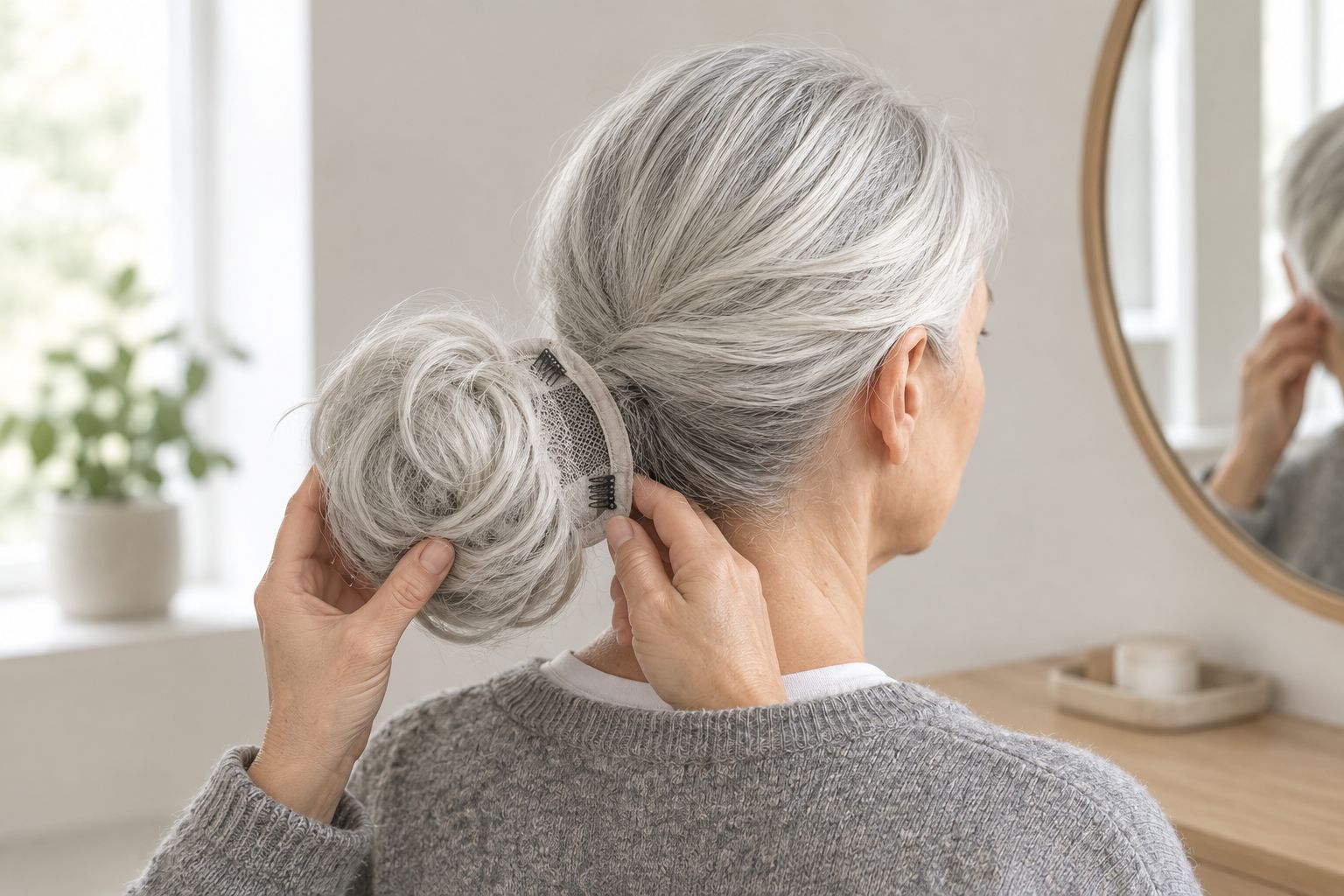
Match the hairpiece to the hair around the attachment point, not just a lighter front section. Grey can describe mixed light and dark strands, while silver often describes a lighter, cooler-looking shade; the names alone do not establish an exact match.
Compare product photos with your own hair in indirect daylight. Check both the overall lightness and whether the color looks warmer or cooler, rather than assuming every shade labeled grey will blend the same way.
If you have salt-and-pepper hair, look at the balance of dark and light strands. If your hair is mostly silver, check whether the piece looks noticeably darker, warmer, or more uniform than the hair surrounding it.
For your 2026 shade check, judge the finished updo as well as the loose piece. A close-up shade comparison helps, but the attachment area is where a mismatch becomes most visible.
Can you use fake hair buns if your hair is thin?
Fake hair buns can add visible fullness to a thin-haired updo, but your natural hair still needs a comfortable attachment. Keep the base compact and use the hairpiece's intended fastening method rather than pulling fragile hair tighter to support an oversized shape.
If a smaller base lets the piece slip, address the attachment before adding more hair or padding. Do not trade comfort for a fuller outline, and remove the piece if it pulls or hurts.
Should you cut a synthetic bun to make it smaller?
Try placement and tucking before cutting a synthetic bun. Cutting removes fibers permanently and can change the curl pattern's appearance or expose parts of the attachment.
If the hairpiece remains too large after adjustment, choose a smaller shape or ask a stylist experienced with synthetic hairpieces about alteration. Do not use a hot tool unless the instructions for that exact piece explicitly allow it.
FAQ
Why do fake hair buns look too big on me?
Fake hair buns look too big when the natural bun, hairpiece shape, or outward-facing strands create more height or width than you want. Flatten the base and tuck the widest sections inward before replacing the piece.
How can I make a messy bun hairpiece look more natural?
Make a messy bun hairpiece look more natural by matching the attachment-area shade, positioning it close to your natural bun, and arranging the strands around the base. Check the side and back as well as the front.
Is a straight bun scrunchie better than a curly bun for less bulk?
A straight bun scrunchie is better for a smooth outline, while a curly bun suits a textured finish. Neither removes the bulk of a large natural bun underneath, so adjust the base first.
Can I wear a bun hairpiece if I have thick hair?
You can wear a bun hairpiece with thick hair when the attachment fits comfortably and the finished shape suits your goal. Form a flatter natural bun to avoid stacking extra height underneath the piece.
How do I choose between grey and silver bun shades?
Choose grey or silver bun shades by comparing the product photos with your hair around the attachment area in indirect daylight. Shade names alone do not confirm the balance of light and dark strands or the color's warmth.
Can I straighten a synthetic bun with a flat iron?
Use a flat iron on a synthetic bun only if the instructions for that exact hairpiece explicitly permit heat styling. Choose a straight-textured piece instead when you want a smoother shape without heat.
Does a bun hairpiece help hair grow back?
A bun hairpiece changes the appearance of your hairstyle; it does not regrow hair or treat hair loss. Apexhairs sells synthetic hairpieces for added volume and coverage, not hair-loss treatment.
One last thing
Judge the bun from the side before adding another pin. A tall natural base can hide behind the hairpiece in a front-facing mirror, leaving you to fix the wrong part of the hairstyle.
Keep this 2026 styling rule simple: flatten first, position next, then tuck. If the outline is still too large, change the shape rather than increasing tension.


Leave a comment