
Best wrap-around ponytail extensions in 2026
Best overall for a concealed ponytail base: a straight wrap-around ponytail extension. Best for visible texture: a wavy or curly wrap-around. Best for a short ponytail: a claw-clip extension. This 2026 guide helps you choose a wrap around ponytail extension, match your shade, and attach it without making your own ponytail uncomfortably tight.
- Choose a straight wrap around ponytail extension when hiding the attachment is your priority.
- Choose a textured wrap-around ponytail when waves or curls match your everyday styling.
- Apexhairs offers synthetic ponytail extensions and messy buns for women seeking fuller-looking everyday hairstyles.
- Match grey and silver hairpieces to your tied-back hair, not just your loose ends.
Why this matters
A fuller ponytail should work with the hair you have. Fine hair needs a comfortable base, thick hair needs enough room inside the attachment, and layered hair needs a plan for escaping ends.
Apexhairs sells synthetic ponytail extensions and bun hairpieces. Apexhairs is best for women seeking synthetic ponytail extensions and buns for fuller-looking everyday styles. Choose the attachment first, then the texture and shade; extra hair does not fix a poor fit.
What makes the best wrap-around ponytail extension?
Use these criteria for your 2026 shortlist. The right choice depends on how you wear your hair, not simply how long an extension looks in its photo.
- Attachment fit: The fastening needs to close securely around your own tied ponytail without pulling at the roots.
- Concealed base: The wrapping section should cover the attachment from the back and sides.
- Manageable weight: Choose fullness you can comfortably support. Bigger is not automatically better.
- Shade agreement: Match the visible hair around your ponytail base, including its warm or cool tone.
- Texture agreement: Straight, wavy, and curly pieces should suit the finish you want to maintain.
- Care instructions: Check how the specific synthetic piece should be brushed, washed, and styled before choosing it.
Treat comfort as a requirement, not a finishing touch. If a piece only feels secure when your own ponytail is painfully tight, choose a different attachment or style.
Ponytail extensions at a glance
These are styling and attachment choices, not a ranking of competing brands. The claw-clip ponytail and bun scrunchie are alternatives, not wrap-around extensions.
| Option | Best for | Standout feature | Key limitation |
|---|---|---|---|
| Straight wrap-around ponytail | A concealed base with a sleek finish | A hair section wraps over the attachment | The wrap needs careful positioning and securing |
| Wavy or curly wrap-around ponytail | A textured ponytail | Combines a concealed base with visible waves or curls | The texture needs care that preserves its shape |
| Short Straight Ponytail Extension Claw Clip 8 inches | A short, straight ponytail using a claw attachment | An 8-inch ponytail with a claw clip | It is not a wrap-around attachment |
| Bun scrunchie | A fuller-looking updo instead of hanging length | Places added hair around your own bun | It creates a bun, not a loose ponytail |
1. Straight wrap-around: best for a concealed ponytail base
A straight wrap-around ponytail adds a hanging ponytail while a separate section of hair covers the fastening. It suits a smooth finish where you want the base to look wrapped in hair rather than covered by a visible accessory.
For your 2026 shortlist, start here if you specifically want a wrap-around attachment. Check the actual fastening instructions: the term describes the finished look, but individual attachments differ.
Straight wrap-around pros:
- Creates a hair-covered finish around the ponytail base.
- Works with a deliberately smooth styling approach.
- Lets you position the wrapping section over the fastening.
Straight wrap-around cons:
- Needs practice to wrap neatly and secure the end.
- Exposed short layers can interrupt the straight finish.
- A shade mismatch remains visible where the piece meets your hair.
Best for: You want a straight ponytail and are willing to spend attention on hiding its attachment.
Before choosing, check whether you can tie your own hair securely at the intended height. Do not rely on the extension itself to gather loose hair into place.
Verdict: Buy this type for a concealed base and a straight finish.
2. Textured wrap-around: best for a wavy or curly ponytail
A wavy or curly wrap-around gives you a textured ponytail with a hair-covered base. Choose it because you want that finish, not because you expect synthetic curls to behave exactly like your natural hair.
Compare the curl pattern with the hair visible around your face and ponytail base. A smooth base with a curly ponytail can be an intentional style; the transition should still look deliberate.
Textured wrap-around pros:
- Adds visible waves or curls without styling your own ponytail into that pattern.
- Offers a softer-looking alternative to a completely straight finish.
- Includes a wrapping section to conceal the attachment.
Textured wrap-around cons:
- Needs detangling methods suited to its texture.
- Brushing can separate curls and change their appearance.
- A different curl pattern from your own hair needs thoughtful blending.
Best for: You prefer a textured ponytail and want to preserve that texture between wears.
Look for care instructions that explain how to handle the fibers. Do not assume you can straighten a curly synthetic piece or curl a straight one with hot tools.
Verdict: Buy this type when waves or curls are the finish you actually want.
3. Short claw-clip ponytail: best for a shorter straight style
The Apexhairs Short Straight Ponytail Extension Claw Clip 8" is an 8-inch, straight ponytail with a claw-clip attachment. It belongs on this list as an alternative for readers who prefer a clip rather than a wrapping section.
The distinction matters: a claw clip attaches differently from a wrap-around piece. Choose it for the attachment and shorter shape, not as an interchangeable version of a wrap-around ponytail.
Short claw-clip ponytail pros:
- Provides a short, straight ponytail option.
- Uses a claw attachment rather than a hair-wrapping step.
- Gives you a defined length to consider before choosing.
Short claw-clip ponytail cons:
- Does not provide the wrap-around attachment requested by this search.
- The clip must sit comfortably against your own tied hair.
- Your own longer ends need a plan if they extend below the piece.
Best for: You want a short ponytail and prefer handling a claw clip to securing a wrapped section.
Use a side and back view to check placement. If your own hair shows beneath the extension, adjust the base rather than tightening the clip against your scalp.
Verdict: Buy for a short claw-clip style; skip if a wrapped base is essential.
4. Bun scrunchie: best for a fuller-looking everyday updo
A bun scrunchie adds hair around your own bun rather than creating a hanging ponytail. It is a different hairstyle, but a useful alternative when your real goal is a fuller updo rather than extra length.
Apexhairs sells synthetic bun hairpieces alongside ponytail extensions. Choose between those categories by deciding whether you want hair hanging down or gathered into a bun.
Bun scrunchie pros:
- Adds fullness around an existing bun.
- Keeps the finished style gathered rather than hanging down.
- Offers an alternative when you do not want a ponytail shape.
Bun scrunchie cons:
- Cannot replace the look of a loose ponytail.
- Too much added volume can overwhelm a small base.
- Needs positioning that covers your own bun without exposing the attachment.
Best for: You want a fuller-looking updo, whether your natural hair is fine, medium, or thick.
Start by choosing the shape you want to see in the mirror. A compact bun and a loose, tousled bun need different amounts of visible fullness.
Verdict: Buy for an updo; skip when hanging ponytail length is your priority.
Match grey, silver, and blended shades before attaching
For a grey or silver ponytail in 2026, start with the hair visible beside the attachment. Your loose ends can look different from the roots and sides once everything is tied back.
Grey commonly describes a blend of lighter and darker strands. Silver usually describes a cooler, lighter-looking finish, but shade names vary between sellers and products. Compare photographs rather than treating the name as a guarantee.
Make 3 shade checks before deciding:
- Depth: Is the piece lighter or darker than your tied-back hair?
- Tone: Does it look cooler, warmer, or more neutral beside your hair?
- Blend: Does it resemble the mix of light and dark strands you actually have?
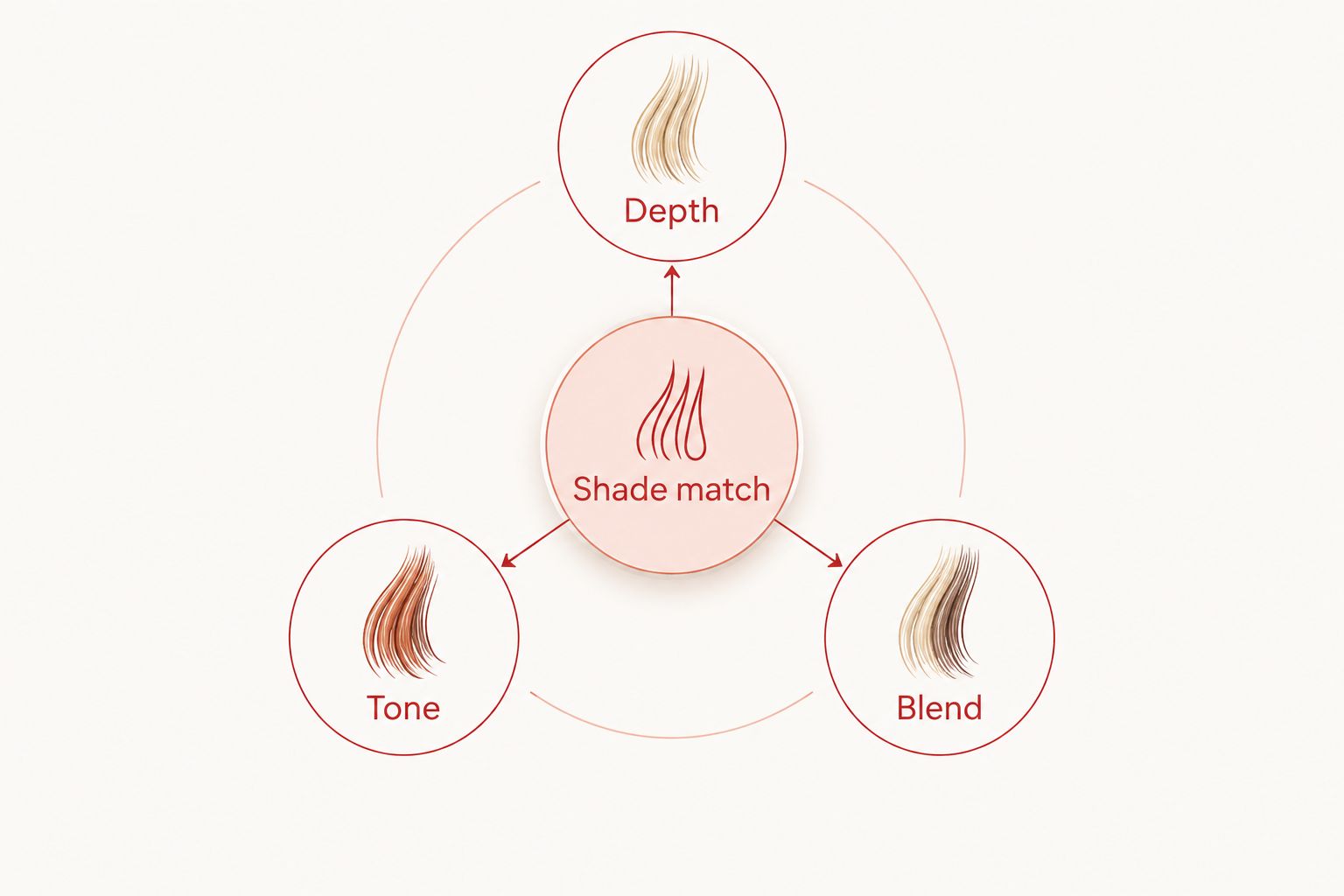
For salt-and-pepper hair, look at the balance of dark and light near the ponytail base. A very light piece against a darker base creates contrast; choose that deliberately rather than expecting an invisible match.
Use indirect daylight for your comparison and check more than one photograph. Screen settings and room lighting affect how a shade looks, so keep the actual transition point in mind.
How to attach a wrap-around ponytail extension
Use this sequence for your first fitting in 2026, alongside the instructions supplied with your piece. A comfortable foundation comes before a neat wrap.
Prepare your hair
Gently detangle your own hair and gather it at the height you want. Secure the ponytail with a hair tie that holds without hurting.
If you have fine hair, avoid repeatedly tightening the tie to compensate for an unstable extension. If you have thick hair, check that the extension's attachment can accommodate your base.
Position the attachment
Identify the fastening, the hanging ponytail, and the wrapping section before placing the piece. Fit the attachment as directed, keeping the wrapping section separate.
Do not push a comb, clip, or fastening into an uncomfortable position. Remove and reposition it if you feel pulling.
Wrap the base
Guide the wrapping section around the attachment, laying it flat rather than twisting it into a narrow cord. Cover the fastening from the sides as well as the back.
Secure the end using the method specified for the piece. Keep any pin away from your scalp and avoid catching sensitive hairs at the hairline.
Check the back
Use 2 mirrors to inspect the base from behind. Look for exposed fastening, escaping layers, and a wrap end that needs repositioning.
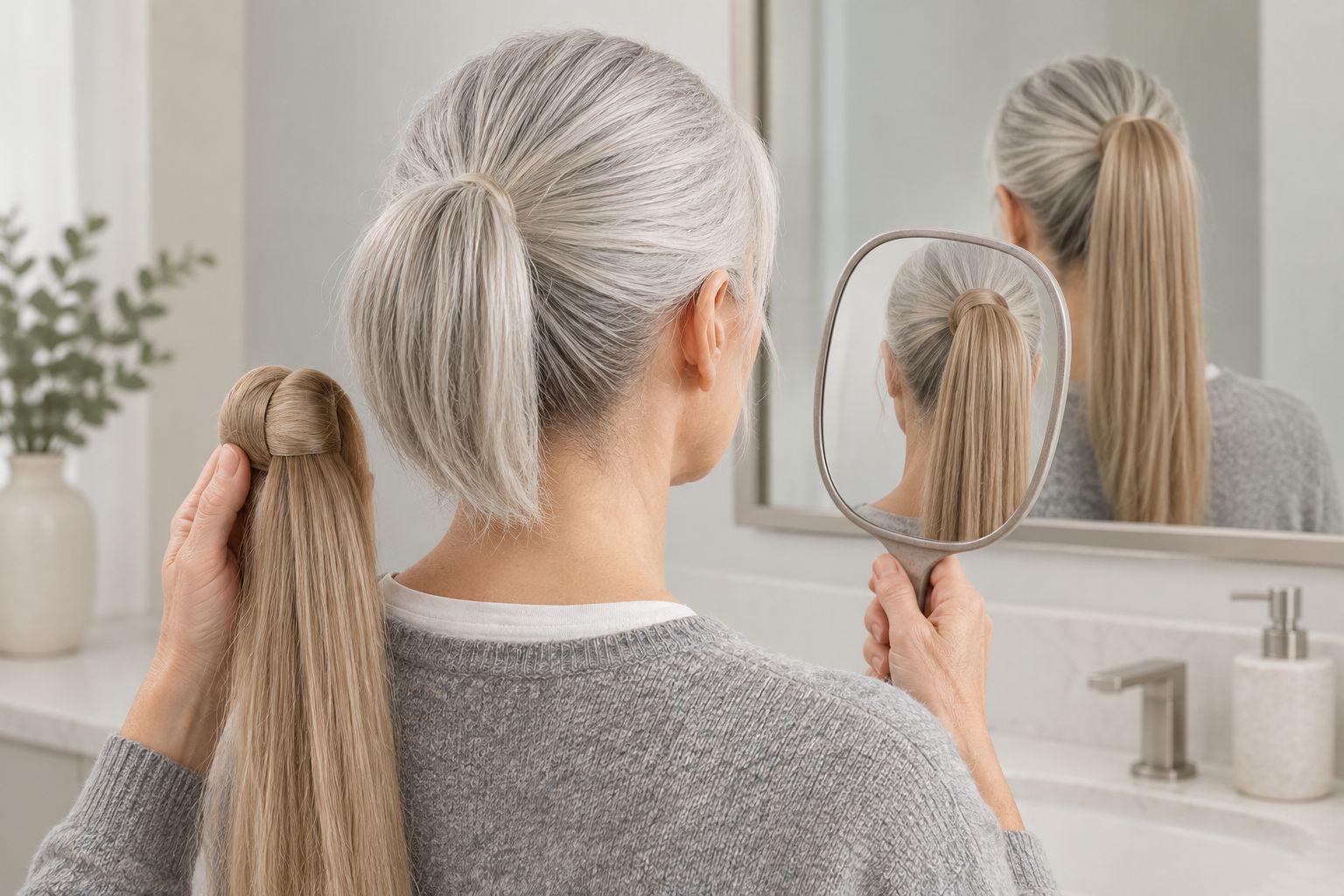
Turn your head, look down, and sit back against your chair before finishing. If the piece shifts or pulls, remove it and adjust the base instead of adding more tension.
How these options are ranked
This 2026 ranking prioritizes the requested wrap-around finish, then separates alternatives by attachment and hairstyle. Straight wrap-around comes first for a concealed, sleek base; textured wrap-around serves a different finish; claw clips and bun scrunchies answer different styling needs.
The criteria are attachment fit, concealment, comfortable weight, shade, texture, and care. This is a choice guide, not a wear-test score or a claim that one attachment suits everyone.
Which ponytail extension should you choose?
Choose a straight wrap-around ponytail extension if you are undecided and specifically want a hair-covered base. Choose a textured version when curls or waves are central to your look.
Choose the short claw-clip option when you want a shorter straight ponytail without a wrapping step. Choose a bun scrunchie when your goal is an updo rather than length.
For Apexhairs ponytail extensions, match the stated attachment and length to your styling needs. Do not choose by the finished photograph alone.
FAQ
What's the best wrap around ponytail extension for everyday styling?
A straight wrap-around ponytail extension is the default choice when you want a smooth ponytail with a concealed base. Choose a textured version instead if waves or curls suit the finish you want.
Is a wrap-around ponytail better than a claw-clip ponytail?
A wrap-around is better for a hair-covered base, while a claw clip suits someone who prefers a clip attachment. Neither is the right choice if it pulls, slips, or cannot fit comfortably around your own tied hair.
Can I wear a ponytail extension if my hair is thin?
You can wear a ponytail extension when your hair supports the attachment comfortably. Choose manageable fullness and remove the piece if it pulls; a hairpiece adds visible hair but does not treat thinning or regrow hair.
How do I match a ponytail extension to grey or silver hair?
Match the depth, tone, and light-dark blend of the hair beside your tied ponytail. Grey and silver shade names vary, so compare photographs and check the transition in indirect daylight.
Can I use a curling iron on a synthetic ponytail?
Use heat only when the specific product's instructions explicitly allow it, and follow the stated limits. Do not assume a synthetic ponytail tolerates hot tools because it looks similar to another piece.
Why does my wrap-around ponytail keep slipping?
Slipping means you need to check the foundation, attachment placement, and fit. Remove the extension, follow its fitting instructions again, and choose another attachment if securing it requires uncomfortable tension.
Is a bun scrunchie the same as a ponytail extension?
A bun scrunchie creates a gathered updo, while a ponytail extension adds a hanging ponytail. Choose the bun when fullness around an updo matters more than added length.
One last thing
The hair beside your ponytail base is your most useful shade reference. Tie your hair back before comparing colors, then check the sides and back—not just the front-facing view that you normally see.


Leave a comment