
Can a clip-in ponytail extension damage your hair?
Yes, a clip-in ponytail extension can damage your hair if its attachment pulls on your roots, catches strands, or repeatedly stresses the same area. Damage is not inevitable, but a comfortable fit, gentle removal, and breaks from tension matter more than how secure or full the finished ponytail looks.
- Can a clip in ponytail extension damage your hair? Yes—pulling, snagging, and repeated tension can cause damage.
- Apexhairs synthetic ponytail extensions and bun hairpieces add fullness; they do not treat hair loss.
- Choose an attachment your hair supports comfortably, and remove it if you feel pulling or soreness.
- A clip-free bun still needs a comfortable base ponytail; clip-free does not mean tension-free.
Can a clip-in ponytail extension damage your hair?
Yes. The main concern is tension on your own hair, not simply the presence of synthetic fibers. A tight base ponytail, an attachment gripping too little hair, or forceful removal can cause breakage. Repeated pulling can also contribute to traction alopecia—hair loss caused by tension.
The American Academy of Dermatology identifies tightly pulled hairstyles and extensions as potential causes of traction alopecia. Its practical warning applies here: a hairstyle that hurts is too tight. Persistent pulling can eventually cause lasting hair loss, so discomfort is not something to push through.
Start with the attachment rather than the finished look. This guide to putting on a claw-clip ponytail extension covers the fitting step; the checks below help you decide whether that fit feels right.
Why this matters
A fuller ponytail should not require a tighter ponytail underneath. That applies whether your hair is fine, thick, thinning, curly, straight, grey, or color-treated.
For your 2026 styling routine, make comfort the deciding factor. A style that photographs well but leaves your scalp sore is not a successful fit.
What actually causes the damage?
Several parts of the styling routine can create tension. Check the whole setup rather than blaming—or trusting—the attachment alone.
- Base tightness: Pulling your own hair into a very tight ponytail creates tension before the extension goes on.
- Added weight: The extension adds a load that your natural hair must support. Length alone does not tell you its weight.
- Attachment placement: A clip that pinches, catches loose strands, or pulls against a small section can create localized discomfort.
- Repeated placement: Wearing a pulling attachment over the same area repeatedly keeps stressing that area.
- Wear habits: Sleeping in the piece or leaving an uncomfortable style in place prolongs pulling and friction.
- Removal technique: Dragging a closed clip or tangled band through your hair can snap or snag strands.
Do not solve slipping by tightening everything until it hurts. Remove the piece, check the attachment, and rebuild the base gently. If the hairpiece still needs painful tension to stay put, choose a different setup or leave it off.
Which attachment makes sense for your everyday style?
No attachment type is automatically damage-free. A claw clip and a scrunchie hold differently, but either can become uncomfortable when the base is too tight or the hairpiece is poorly supported.
| Hairpiece or styling choice | Best for | Practical advantage | Limitation to check |
|---|---|---|---|
| Short Straight Ponytail Extension Claw Clip 8" | A short, straight ponytail look | Adds a ponytail using a claw-clip attachment | The clip still needs a comfortable, stable position; 8 inches is length, not a safety rating |
| Synthetic Messy Bun Hairpiece Scrunchie | A fuller-looking, tousled updo | Its clip-free scrunchie design avoids a claw-clip attachment | The scrunchie and your base bun can still pull if wrapped too tightly |
| Your own loose ponytail or bun | Giving attachment points a break | Leaves off the added hairpiece | Provides only the fullness of your natural hair |
Apexhairs synthetic hairpieces are best for women seeking fuller-looking everyday ponytails and buns, not a treatment for hair loss. Choose between styles by the look you want and the fit your hair comfortably supports.
An 8-inch ponytail and a 14-inch ponytail describe different lengths, not different levels of safety. You cannot judge weight, clip pressure, or suitability from those measurements alone. Check the actual attachment and your comfort instead of assuming shorter always means gentler.
How do you attach a ponytail extension without unnecessary pulling?
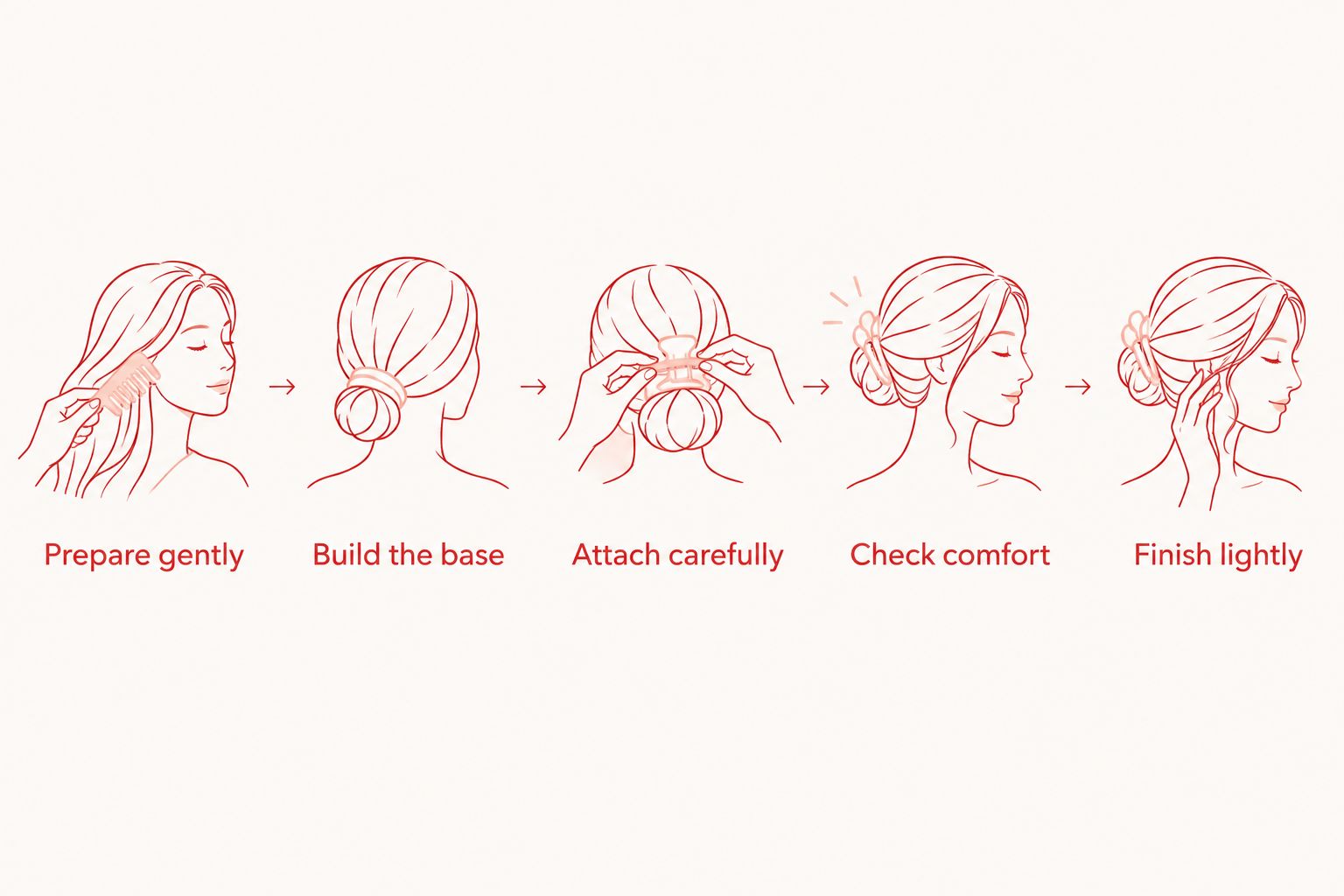
Use this 2026 fitting checklist before you commit to the finished style. Follow the instructions supplied with your particular attachment; claw clips, scrunchies, and other fasteners do not all attach the same way.
1. Prepare gently
Detangle your own hair before gathering it. Work through knots without yanking, and prepare the hairpiece separately according to its care instructions.
Do not use the extension to cover a tangled base. Hidden knots can make both attachment and removal harder, especially when loose strands catch around the fastener.
2. Build the base
Gather your hair into a ponytail or bun that feels comfortable without the extension. Keep the hairline relaxed rather than pulling every strand tightly backward.
If the base already aches, redo it before adding anything. The hairpiece will not correct tension underneath it.
3. Attach carefully
Support the hairpiece with your hand while positioning the fastener. Open the clip fully, place it as directed, and check that stray hairs are not caught in a hinge or caught awkwardly between parts.
For a scrunchie-style bun, follow its wrapping instructions rather than adding extra turns by default. More grip is not helpful when it comes from pulling your own hair too tightly.
4. Check comfort
Do 3 fit checks: look for pulling at the hairline, feel for pinching at the attachment, and turn your head normally. Stop if you feel pain or a concentrated tug.
A secure attachment should not depend on ignoring discomfort. If the piece shifts, take it off and reassess rather than repeatedly tugging it back into position.
5. Finish lightly
Arrange the synthetic hair with your fingers as its instructions allow. Avoid pulling the attached ponytail hard to change its direction or force more volume into the base.
Check the back with a mirror. If the attachment shows, adjust the styling or placement; do not tighten your natural hair simply to hide it.
What changes if your hair is fine or thinning?
Fine hair describes strand thickness; thinning describes reduced density. You can have either or both, and neither tells you exactly how a particular clip will feel.
If you have less hair around the attachment point, pay close attention to slipping and localized pulling. Avoid repeatedly tightening a small section to make it support a style that does not sit comfortably.
A bun hairpiece is another styling choice, not an automatic safety upgrade. Its band still needs a comfortable base, and a bulky-looking updo is not a reason to wrap it tighter.
If you have active hair loss, bare patches, or a sore scalp, pause extension use and ask a dermatologist for advice. A cosmetic hairpiece can change the appearance of fullness; it cannot diagnose or treat the reason your hair is thinning.
How do you choose fullness and match grey or silver hair?
Start your 2026 hairpiece choice with the shape you actually want: a hanging ponytail or a fuller bun. Then compare attachment instructions, texture, and shade. Choose the appearance without making your own hair carry an uncomfortable fit.
For grey hair, compare the hairpiece with the hair beside the attachment in natural light. Grey can include a mixture of darker and lighter strands; silver usually describes a lighter, cooler-looking effect. Shade names are not standardized, so the name alone is not a reliable match.
If your roots are silver but your lengths remain darker, look at both areas. A piece that matches only the roots can contrast with the hair surrounding the bun or ponytail. Do not assume a single product photo shows every lighting condition.
Apexhairs offers synthetic ponytail extensions and bun hairpieces for these everyday styling choices. The options below serve different looks: a short straight ponytail or a tousled bun. Neither replaces the fit checks above.


How do you remove a ponytail extension without snagging?
Release the attachment before moving the hairpiece away from your head. Support the piece with one hand, open the fastener fully, and gently free any caught strands with the other.
For a scrunchie attachment, carefully unwind the band instead of dragging the entire hairpiece down your ponytail. Remove your base hair tie separately so you can feel where anything is catching.
Detangle the synthetic piece after it is off your head. That keeps brushing force from transferring to your roots and lets you inspect the attachment before storing it.
Make gentle removal part of your 2026 routine, even when you are tired. Never pull harder to get past a snag; stop and find the caught hair.
How long can I wear a clip-in ponytail without damage?
There is no universal damage-free number of hours for every wearer and attachment. Fit, pulling, hair condition, and repeated use matter; a timer does not make a painful style safe.
Remove the piece when it feels uncomfortable, and take it off before sleep. Give your hair breaks from extensions rather than treating an easy attachment as a reason to keep it in continuously.
Is a scrunchie bun safer than a claw-clip ponytail?
A scrunchie bun is not automatically safer than a claw-clip ponytail. It avoids claw-clip pressure, but a tight band or tight base bun still creates tension.
Choose the method that fits comfortably and removes without snagging. If neither works comfortably, wearing your own hair without the added piece is the better choice.
What should I do if I notice breakage or sore roots?
Remove the hairpiece and stop the pulling hairstyle. Do not keep testing the same sore area with a tighter clip or more pins.
Seek a dermatologist's advice for persistent soreness, visible thinning, broken hairs around stressed areas, or patches of hair loss. Early attention matters because continued traction can cause lasting damage.
FAQ
Can a clip-in ponytail extension damage healthy, thick hair?
Yes, thick hair can still experience breakage or tension-related damage from a tight base, pulling attachment, or rough removal. Hair thickness does not make a painful style safe.
Should a clip-in ponytail feel tight to stay secure?
No, a secure ponytail should not require pain, pinching, or a constant tug at your roots. Remove and refit it if it pulls; leave it off if you cannot achieve a comfortable fit.
Can I sleep in my clip-in ponytail extension?
Remove your clip-in ponytail before sleeping. Leaving the attachment in adds opportunities for friction, tangling, and pulling as you move.
Is a shorter ponytail extension always gentler on my hair?
No, length alone does not establish weight, attachment pressure, or safety. Check the actual fit rather than treating a shorter measurement as a guarantee.
Can I wear a ponytail extension if my hair is thinning?
An extension still needs enough hair to support its attachment comfortably. If you have active hair loss, scalp soreness, or bare patches, pause use and ask a dermatologist for individual advice.
Do Apexhairs synthetic hairpieces help hair grow back?
No, Apexhairs synthetic hairpieces add cosmetic fullness; they do not regrow hair or treat hair loss. Persistent thinning needs an assessment separate from your styling choice.
Can I tighten a slipping hairpiece with more wraps or pins?
Do not add tightness as the default solution to slipping. Remove the piece, check the base and attachment instructions, and stop using that setup if it only stays put by pulling.
One last thing
Test the base ponytail on its own. If removing the extension leaves your scalp feeling pulled, the base hairstyle needs changing too—not just the hairpiece.
Keep that distinction in your 2026 styling routine. A fuller-looking updo is the goal; enduring tension is not part of the process.


Leave a comment