
Can you wear a bun hairpiece over braided hair?
Yes, you can wear a bun hairpiece over braids when you gather the braided lengths into a compact bun and the attachment fits securely without pulling. The main limitation is bulk: a hairpiece that fits over loose hair will not necessarily cover a thick braided base. For your 2026 everyday styling routine, choose the attachment around your finished braid bun—not just the look you want.
- Can you wear a bun hairpiece over braids? Yes—if the base fits comfortably beneath the attachment.
- Apexhairs synthetic bun hairpieces suit women seeking fuller-looking everyday updos; fit over braids still needs checking.
- Scrunchie attachments need room around the base; clips need space to close without pinching.
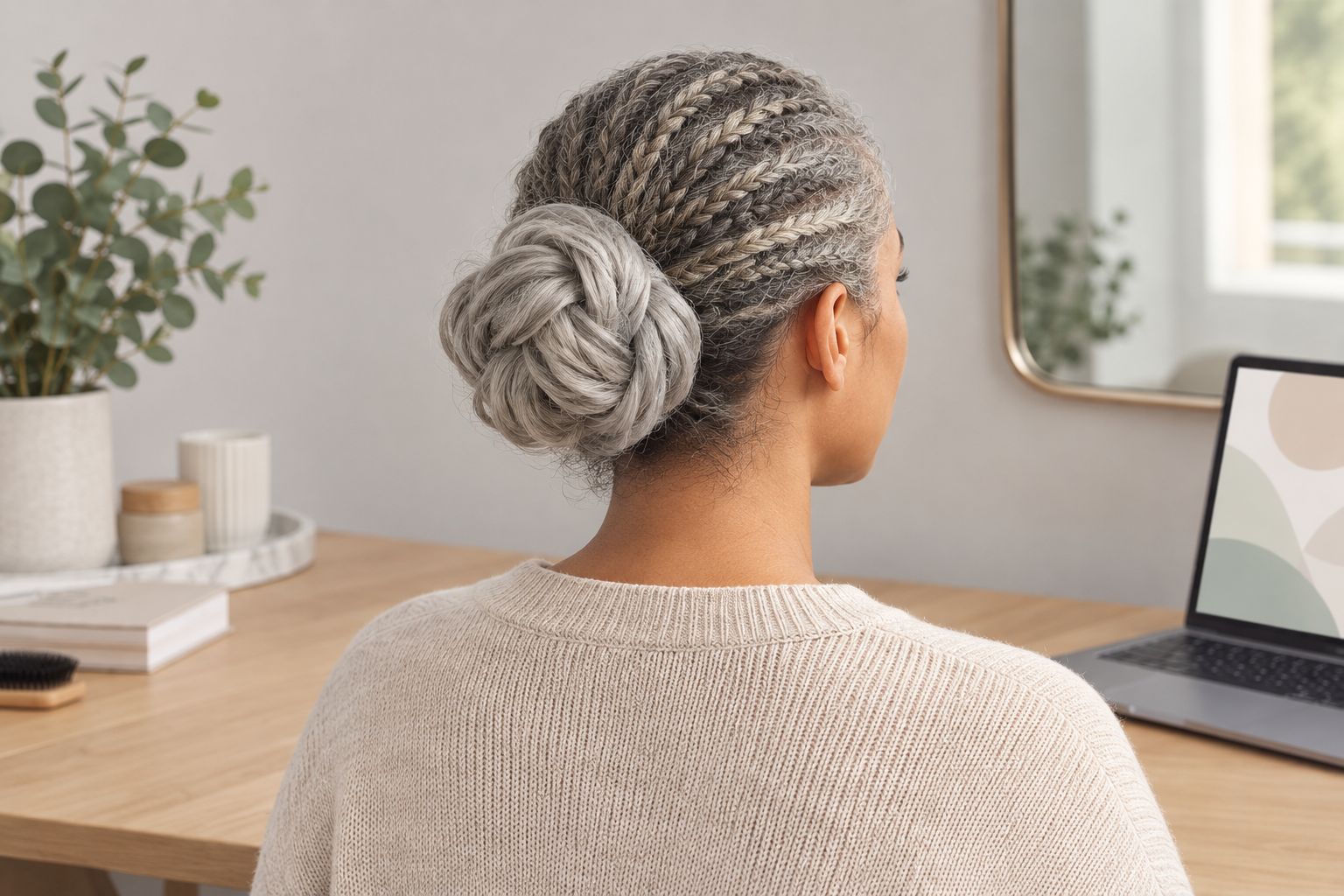
- Match grey or silver hairpieces to the hair visible beside the bun, not just your roots.
Can you wear a bun hairpiece over braided hair?
Yes—build the braided bun first, then check whether the hairpiece can cover and attach around it. A braid is not automatically a suitable anchor simply because it feels firm. The finished shape must leave enough room for the attachment to work as intended.
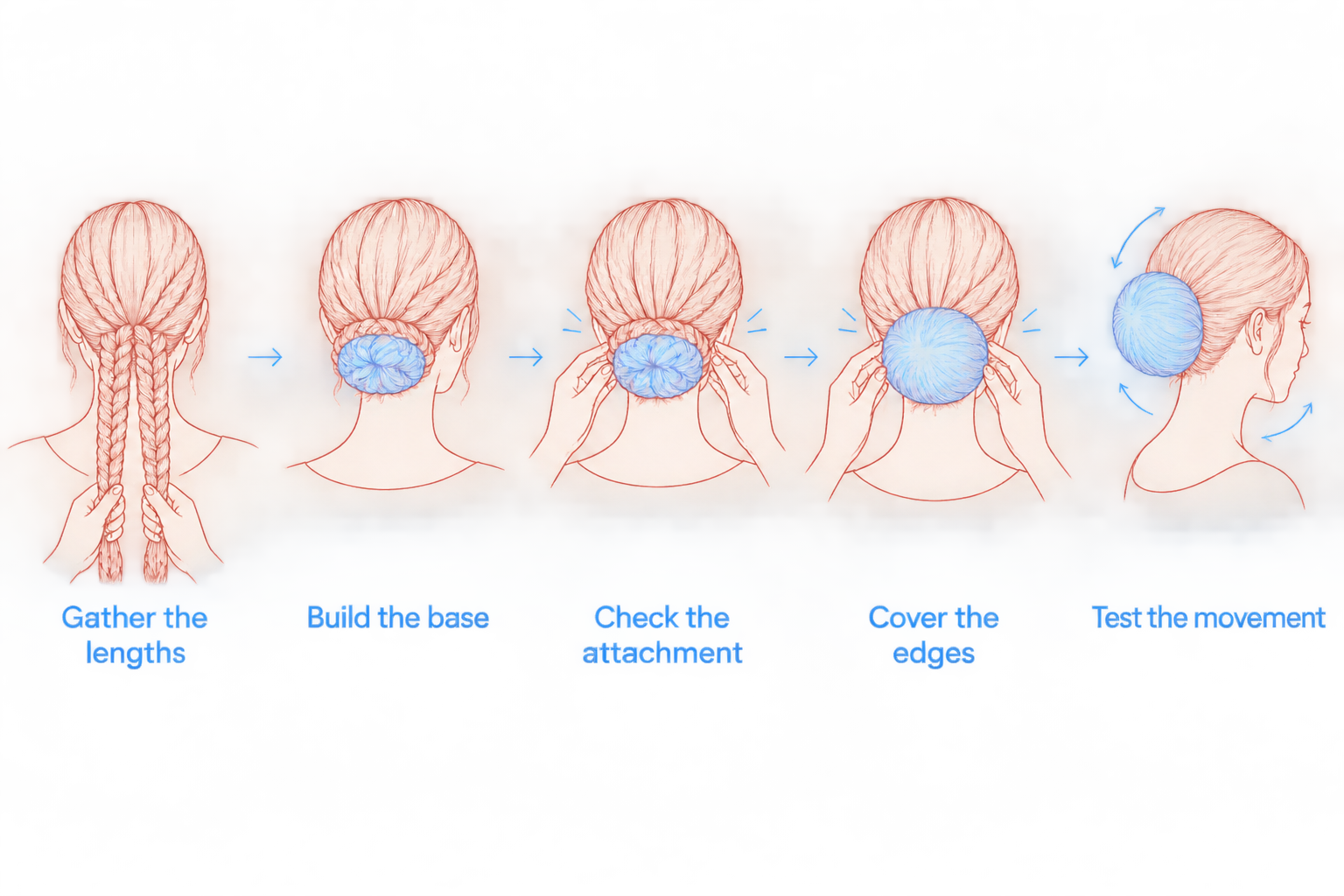
- Gather the lengths. Bring your braids toward the intended bun position without pulling the hairline taut.
- Build the base. Coil or fold the braided lengths into a compact shape and secure them independently.
- Check the attachment. Follow the hairpiece instructions and confirm that the elastic or clip fits the base without forcing it.
- Cover the edges. Arrange the synthetic hair around the braided bun, checking the sides and underside.
- Test the movement. Turn your head, look down, and sit back. Remove or reposition the piece if it pulls or shifts.
For a more detailed starting style, follow the braid-to-messy-bun hairstyle workflow.
Why this matters
A bun hairpiece adds hair around a base you already have. It does not make a bulky braid bundle smaller or correct an uncomfortable hairstyle underneath. Get the base comfortable before adding fullness.
This applies whether your hair is fine, thick, grey, short, or already styled with added braiding hair. Your total braided volume matters more to the fit than the thickness of your natural hair alone.
For a practical 2026 choice, judge the hairpiece against your actual braided updo. A product photo showing an unbraided bun does not establish how the same attachment will fit your braids.
Which attachment works best over braids?
Choose by the space available around your base. Scrunchie and clip attachments solve different styling problems; neither is automatically the right choice for every braided hairstyle.
| Attachment or style | Best for | Main benefit | Main limitation over braids |
|---|---|---|---|
| Bun scrunchie | A compact braided bun | Adds fullness around an existing base | The elastic must fit without excessive stretching |
| Clip-in bun | A base with accessible attachment space | Offers a clip-based way to position an updo | A thick braid bundle can obstruct clip closure |
| Claw-clip ponytail | A ponytail look rather than a covered bun | Adds hanging length instead of bun-shaped volume | The claw needs room to close without pinching |
A ponytail extension is an alternative style, not a workaround for an attachment that cannot close. An 8-inch ponytail and a 14-inch ponytail also create different silhouettes; neither length tells you the size of the claw opening.
Before choosing any attachment, check the product instructions and available fit details. Do not assume that a longer extension has a larger clip or that a fuller bun has a wider elastic opening.
Bun scrunchies: best for a compact braided base
A scrunchie-style hairpiece goes around an independently secured bun. That makes it a useful option when your braided lengths form a contained shape and you want to add visible fullness around it.
The benefit is simple placement; the drawback is the opening must accommodate your base. Do not repeatedly stretch or twist an attachment just to force a fit. Follow its instructions rather than assuming every hairpiece works like an ordinary hair elastic.
For fine hair, keep the braided base secure without making it painfully tight. For thicker hair or braids with added hair, focus on whether the entire base fits beneath the piece. More fullness is not useful if the braided center remains exposed.
Clip-in buns: best when the attachment has clear space
A clip-in bun needs an accessible place to attach. Dense braids, raised braid junctions, or a bulky central knot can interfere with that placement.
The advantage is an alternative to wrapping an elastic around the base. The limitation is local pressure: a closed clip is not a good fit if it pinches or pulls. Never force teeth between tightly braided sections or against your scalp.
Check the clip before fitting it so you understand how it opens and releases. If positioning requires repeated tugging, remove the hairpiece and change the base or attachment type rather than tightening the underlying style.
Why fit over braids varies
Use this checklist when comparing bun hairpieces in 2026. These factors explain why the same piece can sit differently on different braided styles.
- Finished base size: Judge the coiled bun, not an individual braid. Several manageable braids can create a substantial bundle together.
- Added braiding hair: Added length and thickness become part of the base the hairpiece must cover.
- Attachment clearance: An elastic needs room around the base; a clip needs space to open, sit, and close.
- Braid placement: Raised sections and knots change where an attachment can rest comfortably.
- Hairpiece texture: Loose curls and straight fibers create different outlines around the same base.
- Shade contrast: A contrasting exposed braid is more noticeable than a closely matched one at the edge of the piece.
Changing the base shape is often more useful than adding another fastener. Spread bulky lengths into a flatter arrangement before deciding that the hairpiece needs more grip.
How do you make the hairpiece look natural over braids?
Start with coverage, then adjust texture. Use a mirror to check the back and underside, where a braided base or attachment can remain visible even when the front looks finished.
For a messy finish, separate the synthetic strands gently with your fingers and arrange them around the exposed edges. For a smoother finish, keep the visible fibers aligned instead of pulling them into a larger halo. Follow the care instructions before brushing or applying styling products.
Do not use heat unless the specific hairpiece instructions permit it. “Synthetic” alone does not establish heat compatibility, and the wrong styling method can change the fibers.
Choose fullness your base can support
If your natural hair is fine, you do not need to make the braid tighter to justify a fuller-looking bun. Choose a piece that sits comfortably on the base you can create.
If your hair is thick, avoid assuming you need extra volume everywhere. Your goal might be a finished outline or a different texture rather than a larger bun. Start with the shape you want, then check coverage and comfort.
How should you match grey or silver hair over braids?
Match the hair visible beside the bun, particularly the nape and outer braided sections. If your roots are silver but your braided lengths are darker, a bright silver bun creates a contrast rather than a continuous blend.
Grey is a broad shade description. Salt-and-pepper hair mixes darker and lighter strands, while silver generally describes a lighter, cooler-looking appearance. Product shade names are not a substitute for comparing the actual images with your hair.
For your 2026 shade check, view your hair in indirect daylight and compare lightness, warmth, and the balance of dark and light strands. Avoid choosing from a photograph taken under strongly yellow bathroom lighting.
A close overall match is a practical goal; an exact strand-for-strand match is not necessary for every tousled updo. For a deliberately contrasting bun, keep the transition tidy so the contrast looks intentional.
Bun options to compare after checking your base
Apexhairs synthetic bun hairpieces suit women seeking fuller-looking everyday updos. For braids, the deciding factor remains attachment fit: the supplied product descriptions do not establish a universal braid-bundle capacity.
| Product | Best for | Verified benefit | What to check over braids |
|---|---|---|---|
| Synthetic Messy Bun Hairpiece Scrunchie | A tousled finish | Synthetic, lightweight, clip-free construction that adds volume | Whether the scrunchie fits your secured braided base |
| Straight Synthetic Hair Bun Scrunchie | A smoother finish | Synthetic, lightweight, clip-free construction with a smooth finish | Whether the straight fibers cover the outline of your base |
Both Apexhairs options add hair around an existing style; neither removes the bulk beneath it. Choose the messy texture for a tousled outline or the straight texture for a smoother finish, then verify shade and attachment details before ordering.


What if your braided bun is too bulky?
Remove the hairpiece before changing the base. Recoil the lengths into a flatter shape, keeping braid ends tucked inside rather than stacked into a raised knot.
Try a different comfortable position if the original placement leaves an awkward angle for the attachment. Do not loosen or alter a braided style beyond what you can comfortably manage; ask your stylist for help when needed.
If the piece still cannot cover the base or attach without strain, skip that combination. Wearing the braids without a hairpiece is a better result than a covered bun that pulls.
Can you wear a ponytail extension over braids instead?
An 8-inch or 14-inch ponytail extension changes the finished length, not the basic fit requirement. Choose a ponytail when you want hanging hair rather than a rounded updo, and check whether its attachment works with your gathered braids.
A claw should close without trapping or pinching tightly braided roots. If the braid bundle prevents closure, forcing it is not a fitting method. Choose another style instead.
How do you remove the bun without snagging your braids?
Support the braided base while releasing the attachment. Open a clip fully before moving it away; for a scrunchie, work the attachment back over the base without dragging loose synthetic strands through the braids.
Untangle caught fibers gently before continuing. Do not pull the whole hairpiece away to release a small snag. Once removed, store it according to its care instructions so the attachment and fibers are ready for the next wear.
FAQ
Can I put a messy bun hairpiece over box braids?
Yes, if your box braids form a base the hairpiece can cover and attach around comfortably. Added braiding hair increases the bulk you need to accommodate.
Can I wear a bun hairpiece over cornrows?
Yes, when the gathered lengths provide a suitable base and the attachment does not press against tightly braided roots. Do not force clip teeth beneath cornrows.
Is a scrunchie bun better than a clip-in bun over braids?
A scrunchie bun suits a base its elastic can comfortably accommodate; a clip-in bun needs accessible attachment space. Choose by fit rather than assuming either method works with every braid style.
Will a bun hairpiece hide all my braids?
A bun hairpiece covers only the area it physically reaches. Braids along the scalp, sides, or nape remain visible unless the finished style covers them.
Can women with thin hair wear a bun hairpiece over a braid?
Yes, when the braid provides a comfortable base that supports the attachment. Do not tighten fine hair excessively to compensate for a poorly fitting piece.
Should I match a grey bun to my roots or my braided lengths?
Match the hair visible immediately beside the bun. Silver roots and darker braided lengths can require a different choice from an all-over silver style.
Does wearing a synthetic bun help thinning hair grow?
No, a synthetic bun changes the appearance of your hairstyle; it does not regrow hair or treat hair loss. Remove it if the attachment pulls or causes discomfort.
One last thing
The most useful fit test for your 2026 bun routine happens before you add the hairpiece: look at the braided base from behind. A flat, contained base gives you a different starting point from a tall knot, even when both contain the same hair.
Fix the base before adding fullness. That keeps the final decision focused on coverage, comfort, and the everyday style you actually want.


Leave a comment