
How tight should a messy bun hairpiece clip be?
A messy bun hairpiece clip should feel snug enough to hold your style during normal movement, without pinching, pulling, or pressing into your scalp. If keeping the bun in place requires discomfort, remove it and adjust the base or attachment—not your tolerance for tightness.
- How tight should a messy bun hairpiece clip be? Secure without scalp pressure, pulling, or pain.
- Check the base ponytail before tightening anything; the hair underneath should feel comfortable on its own.
- Apexhairs synthetic bun hairpieces suit women seeking fuller-looking updos without changing their haircut.
- Choose a scrunchie attachment if you prefer wrapping a bun rather than fastening a clip.
Why this matters
A fuller-looking updo should not leave you counting the minutes until you can take it out. Tight hairstyles and repeated pulling can contribute to traction-related hair loss, so discomfort is a reason to stop—not a sign that the attachment is working.
This applies whether your hair is fine, thick, thinning, straight, or curly. If your bun keeps moving, start with the base and placement; the guide to stopping a messy bun hairpiece from slipping on thin hair addresses that separate problem.
How tight should a messy bun hairpiece clip be?
The right fit holds the hairpiece without making your scalp feel pulled. You should be able to turn your head, look down, and sit normally without the bun shifting noticeably or the clip digging in.
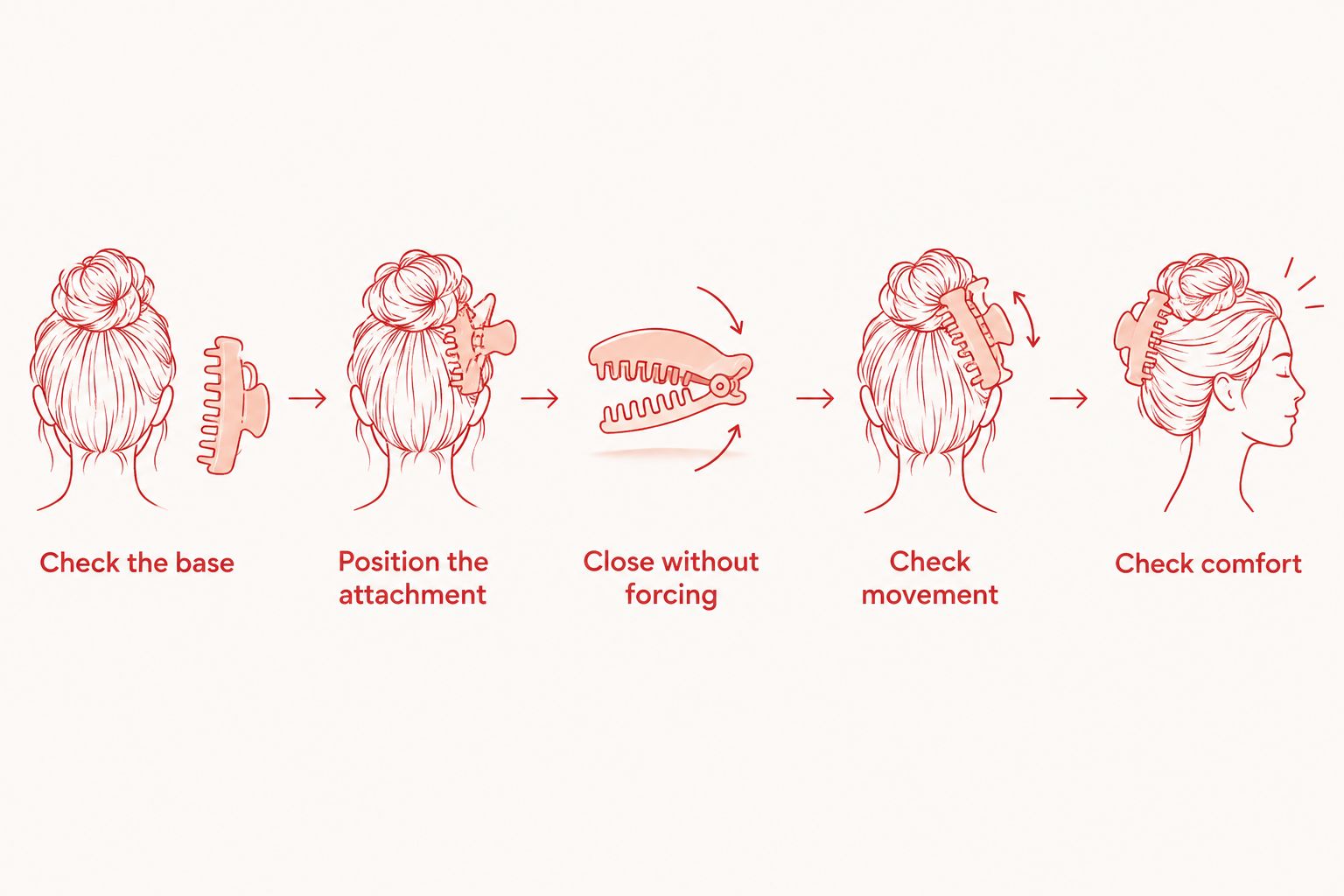
Use this fitting sequence whenever you attach a bun:
- Check the base. Put your own hair into the intended ponytail or bun before adding the hairpiece. Release and redo it if it already feels tight.
- Position the attachment. Follow the hairpiece's instructions and keep the clip from pressing directly against your scalp. Move loose strands out of the mechanism.
- Close without forcing. If the clip will not fasten normally, open it and reposition the hair. Do not force an overfilled attachment shut.
- Check movement. Turn your head gently and look down. Support the hairpiece while checking whether the base stays put.
- Check comfort. Notice any concentrated tugging, pinching, or pressure. Remove and refit the piece if you feel any of these.
A clip that closes is not automatically a clip that fits. Its position, the amount of hair inside it, and the support underneath all matter.
Choose the attachment before chasing a tighter hold
A clip-in bun, a bun scrunchie, and a claw-clip ponytail attach differently. Do not judge all of them by how firmly they squeeze: the goal is a supported hairstyle, not maximum pressure.
For your 2026 hairpiece shortlist, compare the attachment you want to handle each morning. Use this table to separate the styling benefit from the fitting trade-off.
| Attachment or option | Best for | Useful feature | Trade-off and fitting check |
|---|---|---|---|
| Clip in Bun - Messy Bun Hair Piece | Women who prefer a clip-in bun attachment | Adds a bun using a clip-in format | Clip placement needs attention; refit if it presses or pulls |
| Synthetic Messy Bun Hairpiece Scrunchie | Women who prefer a clip-free, tousled updo | Synthetic scrunchie described as lightweight and clip-free | Wrapping still needs care; a tight base or elastic can pull |
| Claw-clip ponytail extension | Women who want a hanging ponytail rather than an updo | Uses a claw attachment for a ponytail shape | Check where the claw rests and whether the base supports the extension |
Apexhairs synthetic bun hairpieces are best for women seeking fuller-looking updos without changing their haircut. That styling benefit does not remove the need for a comfortable attachment; neither a clip nor an elastic should compensate for an unstable base by pulling harder.
The following options match the clip-versus-scrunchie choice above. Choose by attachment preference first, then compare the current shade information and fitting instructions.


Why a comfortable bun fit varies
There is no universal clip setting that works for every head of hair. These fitting factors explain why the same attachment needs different positioning from one hairstyle to another:
- Base stability. A loose ponytail lets the whole style move. A painfully tight ponytail starts the style with tension before the hairpiece goes on.
- Hair gathered inside the attachment. Too much hair can prevent normal closure; poorly positioned strands can catch in the mechanism.
- Bun placement. Changing the height changes where the attachment sits. Check comfort again whenever you move the bun.
- Hairpiece support. Your own hair needs to support the chosen piece without concentrated pulling. More visible fullness is not a reason to accept strain.
- Contact during everyday activities. A chair, headrest, hat, or scarf can press against the bun or attachment. Test the hairstyle in the positions you actually use.
The practical rule for 2026 is simple: assess your finished hairstyle, not just the clip in your hand. A comfortable fastening can become uncomfortable when a headrest pushes against it.
Fit the bun to your hair, not the other way around
If your hair is fine or thinning
Start with a base that holds without being pulled flat against your scalp. Avoid gathering a few delicate strands into a tight anchor simply because they are closest to the clip.
Choose a style your hair can support comfortably, and remove the piece if it causes persistent tugging. A bun hairpiece adds the appearance of fullness; it does not regrow hair or treat hair loss.
If your hair is thick
Check that the attachment has enough room to close as intended. If it feels crowded, redo the base rather than squeezing harder or forcing the mechanism.
A bulky base also changes how the hairpiece sits. Tuck your own hair neatly and check the rear view before adding more tension to correct an uneven shape.
If your hair is short or layered
Do not pull short sections painfully tight just to make them reach the base. Secure only the hair that comfortably reaches, and check the hairpiece's fitting requirements before wearing it.
If the attachment cannot sit securely on your available hair, choose a different style rather than relying on trapped strands. A secure-looking result is not enough when the anchor feels strained.
Match grey or silver without tightening the bun to hide a mismatch
A shade difference can make the join more noticeable even when the attachment fits correctly. Tightening the bun will not correct the color.
Grey often describes a blend of darker and lighter strands, while silver commonly describes a lighter, cooler-looking effect. Shade names are not standardized, so compare the actual product images and descriptions rather than choosing by the name alone.
For a 2026 shade check, look at your hair where it will meet the bun—not only at your roots or front hairline. Check in daylight and indoor light, especially if your lengths remain dyed while your roots are growing in grey.
With Apexhairs synthetic bun hairpieces, choose from the shade information provided for the specific item. Do not assume every bun has the same shades or that a color name guarantees the same blend across different pieces.
What should you do if the clip feels too tight?
Remove the hairpiece and rebuild the base before trying again. Do not slide a closed clip through your hair or keep wearing it while waiting for the pressure to disappear.
Support the bun with one hand, open the attachment fully, and free caught strands gently. Then check whether the discomfort came from your own ponytail, the clip's position, or hair trapped in the closure.
When you refit, change the cause of the pressure rather than simply shifting the same tight setup slightly sideways. If you cannot get a comfortable fit, stop using that attachment. Seek medical advice for persistent scalp pain, sores, or noticeable hair loss.
What if the bun slips even though the clip feels tight?
Slipping and tightness can happen together. A clip can pinch a small section of hair while the rest of the hairstyle remains poorly supported.
Remove the piece and check whether your base ponytail is slipping too. Then check that you are using the attachment as instructed and that the hairpiece sits where the base can support it.
Do not bend clip teeth, alter a spring, or add pressure to make an unsuitable fit work. If repeated fitting attempts still leave you choosing between slipping and pain, use a different attachment or hairstyle.
Can you use the same fit check for a ponytail extension?
Yes—the comfort rule stays the same, but the attachment instructions still matter. A ponytail hangs differently from a bun, so assess its support and movement separately rather than copying the bun's position.
For an everyday 2026 ponytail routine, close the claw as instructed, check that it does not press into your scalp, and turn your head gently. Remove and refit the extension if its movement pulls at the base.
A hanging ponytail and a fuller updo offer different looks. Neither should need painful tension to stay wearable.
FAQ
How tight should a messy bun hairpiece clip be?
A messy bun hairpiece clip should hold securely without pinching, pulling, or pressing into your scalp. Check both comfort and stability while gently turning your head.
Should I tighten my ponytail if my bun hairpiece slips?
Do not tighten your ponytail to the point of discomfort. Remove the hairpiece, check whether the base is stable, and refit the attachment according to its instructions.
Is a bun scrunchie better than a clip for thin hair?
A bun scrunchie is an alternative, not an automatic better choice for thin hair. Choose the attachment your hair supports comfortably; elastic can pull too if the base or wrapping is too tight.
Why does my messy bun clip hurt in one spot?
Localized discomfort is a reason to remove the hairpiece and check the attachment. Look for caught strands, direct scalp pressure, or a base that concentrates tension in that area.
Can I wear a bun hairpiece if I have thick hair?
Yes, provided the attachment fits and closes normally without forcing. Keep the base tidy and choose a setup that does not overcrowd the clip.
Should a messy bun clip touch my scalp?
A messy bun clip should not dig or press into your scalp. Follow its fitting instructions and reposition it if normal head movement creates pressure.
How do I match a grey bun hairpiece to silver roots?
Compare the hairpiece with the hair surrounding your intended bun position, not only your roots. Grey blends and lighter silver effects differ, and shade names alone do not establish a match.
Can Apexhairs bun hairpieces treat thinning hair?
Apexhairs synthetic bun hairpieces add styling volume; they do not treat thinning hair or regrow hair. Choose a comfortable attachment and get medical advice for unexplained hair loss or persistent scalp symptoms.
One last thing
Check your hairstyle while sitting, not just standing at the mirror. A bun that feels comfortable upright can meet your headrest when you lean back, changing where the attachment presses.
Make that seated check part of your 2026 everyday styling routine before leaving home. If the bun meets the headrest, try a different placement and repeat the comfort check—do not tighten it to resist the pressure.


Leave a comment