
Hair extension scrunchie care for travel and overnight storage
For women packing fuller updos, hair extension scrunchie care means gently removing, detangling, drying, and storing a synthetic bun with the aim of keeping everyday styling simple. This 2026 guide covers overnight storage and travel packing for fine, thick, grey, and silver hair, where preserving shape matters as much as keeping loose fibers out of zippers.
- Apexhairs is best for women seeking synthetic bun hairpieces for quick, fuller-looking everyday updos.
- Store a hair extension scrunchie completely dry, with its fibers clear of zippers and other accessories.
- Choose roomy protection for travel; use a clean, protected resting spot for overnight storage.
- Match grey and silver shades in daylight, and follow the hairpiece’s care instructions before washing or applying heat.
Why hairpiece care matters for everyday styling
A bun hairpiece needs somewhere to rest when you take it off. Tossing it beside earrings, leaving it under toiletries, or packing it while damp makes your next styling session harder than it needs to be.
For women with fine hair, careful removal also means avoiding unnecessary pulling on the natural bun underneath. Women with thicker hair need the same gentle handling; a secure attachment is not a reason to tug the whole piece off at once.
Separate washing from storage. You do not need to wash a hairpiece simply because you wore it today. When cleaning is necessary, follow the supplied directions and the guide to washing a messy bun scrunchie and drying it without tangles.
For your 2026 travel routine, focus on repeatable habits rather than elaborate accessories: remove gently, keep the fibers separate from hardware, and put the piece away only when it is fully dry.
Follow this travel and overnight care routine
Remove gently
Support your natural bun with one hand while you release the hairpiece with the other. If the attachment wraps around your bun, loosen each wrap instead of pulling the piece straight over your hair.
For a clip attachment, open the clip before lifting it away. Stop if natural strands catch inside the attachment, then free them with your fingers rather than pulling harder.
This step matters whether you have thinning hair or simply prefer a fuller updo. The goal is to remove the added hair without dragging your own hair along with it.
- Remove separate pins before loosening the hairpiece.
- Support the base of your natural bun.
- Unwrap an elastic attachment gradually.
- Open a clip fully before removing it.
- Release trapped strands by hand.
Detangle gently
Check the loose ends before you put the piece down. Start with your fingers and separate small catches without stretching the elastic center or pulling against the attachment.
For a curly bun, preserve the curl groupings rather than brushing everything into a fluffy mass. For a straight piece, use a suitable comb only if the care directions allow it, working from the ends toward the attachment.
Do not force a tool through resistance. Support the section above a tangle so the pull does not travel directly to the base. If you packed a ponytail extension instead of a bun, give its longer ends the same attention before folding them into storage.
- Inspect the underside as well as the visible surface.
- Separate obvious snags with your fingers.
- Work on small sections rather than the whole piece.
- Keep loose fibers away from clip hinges.
- Stop when a knot needs more careful attention.
Choose your setup
Start with the hairpiece you already own and a clean container that gives it room. You do not need a new product to improve storage, and changing attachment types will not replace careful handling.
If you are choosing a piece for your 2026 travel bag, match the shape to the style you actually wear. The Apexhairs Synthetic Messy Bun Hairpiece Scrunchie is a lightweight, clip-free option for a tousled updo; the Straight Synthetic Hair Bun Scrunchie adds fullness with a smoother finish.
Best for tousled styling: choose the messy scrunchie. Best for a smoother finish: choose the straight scrunchie. Both need gentle care, and neither product description establishes heat tolerance or permission to sleep in the piece.
- Choose texture around your usual finished hairstyle.
- Check the attachment before planning your packing setup.
- Allow space for curls instead of compressing them flat.
- Keep care directions with your travel supplies.
- Choose a shade before choosing matching accessories.


Dry fully
After washing, follow the drying method supplied with the hairpiece. Do not twist the fibers to squeeze out water or assume the surface tells you whether the center is dry.
Check the underside, attachment area, and any dense sections before packing. There is no useful universal drying deadline: the piece, washing method, and conditions affect when it is ready.
Keep the hairpiece away from direct heat unless its instructions specifically permit the method you intend to use. A travel hair dryer or straightener is not a substitute for checking synthetic-fiber care directions.
- Follow the product’s washing and drying instructions.
- Avoid wringing or twisting the fibers.
- Leave the piece unpacked while it dries.
- Check the center and underside before closing a container.
- Delay packing if any section remains damp.
Pack loosely
Use a clean container you already have, provided it is dry, smooth inside, and roomy enough for the hairpiece. A structured container protects the shape from surrounding luggage; a soft pouch keeps items separate but does not prevent crushing.
Place the piece so its attachment does not snag the loose fibers. Close the container slowly and check the edges first, especially around zippers and hinges.
For a ponytail, arrange the length in a loose curve rather than forcing a tight fold. With either style, keep cosmetics, sharp accessories, and hot styling tools separate from the hairpiece.
- Pack only a completely dry piece.
- Give curls room rather than pressing them down.
- Tuck loose ends clear of closures.
- Store pins and clips in a separate compartment.
- Keep the container away from heated tools.
Settle it overnight
Choose one clean, dry resting place before you remove your hairpiece. A protected tray or open container works for overnight storage when nothing will land on top of it.
Remove the piece before bed rather than treating it like a regular fabric scrunchie. A hairpiece has loose fibers and an attachment to manage, so sleeping without it avoids pressing the style between your head and pillow.
You do not need to seal a fully dry piece away every night if it already has a protected place. Keep it out of a damp bathroom corner and away from jewelry, brushes, or other objects that catch loose strands.
- Remove the hairpiece before lying down.
- Check for tangles before setting it aside.
- Rest it without stretching the attachment.
- Keep the fibers clear of nearby accessories.
- Leave a drying piece unpacked.
Restyle lightly
Unpack the hairpiece before you start tightening your natural bun. Check its shape, attachment, and loose ends first so you can deal with a snag while the piece is still off your head.
Use 2 mirrors to inspect the front and back after attaching it. For grey or silver hair, add a daylight check: grey can include a darker mixture, while silver usually describes a lighter, cooler-looking effect, but shade names alone do not guarantee a match.
Apexhairs synthetic bun hairpieces add cosmetic fullness; they do not regrow hair or treat hair loss. Choose comfortable attachment tension instead of repeatedly tightening your base to make the piece feel secure.
- Compare the shade against the hair around your bun.
- Arrange curls with your fingers before attaching.
- Check the attachment for trapped fibers.
- Secure your natural hair without painful pulling.
- Inspect the finished shape from front and back.
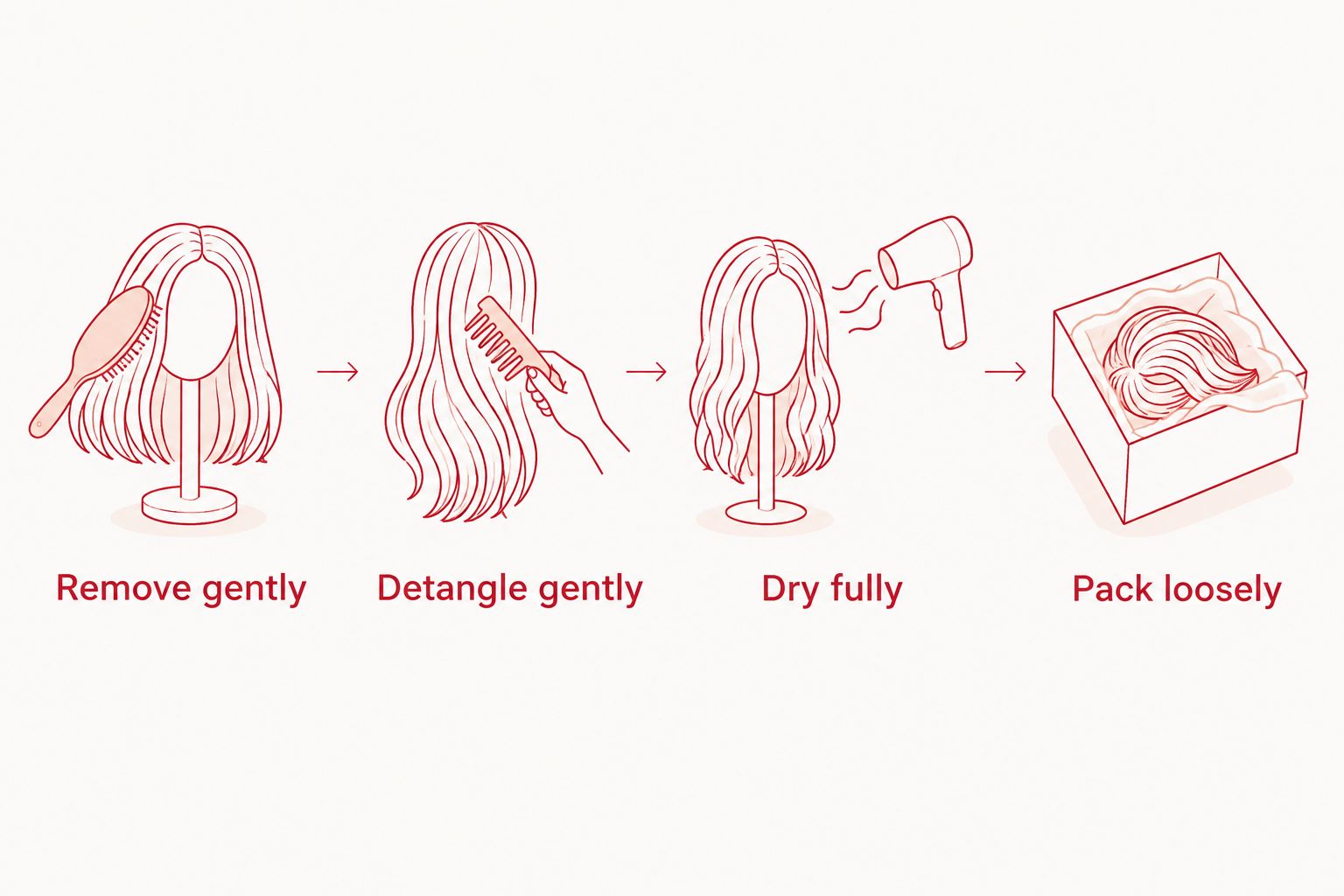
The routine works as a sequence: remove gently, detangle gently, dry fully when washing is needed, then pack loosely. Those habits matter more than buying a special storage accessory.
Compare overnight and travel storage options for 2026
Choose protection based on what will surround the hairpiece. A bedside resting spot and a tightly packed suitcase present different problems, so the same container does not have to serve both jobs.
The options below describe storage methods, not requirements for a particular product. Check that any container is clean and has no rough seams or edges where fibers can catch.
| Storage option | Best for | Main benefit | Key limitation |
|---|---|---|---|
| Clean, protected tray | Overnight storage at home | Keeps a dry bun easy to inspect and pick up | Does not protect against objects placed on top |
| Roomy soft pouch | Separating a dry piece inside a lightly packed bag | Keeps the hairpiece apart from other items | Offers little protection against compression |
| Smooth, structured container | Travel with surrounding luggage | Keeps other belongings from pressing directly on the fibers | Takes up more packing space |
| Original packaging, if suitable | Keeping the supplied care information together | Reuses a container you already have | Must still be dry, clean, and roomy enough |
Before closing a suitcase, make 3 checks: the piece is dry, the ends are clear of closures, and the container will not be crushed. These are packing checks, not a promise that every style will emerge ready to wear.
Keep 1 hairpiece per compartment when loose fibers or attachments would otherwise catch together. A longer ponytail especially benefits from its own space rather than sharing a small pouch with a curly bun and loose pins.
Common storage mistakes to avoid in 2026
Packing immediately after washing
A dry-looking outer layer does not confirm that the attachment area is dry. Check the whole piece before putting it in a closed travel container; if it is still damp, leave it out to finish drying.
Flattening curls to save luggage space
A curly bun needs room for its shape. Choose a container that accommodates it rather than squeezing it beneath a toiletry bag, then use your fingers to arrange the curls when you unpack.
Pulling the piece off a tight natural bun
When a scrunchie attachment catches your own strands, pulling harder adds unnecessary tension. Support the natural bun, loosen the attachment gradually, and release caught hair before removing the piece.
Choosing grey or silver under bathroom lighting alone
Shade names describe a general direction, not an exact match to your hair. Compare the piece with the hair beside your intended bun position in daylight, including any darker strands or warm tones in the blend.
Reaching for heat to fix every packing crease
Do not assume synthetic fibers tolerate a straightener, curling iron, or hot dryer. Check the specific care directions first; gentle finger arrangement is the starting point, not an unverified heat setting.
FAQ
Can I sleep in a hair extension scrunchie?
Remove a hair extension scrunchie before sleeping as your everyday care routine. Taking it off keeps the fibers and attachment from being pressed between your head and pillow.
What is the best way to pack a synthetic bun for travel?
Pack a completely dry synthetic bun loosely in a clean container with its fibers clear of closures. A structured container is best when surrounding luggage would otherwise press on the piece.
Should I wash my hairpiece every night?
Do not wash a hairpiece simply because you wore it that day. Check its condition and follow the supplied care directions when cleaning is needed.
Can I use a hair dryer on my synthetic bun?
Use a hair dryer only if the hairpiece’s care instructions permit that drying method and setting. Synthetic does not automatically mean heat-friendly, so do not guess from the product’s appearance.
Is a soft pouch better than a box for a hair scrunchie extension?
A soft pouch is best for separating a dry hairpiece from other belongings, while a structured box is best for protection against surrounding luggage. A pouch alone does not stop compression.
How do I match a grey or silver bun to my hair?
Compare the hairpiece with the hair around your bun in daylight. Check the blend of light, dark, warm, and cool strands rather than relying on a grey or silver shade name alone.
How should I store a claw-clip ponytail overnight?
Remove the claw-clip ponytail, free trapped fibers, and rest it dry in a protected place with its length arranged loosely. Keep the clip separate from loose pins and check its hinge before the next wear.
One last thing
Choose your storage spot before you take the hairpiece off. That small decision keeps it from landing beside damp toiletries or becoming buried under tomorrow’s clothes, and it makes the removal routine easier to repeat.
For your next 2026 trip, do a packing rehearsal with the empty container first. If you have to force it closed around the hairpiece, change the container rather than compressing the style; leave a little space for the fuller updo you want to wear tomorrow.


Leave a comment