
How long can you wear a clip-in ponytail extension at once?
Wear a clip-in ponytail extension only while the attachment feels comfortable and your own hair supports it without pulling; remove it before sleeping. There is no universal number of hours that makes every clip-in ponytail safe to wear. Tightness, repeated tension, and pressure matter more than the clock, so take the piece out if you notice soreness, a headache, or tugging.
- How long can you wear a clip in ponytail extension? Use comfort, not a fixed hourly limit.
- Remove a synthetic ponytail extension before sleeping; take it out sooner if the attachment pulls or hurts.
- Apexhairs offers synthetic ponytail extensions and bun hairpieces for fuller-looking everyday styles, not hair-loss treatment.
- Choose a ponytail or bun your own hair supports without tightening the base to compensate for slipping.
Why this matters
A fuller ponytail should not require you to ignore a sore scalp. A style can look tidy from the outside while the elastic underneath pulls too tightly or the clip presses against your head.
The practical rule for your 2026 styling routine is simple: a secure attachment should not hurt. If your main concern is pressure around the fastening, start with this guide to wearing a short ponytail extension without clip pressure.
This applies whether your hair is thin, thick, straight, curly, grey, or color-treated. Choose the style around what your hair comfortably supports, rather than assuming a particular hair thickness guarantees longer wear.
How long can you wear a clip-in ponytail extension at once?
Use a clip-in ponytail as a removable style, not something to leave attached continuously. Wear it for the part of your day when you want the look, check how the base feels as you go, and remove it before bed.
An hourly target cannot account for differences in attachment, placement, or the hair supporting the piece. Persistent pulling can contribute to traction-related hair loss, so discomfort is a reason to stop wearing the style—not a signal to wait until a planned removal time.
| What you notice | What to do | What not to do |
|---|---|---|
| The base feels comfortable and stays in place | Continue wearing it while checking for changes | Assume comfort now guarantees comfort later |
| The ponytail slips or tilts | Remove it and reassess the base and attachment | Keep tightening the elastic |
| The clip presses against your scalp | Remove the piece and check its position | Push the teeth harder against your head |
| Your scalp feels sore or your hair is tugging | Take the extension out | Wait for a preferred number of hours |
| You are getting ready for bed | Remove the extension and release the base | Sleep with the attachment in place |
Your removal time should respond to your scalp, not compete with a wear-time goal. A comfortable morning fitting does not mean you should ignore pressure that develops later.
Why comfortable wear time varies
Several parts of the style affect how it feels. Check these before deciding whether an extension suits an extended outing or only a particular occasion.
- Base tension: A tight natural ponytail can pull before you even add the extension. Start with a comfortable base.
- Attachment position: A clip pressing into the scalp needs repositioning, even if the finished style looks right.
- Hair supporting the piece: An extension needs an anchor your own hair can hold without being stretched tight.
- Movement: A swinging ponytail can tug as you walk, turn, or bend. Check the fit while moving, not just standing still.
- Contact with other items: A hat, collar, or headrest can press against the attachment or shift its position.
- Scalp condition: Do not attach a hairpiece over an irritated, tender, or broken area of skin.
Changing the style is more useful than repeatedly tightening it. If a ponytail will not stay comfortable, remove it and choose another hairstyle rather than forcing the attachment to hold.
Choose between a ponytail extension and a bun hairpiece
Choose the finished shape first: a hanging ponytail or a gathered updo. Then consider how you will attach it and whether your own hair comfortably supports that arrangement.
Apexhairs synthetic ponytail extensions and bun hairpieces are best for women seeking removable, fuller-looking everyday styles. They change the appearance of your hairstyle; they do not regrow hair or treat hair loss.
| Option | Best for | Useful feature | Trade-off |
|---|---|---|---|
| Short Straight Ponytail Extension Claw Clip 8" | A short, straight ponytail look | An 8-inch synthetic ponytail with a claw-clip attachment | Clip position needs checking for pressure and comfort |
| Synthetic Messy Bun Hairpiece Scrunchie | A fuller-looking, tousled updo | A lightweight, clip-free synthetic bun scrunchie | Your base and scrunchie still need to feel comfortable |
| Half Up Half Down Ponytail Extension - 14" Short Wavy Claw Clip Hair Piece | A wavy half-up, half-down look | A 14-inch ponytail with a claw-clip attachment | The gathered section must support the attachment without pulling |
The 8-inch and 14-inch measurements describe length, not recommended wear time. Neither length establishes how long you should keep a piece attached, and a clip-free bun is not automatically comfortable if you wrap it too tightly.
For your 2026 shopping checklist, put comfortable support ahead of extra fullness. Choose the style you can wear without constantly adjusting the base.


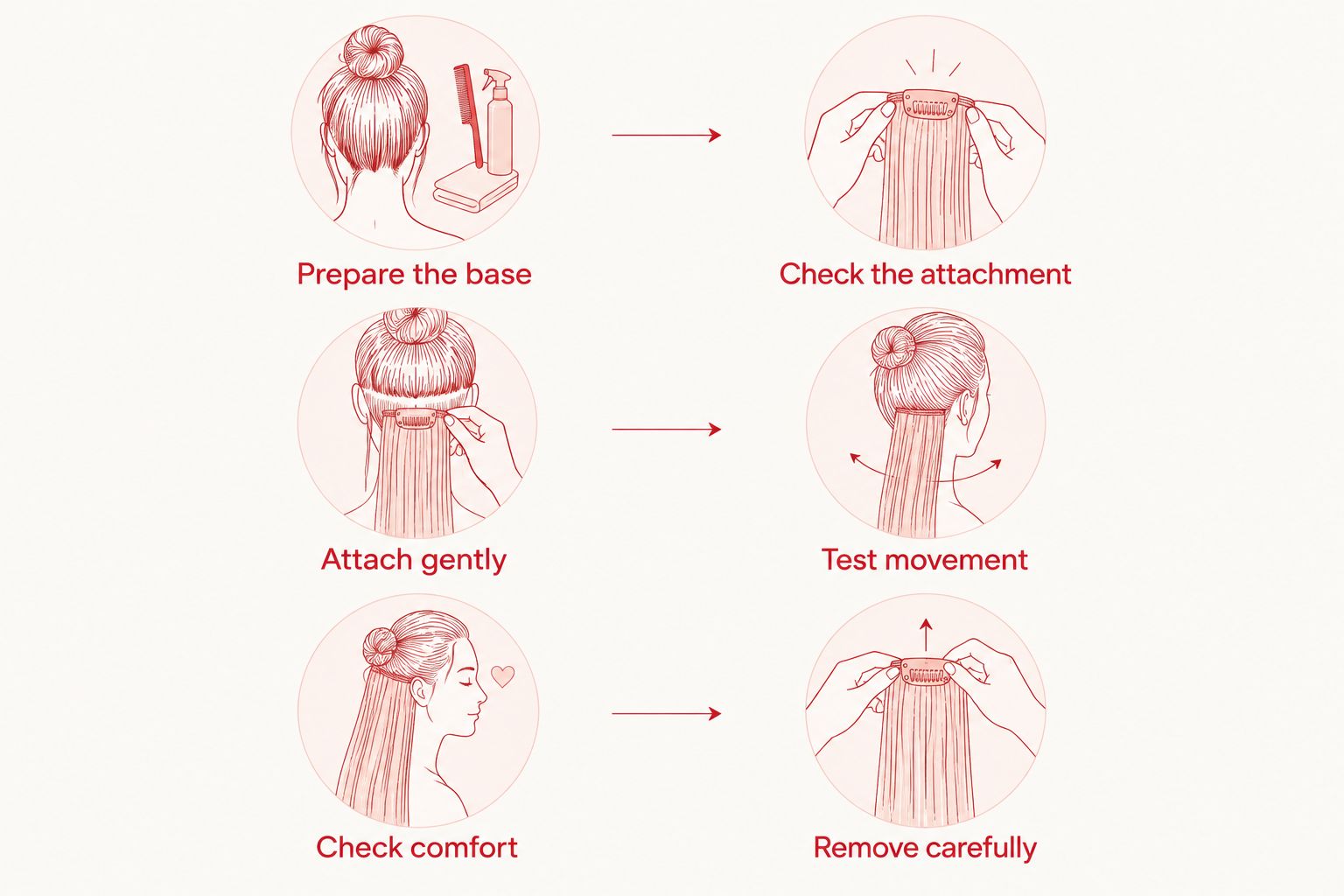
Follow these 6 steps before settling into your day
Build a comfort check into attachment rather than waiting for the piece to bother you. These steps work as a practical 2026 routine for checking a synthetic ponytail or bun before leaving home.
- Prepare the base. Gently detangle your own hair and gather it where you want the finished style. Secure it without pulling the hairline taut. If the base already hurts, redo it before adding the hairpiece.
- Check the attachment. Look for caught strands, damaged teeth, or a fastening that does not close properly. Follow the instructions for the particular piece instead of assuming every claw clip or scrunchie works identically.
- Attach gently. Support the extension with your hand while positioning it. Keep loose strands clear of moving parts, and do not force the attachment against your scalp.
- Test movement. Turn your head, look down, and sit as you normally would. Check whether the piece shifts, pulls, or presses against a chair or headrest.
- Check comfort. Pay attention to the base, hairline, and area beneath the attachment. Remove and refit a piece that feels uncomfortable rather than covering the problem with more accessories.
- Remove carefully. Support the hairpiece, fully release its fastening, and ease it away from your own hair. Release the natural ponytail afterward rather than dragging everything out together.
Keep a plain hair tie nearby so you can switch to your own ponytail if needed. Removing an uncomfortable extension is an easy styling adjustment, not a failed hairstyle.
Match texture and shade before adding more volume
A close visual match helps a ponytail or bun blend without extra teasing or elaborate covering. Compare the piece with the hair beside its intended attachment point, not only with the ends hanging over your shoulders.
For grey hair, look at both depth and tone. Salt-and-pepper hair contains a mix of darker and lighter strands, while silver usually describes a lighter, cooler-looking finish; shade names alone do not guarantee a match.
Check photographs in natural-looking light and compare the visible mixture of colors. If your roots are silver but your lengths remain darker, decide which area will sit directly beside the hairpiece in the finished style.
Apexhairs synthetic bun hairpieces and ponytail extensions should be selected by the individual listing, not assumptions about a shade name. Confirm the current shade options and care instructions for the exact piece you choose.
For 2026 everyday styling, aim for a believable blend rather than the largest possible updo. A smaller-looking style that sits comfortably is a better choice than extra fullness that requires a very tight base.
Can you wear a clip-in ponytail for a full workday?
A full workday is not a guaranteed wear limit. Keep the extension attached only while the base remains comfortable, and be prepared to take it out if it starts pulling or pressing.
Consider the activities in your day before choosing the style. Sitting against a headrest, repeatedly bending forward, or wearing headwear can change how the attachment sits even when it felt comfortable at home.
Bring a simple alternative rather than relying on repeated tightening. Your own loose ponytail or another comfortable hairstyle gives you a way to finish the day without keeping an irritating piece attached.
Does thin hair mean you should remove it sooner?
Thin hair does not come with a universal hourly cutoff. The practical question is whether the hair at the attachment point supports the piece without slipping, stretching tight, or feeling sore.
Avoid trying to solve a weak anchor by pulling everything tighter. Choose a different placement or style, and skip the attachment if you cannot make it comfortable.
The same rule applies to thicker hair. Plenty of hair does not cancel out pressure from a badly positioned clip or an overly tight elastic.
Should you take it out for a nap?
Remove a clip-in ponytail before a nap as well as before nighttime sleep. Lying on the fastening can press it against your head, and movement against a pillow can pull or catch strands.
Take the piece out while you are still awake enough to release it carefully. Put it somewhere clean and dry rather than leaving it loose where the fibers can snag.
FAQ
How long can you wear a clip in ponytail extension without taking it out?
Wear a clip-in ponytail only while it stays comfortable, and remove it before sleeping. There is no universal hourly limit that accounts for every attachment, hairstyle, and scalp.
Can I keep my ponytail extension in overnight if it feels loose?
Remove a clip-in ponytail extension overnight, even if it feels loose. Sleeping can press the fastening against your head or catch and pull strands as you move.
Should I tighten my ponytail extension when it starts slipping?
Remove and reassess a slipping ponytail extension instead of automatically tightening it. Check the base, attachment position, and whether your hair comfortably supports the piece.
Is a bun scrunchie more comfortable than a claw-clip ponytail?
A bun scrunchie avoids claw-clip pressure, but it is not automatically more comfortable. A tight scrunchie or base can still pull, so judge the complete style by how it feels.
Does a shorter ponytail extension guarantee longer wear?
A shorter ponytail extension does not guarantee longer comfortable wear. Length alone does not establish the attachment pressure or how well your own hair supports the piece.
What should I do if my scalp hurts after wearing a ponytail extension?
Remove the extension and release the tight hairstyle if your scalp hurts. Avoid reattaching it over a tender area, and seek medical advice for persistent pain, broken skin, or noticeable hair loss.
Can synthetic ponytail extensions help hair grow back?
Synthetic ponytail extensions do not regrow hair or treat hair loss. They add visible length or fullness while you wear them, and should not require painful tension to stay attached.
One last thing
Check the base after removing the extension, not just while wearing it. If taking the piece out reveals tenderness you overlooked during the day, change the placement or hairstyle before wearing it again.
Make that your simplest 2026 styling habit: choose comfort when attaching, check it while moving, and release the style before sleep. Fuller-looking hair should not depend on putting up with pulling.


Leave a comment