
Bun extensions: scrunchie or clip attachment for everyday wear?
Choose scrunchie bun extensions if you can make a secure bun and want a wrap-around attachment; choose a clip attachment if you prefer positioning and fastening the hairpiece directly. For everyday wear in 2026, the better choice is the one that stays comfortable without pulling. Neither attachment fixes an unstable base, and a clip is not automatically more secure on thin hair.
- Scrunchie bun extensions suit a secure existing bun; clip attachments suit hands-on placement and fastening.
- Apexhairs synthetic bun hairpieces suit women seeking fuller-looking everyday updos, not treatment for hair loss.
- Match grey or silver hair at the bun position, not just at the roots.
- Choose comfort and a concealed attachment before choosing extra volume.
Why this matters
An attachment that works with your own hair makes everyday styling simpler. An attachment that slips, pinches, or needs repeated tightening turns a quick updo into a nuisance.
For your 2026 everyday routine, start with what your hair can comfortably support. Fine hair, thick hair, grey hair, and short layers present different fitting challenges; none makes one attachment universally better.
Bun extensions: scrunchie or clip attachment for everyday wear?
A scrunchie is best for wrapping around a stable bun; a clip is best for placing and fastening the hairpiece where you want it. Compare the attachment first, then the texture and shade.
| Attachment | Best for | Main advantage | Main trade-off | Relevant example |
|---|---|---|---|---|
| Scrunchie | Women who can secure their own hair into a bun | Wrap-around placement without a clip mechanism | Depends on a stable base and a suitable elastic fit | Synthetic Messy Bun Hairpiece Scrunchie |
| Clip | Women who prefer positioning and fastening an attachment | Lets you place the hairpiece before securing it | Needs enough suitable hair for the particular fastening; placement affects comfort | Clip in Bun - Messy Bun Hair Piece |
Do not confuse attachment type with finished style. A messy finish describes the hairpiece's texture, while scrunchie or clip describes how you attach it. You can prefer a tousled updo and still need to decide which fastening works with your hair.
What to check before choosing
Put your hair into the bun position you actually wear. Check whether the base holds, whether shorter layers escape, and whether that position feels comfortable without an added hairpiece.
If your own bun loosens, fix the base before comparing extensions. If you cannot gather enough hair for a bun, do not assume a clip will solve that problem: inspect how the specific attachment closes and what it needs to grip.
Scrunchie bun extensions: best for a stable wrap-around base
A scrunchie hairpiece places synthetic hair around an elastic attachment. It suits you when your own hair already forms a secure bun and you want to add fullness around it rather than manage a separate clip fastening.
Choose a scrunchie for a simple wrap-around routine, not as a substitute for securing your own hair. Loose elastic can let the piece shift; an overly tight fit can tug. The useful fit sits around the base without forcing you to pull your hair tighter.
How to attach a scrunchie bun
- Secure the base. Gather your own hair into your preferred position and fasten it with a suitable hair tie. Form a compact bun that holds on its own.
- Wrap the hairpiece. Follow the hairpiece's fitting instructions and place the elastic around the bun. Keep your own secured base underneath rather than relying on the hairpiece to hold everything together.
- Arrange the texture. Use your fingers to spread the synthetic strands around the base. Cover visible elastic without dragging the hairpiece away from its attachment.
- Check the fit. Look from the front, side, and back. Move your head normally and adjust any section that shifts or exposes the attachment.
Stop if wrapping creates a tight, uncomfortable fit. Adding more tension is not the answer to every slip; sometimes the base needs rebuilding or the attachment is unsuitable for that bun.
Apexhairs describes its Synthetic Messy Bun Hairpiece Scrunchie as lightweight and clip-free, with a tousled finish for fine or thinning hair. Those details suit a fuller-looking updo, but they do not establish how its elastic will fit your particular base.
Clip bun extensions: best for deliberate placement
A clip attachment suits you if you prefer holding the hairpiece in its intended position before fastening it. The mechanism matters: the name clip-in bun alone does not tell you the fastening's size, shape, or exact fitting method.
Choose a clip only when its fastening can hold comfortably in your own hair. A closed clip is not proof of a good fit. It also needs to sit securely without pinching, pulling, or leaving its mechanism visible.
How to attach a clip bun
- Inspect the fastening. Open the attachment and check how it closes. Follow the instructions for that specific hairpiece rather than treating every clip as interchangeable.
- Prepare your hair. Create the base the attachment requires. Keep loose strands away from moving parts so they do not get caught as you close it.
- Position the piece. Hold the hairpiece where you want the finished bun to sit. Check the angle before fastening rather than pulling the closed attachment into a new position.
- Fasten and check. Close the mechanism as directed, then check comfort and coverage. If the piece pulls, release it and reposition it instead of tightening your natural hair.
For fine hair, pay particular attention to the section carrying the attachment. Fastening into a small, fragile section just to hide the clip is not a good everyday solution.
Apexhairs offers the Clip in Bun - Messy Bun Hair Piece as a clip-in option. Choose it for that attachment preference; do not assume an unlisted clip design, weight, or holding strength.
Why everyday fit varies
The same attachment can feel different depending on how you prepare and position your own hair. Use these factors to make your choice rather than assuming that one mechanism wins for everyone.
- Base stability: A scrunchie needs a bun that holds independently. A clip needs a suitable fastening position and enough hair for its mechanism.
- Hair length and layers: Shorter sections need arranging before attachment. Loose layers can leave the base untidy even when the hairpiece itself stays put.
- Bun position: A high, middle, or low placement changes where the attachment rests and which section supports it.
- Attachment fit: Elastic tension and clip closure are different fitting questions. Neither should require painful pulling.
- Texture and finish: Tousled strands can conceal the join; a smooth finish makes careful blending especially important.
- Your usual movements: Check the style while turning your head and looking down, not only while standing still at the mirror.
You do not need thinning hair to use a bun extension. If your hair is already thick, focus on the finished shape and whether the attachment accommodates your base without unnecessary bulk.
Choose your everyday bun in a practical order
For 2026, use the same order whether you want a casual messy bun or a smoother updo: establish the base, choose the attachment, then match the appearance. A shade you love will not rescue an uncomfortable fit.
- Secure the base: Confirm that your natural hair holds in the intended position.
- Choose attachment: Decide whether wrapping or fastening suits that base better.
- Match shade: Compare the hairpiece with the hair surrounding the bun.
- Blend texture: Arrange the strands so the join looks intentional.
- Check comfort: Reposition anything that pulls or shifts before wearing it out.
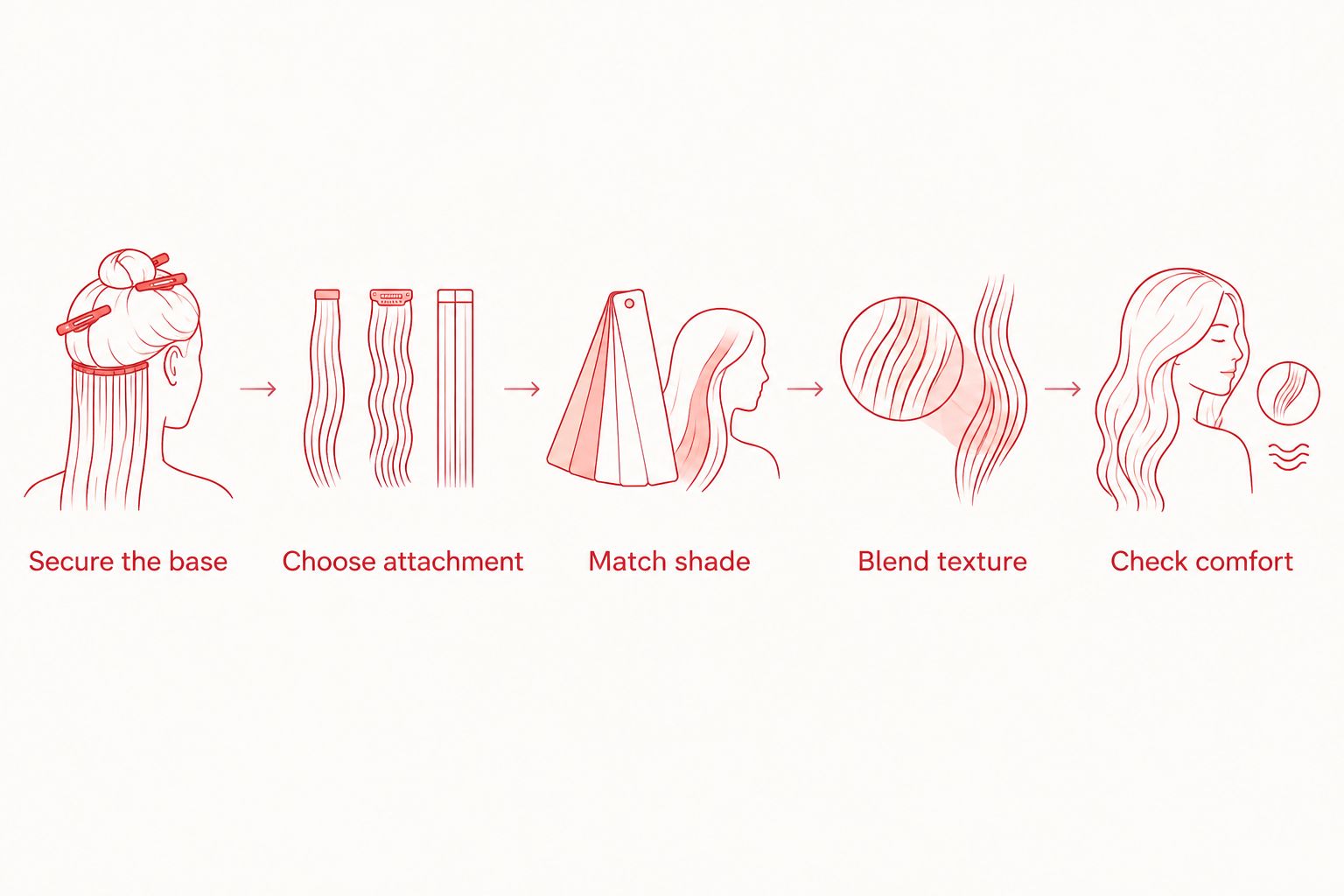
Try that sequence with your usual hairstyle rather than a special-event bun you rarely wear. Your everyday fit should work with your normal parting, preferred placement, and routine for managing loose strands.
Fine or thinning hair: add shape without tightening harder
Start with the amount of hair you can gather comfortably. A compact natural bun can provide the base for a fuller-looking style; you do not need to stretch it into the size you want the finished updo to be.
If the attachment shifts, take it off and inspect the base. Avoid repeatedly pulling the same section tighter. Hairpieces change the appearance of volume; they do not regrow hair or treat hair loss.
Thick hair: check space around the base
With thicker hair, your natural bun already occupies more space. Check that the scrunchie fits around it or that the clip can close as intended without forcing the mechanism.
A fuller hairpiece is not automatically the right match. If you want a modest everyday shape, judge the whole silhouette from the side as well as the amount of visible texture.
How to match grey and silver bun extensions
Match the hairpiece to the hair beside the bun, not only to the color at your scalp. Grey hair can contain a mixture of darker and lighter strands, while a silver description often suggests a lighter, cooler-looking finish. Shade names alone do not guarantee a match.
For a 2026 shade choice, compare the available product images with your own hair in daylight. Look at depth, warmth, and the balance of light and dark strands. Silver-blonde and mixed grey are not interchangeable simply because both look pale in a thumbnail.
Your roots and lengths can also look different. A bun placed near darker lengths needs a different visual comparison from one surrounded mainly by pale strands.
- Compare the hair gathered into the bun position.
- Check whether your hair looks warm, cool, or mixed.
- Examine the product's shade images rather than relying only on its name.
- Recheck the contrast from the side and back.
A close blend is easier to judge when you can see the join. Do not hide that area during your shade check and then discover the contrast after styling.
Which finish suits your daily routine?
Attachment and texture solve different problems. Decide how you want the bun to look after deciding how it will stay in place.
| Finish | Best for | Useful feature | Trade-off |
|---|---|---|---|
| Tousled | Casual, deliberately loose-looking updos | Strands can be arranged around the join | Needs arranging so loose texture looks intentional |
| Curly | Women who want visible texture in the bun | Creates a textured outline | Can contrast with very smooth surrounding hair |
| Straight | Women who prefer a smoother finish | Gives a cleaner-looking outline | Makes shade and blending differences easier to notice |
The Apexhairs bun extensions below offer verified scrunchie and clip-in choices. Compare their attachment and finish with your base; no single option is the best fit for every hair thickness.


Is a scrunchie bun better for thin hair?
A scrunchie bun is better for thin hair when your natural hair makes a stable base and the elastic fits comfortably. It is not better when it slips or needs excessive tightening. Judge the fit on your own bun rather than choosing solely from the attachment name.
Does a clip bun stay in place better?
A clip bun stays in place better only when its specific fastening grips suitable hair and sits correctly. Scrunchies and clips both depend on preparation and fit. If a clip repeatedly shifts, release it and reassess the position instead of assuming more pressure will help.
Can I use a ponytail extension instead of a bun?
A ponytail extension suits you when you want added length hanging below the attachment rather than a gathered updo. A bun suits you when you want the added hair arranged around the base. Check the ponytail's fastening separately; choosing a different style does not remove the need for a comfortable attachment.
FAQ
What's the best attachment for everyday bun extensions?
The best everyday attachment is the one that fits your natural hair securely without pulling. Choose a scrunchie for a stable wrap-around bun or a clip when its fastening suits your hair and preferred placement.
Can I wear bun extensions if my hair isn't thin?
Yes, bun extensions can add texture or change the shape of an updo even when your hair is thick. Check that the attachment fits around or fastens to your existing base without forcing it.
Why does my scrunchie bun keep slipping?
A scrunchie bun can slip when the natural bun is unstable or the elastic fit is unsuitable. Remove the hairpiece, rebuild the base, and check the fit rather than tightening everything harder.
Is a clip bun comfortable enough for daily wear?
A clip bun is suitable for daily wear only when its fastening sits comfortably and securely. Release and reposition it if you feel pinching or pulling; do not ignore discomfort to keep the style in place.
How do I match a bun extension to grey or silver hair?
Match a bun extension to the hair surrounding your bun in daylight. Compare the depth, warmth, and mix of light and dark strands rather than treating grey, silver, and silver-blonde shade names as identical.
Can I heat-style a synthetic bun extension?
Use heat only when the specific product's care instructions explicitly permit it. Synthetic does not automatically mean heat-safe; arrange the strands with your fingers when heat suitability is unconfirmed.
Do bun extensions help hair grow back?
No, bun extensions add the appearance of fullness; they do not regrow hair or treat hair loss. Choose them for styling and keep the attachment comfortable.
One last thing
Check the attachment before you fluff the finished bun. A loose-looking style can conceal a join, but it should not conceal a poor fit.
For everyday wear in 2026, let comfort decide first. Once the base and attachment feel right, shade and texture are the finishing choices—not ways to compensate for slipping or pulling.


Leave a comment