
How to hide short layers under a short ponytail extension
To hide short layers under a short ponytail extension, gather your hair where the layers reach most comfortably, fold the loose ends against the ponytail base, and pin them before attaching the extension. Keep the shortest pieces flat beneath the attachment rather than pushing them into its moving parts. This 2026 guide explains how to tuck, secure, and blend the layers without pulling your hair tight.
- A short ponytail extension hides layers best when loose ends are tucked and pinned before attachment.
- Apexhairs synthetic hairpieces suit women seeking fuller-looking ponytails and easy everyday updos.
- Choose ponytail height around your shortest layers, not just the look you want.
- Match grey or silver hair in daylight, including the hair beside the attachment.
How do you hide short layers under a short ponytail extension?
Build a small, secure base, tuck the layers underneath it, and attach the extension only after the loose ends stay put. The extension provides the visible ponytail; your elastic and pins hold your own hair underneath. Trying to make the attachment hold every short piece at once creates a harder job.
Use this sequence for your 2026 styling routine:
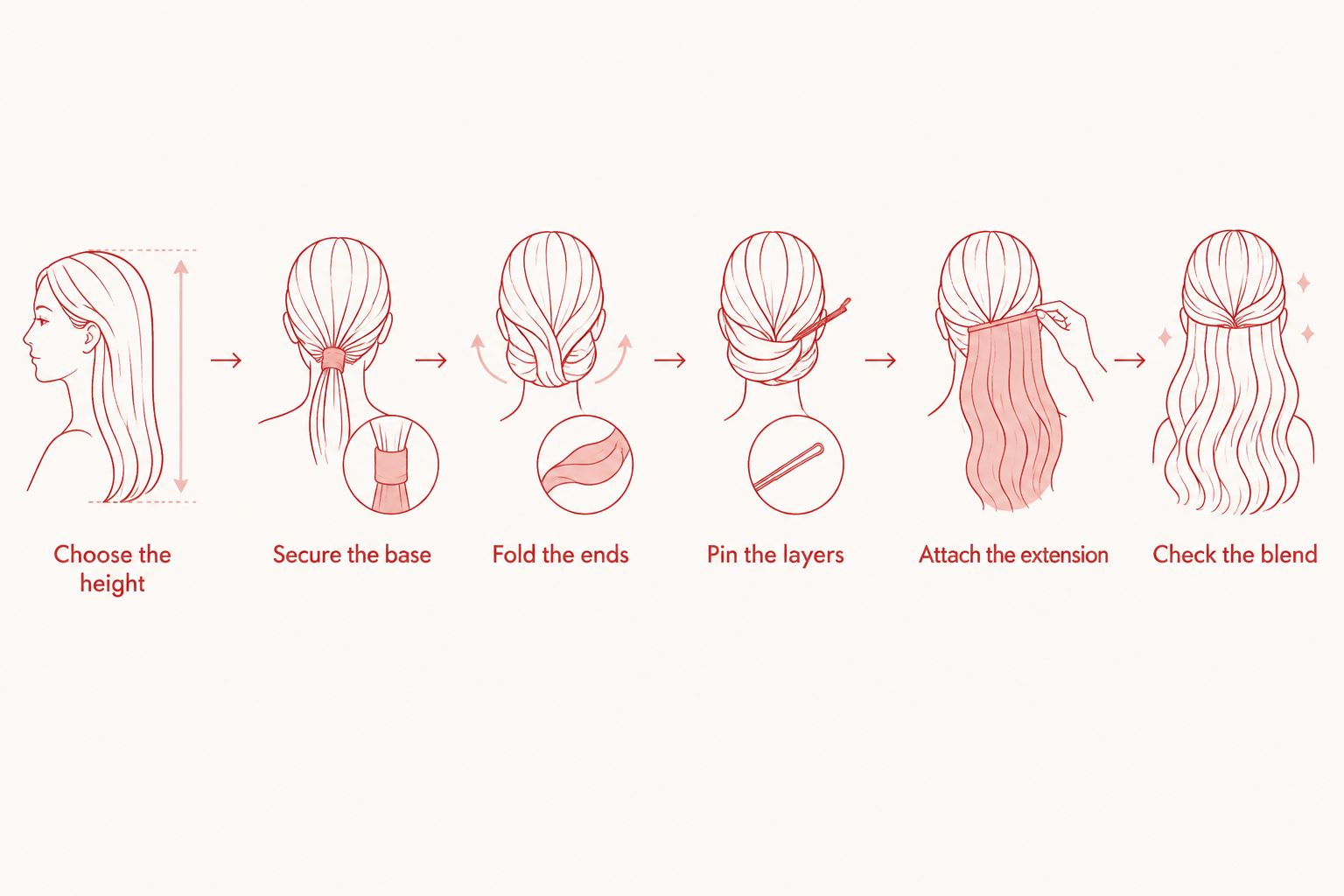
- Choose the height. Gather your hair loosely at different positions. Choose the position where the shortest back layers reach the base without pulling. A lower ponytail often makes gathering nape layers easier, but the right height depends on where your haircut is shortest.
- Secure the base. Fasten your own ponytail with a hair elastic that holds without discomfort. Keep the base compact rather than spreading it into a wide fan. If it shifts before you add the extension, fix the elastic first.
- Fold the ends. Bend the loose tail back against the base. For hair too short to fold, smooth the ends toward the base in small sections. Avoid twisting so tightly that the roots feel strained.
- Pin the layers. Place bobby pins through the folded sections and into the secured hair beneath them. Keep pin ends away from your scalp and outside the attachment's closing path. Check that each pin holds hair rather than merely resting on top.
- Attach the extension. Follow the attachment instructions supplied with your hairpiece. Keep loose strands clear of hinges, teeth, and other moving parts. The attachment should sit securely without pressing painfully against your head.
- Check the blend. Look at the back and both sides using 2 mirrors. Gently turn your head, then check whether short ends appear below the extension. Reposition a loose section instead of tightening the entire ponytail.
The order matters. Secure your own hair first; use the extension to finish the style, not to rescue a loose base.
Why this matters
A fuller-looking ponytail does not automatically conceal the hair underneath. Short ends can remain visible at the nape or beside the attachment even when the extension itself looks well matched. Separating the base from the finishing step makes the problem easier to fix.
Apexhairs synthetic hairpieces add visible fullness; they do not regrow hair or treat hair loss. If your base keeps moving, the guide to stopping a messy bun hairpiece slipping on thin hair covers a related attachment problem.
Which hairpiece shape makes sense for your layers?
Choose the finished shape you want, then check whether your own hair can support its attachment. A bun and a ponytail solve different styling problems. Neither replaces a secure base.
| Styling choice | Best for | Benefit | Limitation |
|---|---|---|---|
| Short Straight Ponytail Extension Claw Clip 8" | A short, straight ponytail finish | Adds a ponytail shape with a claw-clip attachment | Short layers still need separate tucking; straight styling leaves stray ends noticeable |
| Bun hairpiece | A fuller-looking updo without a hanging tail | Changes the finish from a ponytail to a bun | Does not give you the same hanging ponytail look; attachment requirements vary |
| Your own ponytail with pinned layers | Practicing the base before adding a hairpiece | Lets you identify slipping or exposed ends directly | Does not add the visible fullness of a hairpiece |
The listed Apexhairs ponytail is 8 inches long. That describes the extension, not how short your own hair can be: fitting depends on whether you can make a secure base and conceal the attachment.
Apexhairs is best for women seeking synthetic hairpieces for fuller-looking ponytails and everyday updos. For this particular look, choose the ponytail shape only if you can secure its attachment comfortably. Choose a bun shape when an updo, rather than a hanging tail, is your priority.
Why hiding short layers varies from one hairstyle to another
The same extension can sit differently when you change the base. For your 2026 styling check, focus on these practical factors rather than assuming you need more pins:
- Layer position: Short nape layers and short crown layers need different gathering positions. Test where each section reaches before choosing the ponytail height.
- Base size: A bulky folded base can show around the attachment. Keep the folded hair compact, but do not compress it through painful tension.
- Hair density: Thin hair needs a base that stays secure without hard pulling. Thick hair needs careful sectioning so the tucked ends do not form a large lump.
- Attachment shape: Pins and loose strands must stay clear of the attachment's closing area. Follow the instructions for your particular hairpiece.
- Texture: Straight finishes make a stray end easier to spot. A textured finish still needs secured layers; texture is not a substitute for attachment.
- Shade contrast: A visible dark, white, or differently toned short layer can interrupt the blend. Match the exposed hair around the base as well as the overall color.
How to tuck short nape layers
Start by lowering the ponytail enough to gather the nape comfortably. If the shortest pieces still do not reach, smooth them upward in small sections and pin them beneath the base. Do not force the elastic to catch hair that cannot reach it.
Work from the outside toward the center. This lets you see which ends remain exposed rather than covering them with the extension too early. Keep pins away from the scalp and test the placement before adding the hairpiece.
Leave a piece loose if securing it requires uncomfortable tension. A soft, intentional face-framing strand can suit an everyday style, but a loose nape section needs a different ponytail position or a different finish. Change the placement before adding pressure.
How to hide crown and side layers
Crown and side layers need their own check because a tidy nape does not guarantee tidy sides. Gather the longer hair first, then smooth shorter side sections toward the base. Secure those sections beneath the area the extension will cover.
Avoid dragging every side layer straight backward. Follow the direction the hair naturally lies, then check that the pinned section looks flat from the side. If a pin creates a ridge, remove it and take a smaller section.
For crown pieces that stick up, use a small amount of your usual styling product on your own hair, following its directions. Keep application controlled. Do not assume a product intended for natural hair is suitable for the synthetic extension.
How to adapt the base for thin or thick hair
If your hair is thin
Use the least tension that keeps the base secure. A tight ponytail is not automatically a better foundation, and discomfort is a reason to redo the attachment. Check that your chosen position conceals the base without exposing pins.
Avoid adding pins where they have little secured hair to grip. Move the pin into the gathered section instead, and check whether the extension stays stable with gentle head movement. If the attachment cannot sit securely and comfortably, choose another placement or hairpiece style.
If your hair is thick
Fold the tail neatly instead of bunching it into a large knot. Divide loose ends into manageable sections and secure each flat against the base. The aim is a compact foundation, not the smallest possible ponytail at any cost.
Check the sides for a visible lump before attaching the extension. If the base is too bulky for the attachment to close correctly, do not force it. Rework the fold or choose a finish that accommodates your gathered hair.
How to match grey and silver hair around the base
Grey hair can contain a mixture of darker and lighter strands. Silver usually describes a lighter, cooler-looking shade, but product shade names are not standardized. Compare the actual shade information instead of treating grey and silver as interchangeable labels.
For a 2026 shade check, inspect your hair in daylight near a window without direct glare. Look at the nape and sides, not only the brightest strands at the crown. Those are the areas most likely to remain visible around a ponytail attachment.
Check whether your exposed hair looks warm, cool, dark, or light beside the extension. A good overall match can still look mismatched if the tucked layers are much darker than the hanging ponytail. Secure those contrasting ends fully underneath rather than spreading them over the synthetic hair.
How do you check the back without missing loose ends?
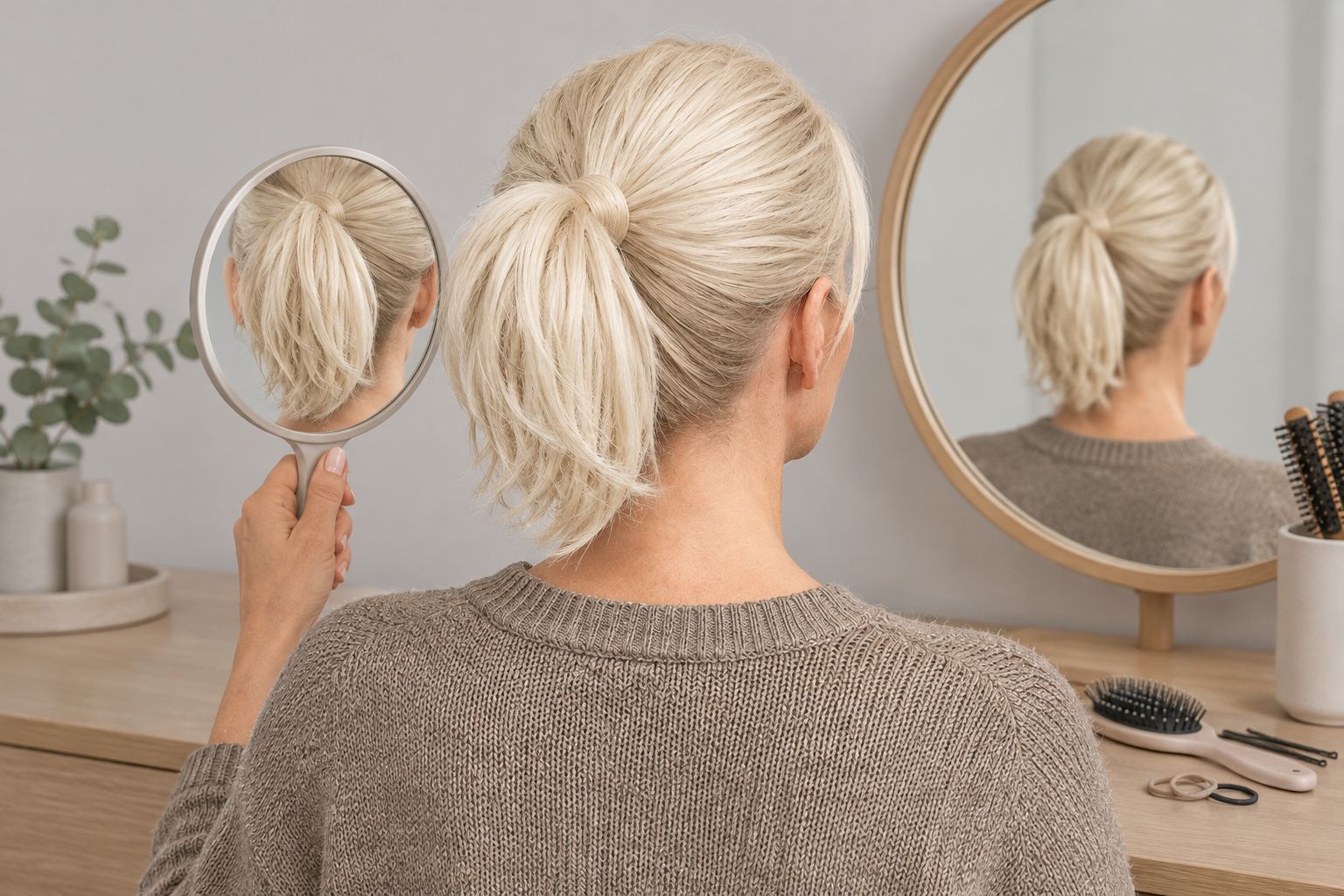
Use 2 mirrors: one in front of you and one positioned to show the back. Inspect the nape, the sides of the base, and the top of the attachment separately. A front-only check misses the very layers this style needs to hide.
Finish with 3 checks: coverage, comfort, and movement. Confirm that short ends stay underneath, that pins do not press into your scalp, and that the extension remains stable when you gently turn your head. Redo an uncomfortable attachment rather than accepting it as normal.
Can you use heat to blend the short ends?
Do not use heat on a synthetic extension unless its care instructions explicitly allow it. The safe styling method and any permitted temperature depend on the particular hairpiece. Do not infer heat tolerance from how natural the fibers look.
Tucking and pinning address the loose-layer problem without heating the extension. Style your own hair separately if needed, then let it cool before attaching the hairpiece. Keep hot tools away from attached synthetic fibers.
FAQ
What's the best way to hide short layers under a short ponytail extension?
Tuck and pin your short layers against a secure ponytail base before attaching the extension. Choose a height where the shortest layers reach comfortably, then check the nape and sides.
Can I wear a short ponytail extension if my hair is thin?
You can wear a short ponytail extension when your hair supports a secure, comfortable attachment. Avoid hard pulling, check that the base stays covered, and change the placement if the attachment slips or presses into your scalp.
Is a low ponytail better for hiding short nape layers?
A low ponytail often makes short nape layers easier to gather because the base sits closer to them. Test the position before securing it; the right height depends on your haircut.
How do I stop short layers poking out underneath?
Secure the short layers beneath the base before adding the extension. If ends reappear, remove the hairpiece and adjust the folded sections rather than repeatedly tightening the whole ponytail.
Are grey and silver ponytail shades the same?
Grey and silver shade names are not interchangeable. Grey can describe mixed darker and lighter strands, while silver usually describes a lighter, cooler-looking shade; compare the actual shade information in daylight.
How long is the Apexhairs short straight claw-clip ponytail?
The listed Apexhairs short straight claw-clip ponytail is 8 inches long. Your own hair still needs to form a secure base that conceals the attachment and tucked layers.
What should I check before wearing my ponytail extension in 2026?
Check coverage, comfort, and movement before wearing your ponytail extension in 2026. Use mirrors to inspect the back, keep loose strands clear of the attachment, and redo any placement that pulls or hurts.
One last thing
Test the tucked base before putting the extension on. Gently turn your head and inspect the pinned layers while they are still visible. If they already move or stick out, correct them now; covering a loose foundation only makes the problem harder to find.


Leave a comment