
How to refresh flattened curls in a curly bun hair piece
Refresh a flattened curly bun hair piece by removing it, supporting the base, and gently separating the curls with your fingers; wash it only when needed and according to its care instructions. Let a washed piece air-dry without compression, and avoid heat unless its instructions explicitly permit it—fluffing improves flattened volume but does not repair damaged synthetic fibers.
- Refresh a curly bun hair piece with gentle finger separation before reaching for water or styling tools.
- Apexhairs synthetic bun hairpieces suit women seeking fuller-looking everyday updos.
- Wash synthetic hairpieces only as directed, and let the curls dry without compression.
- Match grey or silver shades beside your pulled-back hair in natural daylight.
How do you refresh flattened curls in a curly bun hair piece?
Start with the least handling necessary: loosen compressed curls, then decide whether the hairpiece needs washing. A Messy Bun Hair Piece – Curly Synthetic Hair Bun adds fullness to an updo, but its synthetic fibers need a different approach from your own hair.
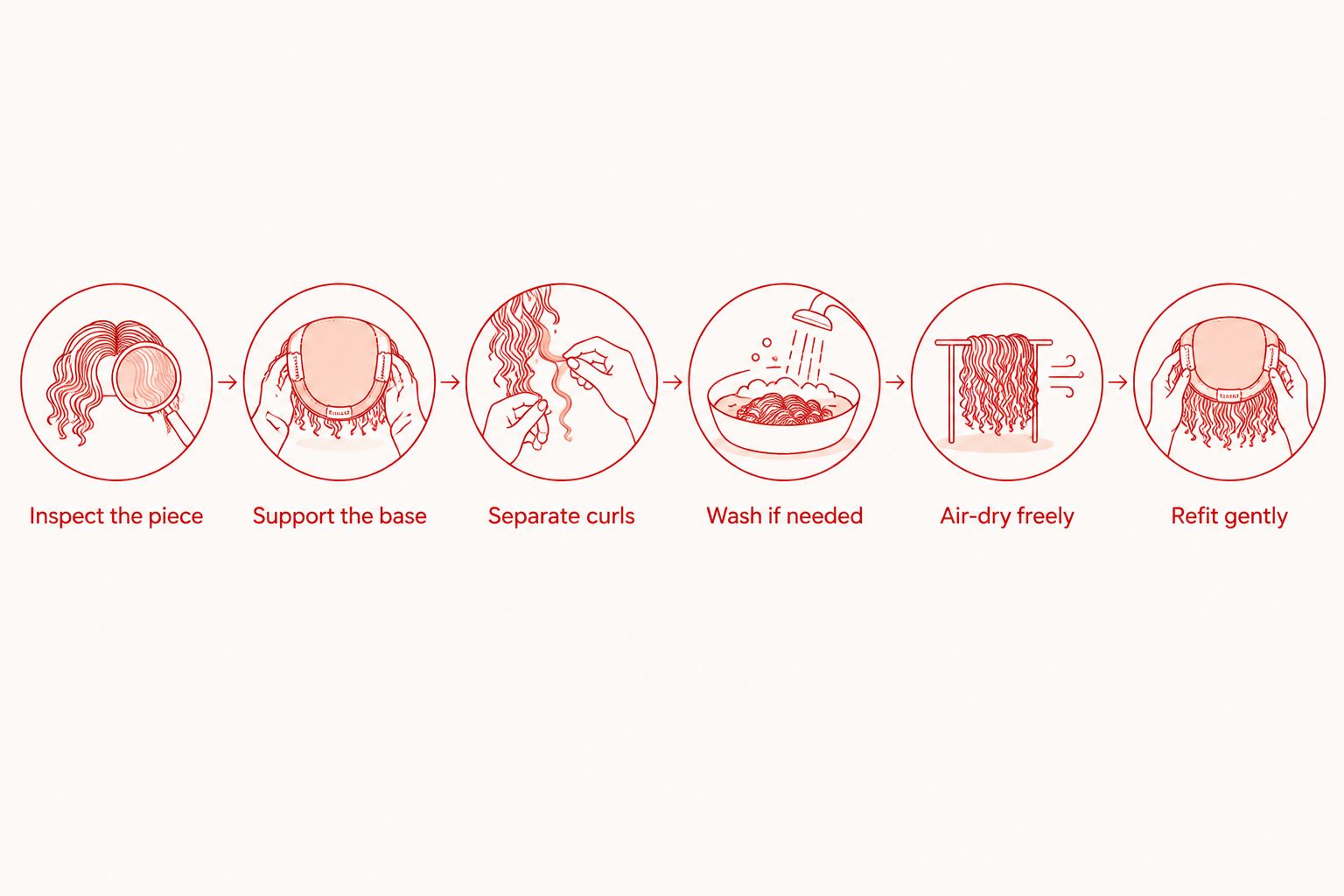
Use this sequence for your 2026 styling routine. Follow the hairpiece’s care instructions wherever they differ from general advice.
- Inspect the piece. Remove it from your hair and look for flattened sections, tangles, residue, and damage around the attachment. Do not pull on loose fibers or a damaged base.
- Support the base. Hold the elastic or attachment rather than suspending the piece by its curls. Keep that support while you work through each section.
- Separate curls. Use your fingertips to ease apart curls that have been pressed together. Follow the existing curve instead of pulling the fibers straight.
- Wash if needed. If the piece feels coated or needs cleaning, follow its washing instructions using products suitable for synthetic hair. Flattening alone is not a reason to wash it.
- Air-dry freely. After permitted washing, blot rather than wring. Arrange the piece so its curls are not trapped beneath the base, and leave it to dry fully.
- Refit gently. Attach the dry piece to your secured bun, then loosen visible curls around the outside. Stop adjusting once the shape looks balanced.
Why this matters
A fuller-looking bun depends on how the curls sit, not just how much hair the piece contains. Curls pressed against each other hide their shape; separating them gives the updo a less compact outline.
For thin hair, added fullness should not come at the expense of a comfortable attachment. For thicker hair, a bulky natural bun can crowd the hairpiece and push its curls out of position. Refresh the hairpiece off your head, then adjust the fit separately.
Choose the refresh method that matches the problem
Before changing your 2026 hairpiece-care routine, identify what you are seeing. A compressed curl, a tangled section, and a damaged fiber do not need the same response.
| Method | Best for | Benefit | Limitation |
|---|---|---|---|
| Finger separation | Clean curls flattened by storage or wear | Loosens the shape without a full wash | Does not remove residue or repair damaged fibers |
| Label-directed washing | A piece that needs cleaning | Removes buildup when suitable care products are used | Adds handling and requires complete drying |
| Heat styling permitted by the label | Fibers explicitly approved for heat styling | Allows only the reshaping the instructions permit | Unsuitable when heat compatibility is unknown |
Finger separation is the first choice for a clean, flattened piece. Work from the outside inward so you can see what changes, and leave curls alone once they separate naturally.
Washing is a cleaning step, not a guaranteed curl reset. If a clean piece still looks stretched or rough after gentle handling, repeated washing is not the answer.
Do not use a curling iron, hot brush, steamer, or hot-water technique based on appearance alone. Synthetic pieces differ in heat compatibility. No stated heat permission means no heat styling.
How to separate flattened curls without creating a fluffy tangle
Place the hairpiece on a clean surface and lift a small section from the outer edge. Hold close to the base while you ease the ends apart, so your fingers do not tug against the attachment.
Follow the curl already present. If several strands form a curved group, separate the group from neighboring hair rather than dismantling every strand. The goal is visible shape, not maximum separation.
If you meet a knot, stop pulling outward. Loosen it carefully from the ends toward the base, using only tools allowed by the care instructions. A brush dragged through the entire bun can separate the curl pattern more than you intended.
Check the shape from the side as well as above. A bun can look full from the front while remaining compressed underneath. Turn the piece in your hands instead of repeatedly tugging at the same visible area.
Stop when the curls look distinct and the outline looks balanced. More handling does not automatically produce more volume, and a messy finish should still have recognizable curl groups.
How to wash and dry a synthetic bun when cleaning is needed
For a 2026 care routine, use the instructions supplied with your actual hairpiece—not instructions for human-hair extensions. Choose a cleanser intended for synthetic hair only if the piece’s care guidance allows it.
Before washing, gently separate any obvious tangles. During cleaning, avoid scrubbing the fibers against each other or twisting the entire piece. Support the attachment throughout the process, especially when the wet hair feels heavier.
Rinse as directed and press excess moisture into a clean towel. Do not wring the bun like a washcloth. Keep the curls loosely arranged rather than packing them into a towel bundle.
Let the piece air-dry in a position that leaves its curls uncompressed. Keep it away from direct heat, and do not wear or store it while damp. Once it is dry, use your fingers to restore the outline rather than starting another wash immediately.
Skip improvised mixtures of household cleaners, oils, and styling products. A product that works on your own hair is not automatically suitable for synthetic fibers. Follow the label rather than layering products until the piece feels coated.
Why the curl refresh result varies
The same gentle technique will not make every synthetic bun look identical. These factors affect the result:
- Original texture: A loosely tousled bun will not become a tightly curled bun through fluffing alone.
- Compression: Curls stored beneath other items need separation, while a freely stored piece needs less reshaping.
- Tangling: Knotted fibers need careful detangling before you can judge the curl shape.
- Residue: Coated fibers need appropriate cleaning rather than extra brushing or more styling product.
- Fiber condition: Heat damage, stretched fibers, and worn areas are not repaired by washing.
- Attachment position: An overly tight wrap or crowded base can flatten curls again after you refresh them.
Compare the result with the piece’s original texture, not with a different hairstyle. Aim to recover its existing shape rather than force a new curl pattern.
How to attach the refreshed bun for a fuller-looking updo
Start with your own hair secured in a bun that feels comfortable. Keep the base neat enough for the attachment to sit around or over it without forcing the hairpiece into position.
For a scrunchie-style piece, follow its wrapping instructions and keep the decorative hair clear of the elastic as you attach it. For a clip-in piece, follow the placement instructions and check that the fastening closes without catching or pulling your hair.
Thin hair needs a secure foundation, not a painfully tight one. If the hairpiece slips, correct the attachment rather than pulling the curls tighter around your bun. With thicker hair, adjust the size and position of your natural bun so it does not crowd the added hair.
After attaching, lift the outer curls gently and check the back with a mirror. Keep some curls grouped together for definition. Spreading every strand equally can make the finish look fuzzy rather than naturally tousled.
Apexhairs synthetic bun hairpieces are best for women seeking fuller-looking updos without restyling their own hair. They add visible hair to the hairstyle; they do not regrow hair or treat hair loss.
Choose a bun texture that suits your everyday style
Choose the finish you want before choosing how much to fluff. The following Apexhairs options are synthetic bun styles; use each piece’s care instructions rather than assuming they all permit the same treatment.
| Hairpiece | Best for | Useful feature | Styling limitation |
|---|---|---|---|
| Messy Bun Hair Piece – Curly Synthetic Hair Bun | A fuller-looking curly updo | Adds curly synthetic hair to the bun | Needs curl separation rather than brushing into a smooth finish |
| Small Messy Bun Hair Piece – Curly Synthetic Scrunchie | Readers choosing a small messy-bun style | Combines a curly texture with a scrunchie format | Must suit your natural bun and desired silhouette |
Neither choice removes the need for shade matching and comfortable placement. Choose the texture you would enjoy wearing with your usual hairstyle, then check the specific attachment and care guidance.


How to match grey or silver hair after refreshing the curls
Check the refreshed piece beside your pulled-back hair in natural daylight. Match the hair surrounding the bun, because that is where the transition will be visible—not just the color near your face.
Grey and silver are not interchangeable shade descriptions. Grey can include a mixture of darker and lighter strands, while silver generally describes a lighter, cooler appearance. Shade names vary, so compare the actual tones rather than choosing by name alone.
Spread the curls into their intended shape before judging the match. Compressed hair creates shadows that can make the piece appear darker. Check both the highlighted outer curls and the shaded hair near the base.
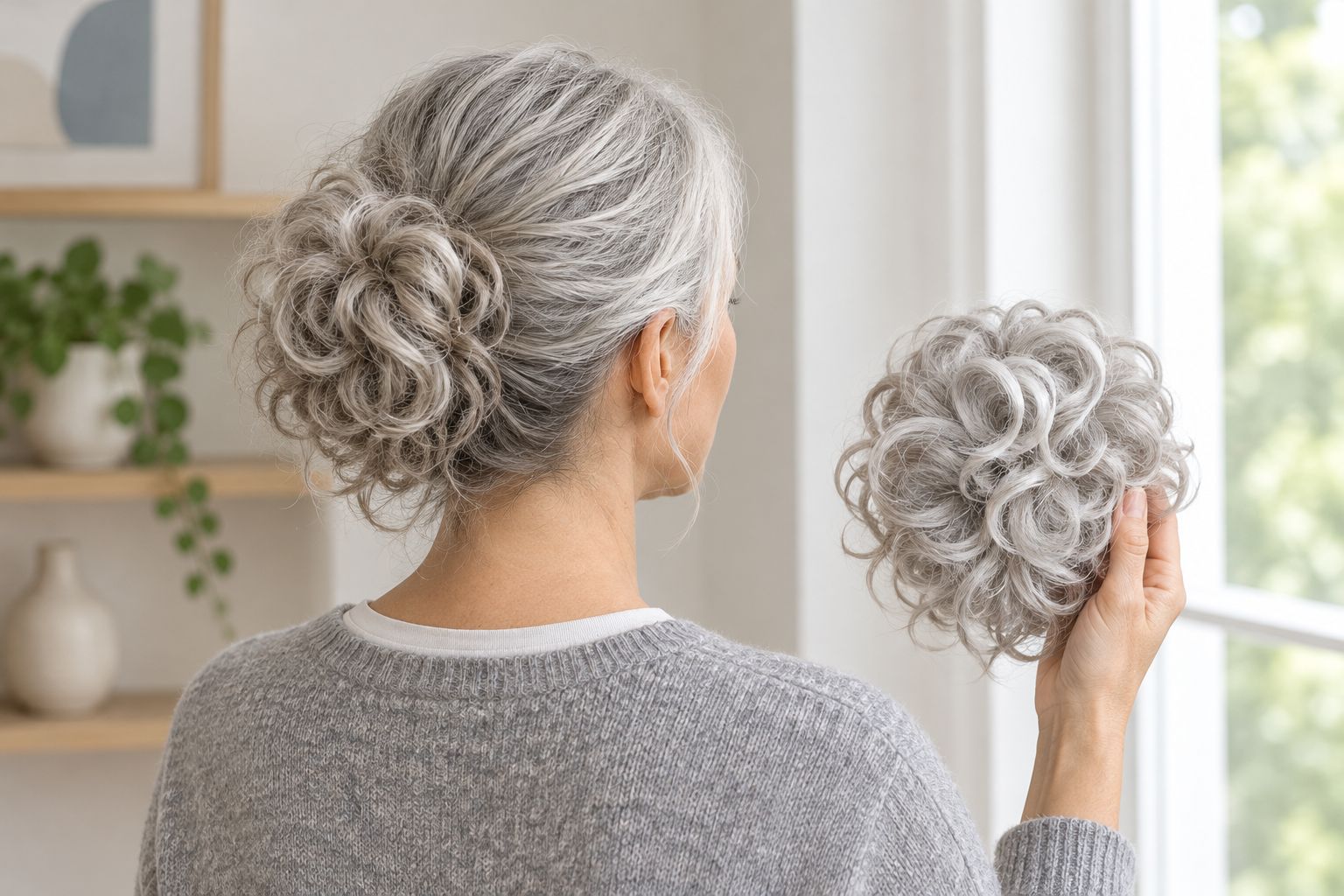
For your 2026 shade check, use the same daylight setting when comparing options. Avoid judging a match under a colored bathroom light or through a photo filter. A good texture match also helps the transition look less abrupt.
Can I use water alone to bring the curls back?
Water alone is not a guaranteed curl reset for a synthetic bun. If cleaning is unnecessary, start with dry finger separation; use water only in the way the care instructions allow.
What if the curls still look flat after drying?
A fully dry piece that still looks flat needs a condition check, not automatic rewashing. Look for stretched curls, rough ends, damaged fibers, or a base that compresses the hair when attached.
Should I switch to a ponytail extension instead?
Choose a ponytail extension if you want hair hanging below the attachment rather than a rounded updo. It is a different silhouette, not a treatment for flattened bun curls, and it still needs suitable shade matching and care.
FAQ
What's the best way to refresh a flattened curly bun hair piece?
Start by removing the piece, supporting its base, and gently separating compressed curls with your fingers. Wash only when cleaning is needed and the care instructions allow it.
Can I brush my synthetic curly bun hairpiece?
Use a brush only if the hairpiece’s care instructions permit it. Finger separation is the gentler starting point for preserving grouped curls rather than brushing them into a fluffy finish.
Can I use a curling iron on my bun hairpiece?
Use a curling iron only when the exact hairpiece is explicitly approved for heat styling. Follow its stated temperature and technique instructions; do not assume all synthetic fibers tolerate heat.
Will washing make flattened synthetic curls spring back?
Washing removes residue when done correctly, but it does not guarantee restored curls. Gentle separation helps compressed curls, while damaged or stretched fibers are not repaired by washing.
How do I keep my curly bun from flattening again?
Store the dry hairpiece with its curls free from compression and avoid an attachment that squeezes the decorative hair. Refresh the outline gently after fitting rather than pulling the curls tighter.
How do I match a bun hairpiece to grey or silver hair?
Compare the piece with the hair around your secured bun in natural daylight. Check the lighter and darker strands, because grey and silver shade names alone do not establish a match.
Are Apexhairs bun hairpieces only for women with thin hair?
Apexhairs bun hairpieces suit everyday styling as well as fuller-looking updos for thin hair. Choose an attachment and shape that work comfortably with your own hair thickness.
Can a synthetic bun hairpiece help my hair grow back?
A synthetic bun hairpiece adds visible fullness to a hairstyle; it does not regrow hair or treat hair loss. Keep the attachment comfortable and avoid pulling on your natural hair.
One last thing
Before putting the refreshed piece away, check its underside. Curls tucked beneath the attachment can stay compressed even when the visible top looks full. Arrange the dry piece loosely, with nothing heavy resting on it.
Make that underside check part of your 2026 routine. A gentle refresh lasts only as long as your fitting and storage habits let the curls keep their shape.


Leave a comment