
Low hair bun styling for collars, scarves and cool-weather wear
For women wearing collars, hair bun styling is arranging your hair into a secured updo that stays clear of neckwear while giving you the fullness you want. A low bun needs enough room above a coat collar or scarf; a synthetic bun hairpiece adds volume without requiring a larger bun made from your own hair.
- Apexhairs hair bun pieces are best for women seeking fuller-looking updos without relying on their own hair for volume.
- Position a low bun above your collar, not directly against the fabric.
- Match grey or silver hairpieces to your gathered hair in daylight, including the darker strands.
- Choose a bun scrunchie for added fullness; choose a ponytail extension when you want a hanging shape.
Why hair bun styling matters for cool-weather dressers
Your collar should determine the bun position—not the other way around. A hairstyle that feels comfortable with a neckline can press against a raised coat collar once you leave home. A scarf adds another contact point, especially when you turn your head.
For your 2026 cool-weather routine, start with the outfit you actually wear outside. Thin hair, thick hair and short layers need different preparation, but every bun needs a secure base and space away from fabric.
If added hair overwhelms your natural bun, use this guide to why fake hair buns look too bulky and how to fix it. More fullness is useful only when the finished shape suits your head and clothing.
A bun hairpiece changes the appearance of your hairstyle. It does not regrow hair or treat hair loss, and a fuller-looking bun does not provide coverage everywhere on the scalp.
How to style a low bun around collars and scarves
Choose your neckline before positioning the bun
Put on your coat and arrange your scarf before making the final parting. Find the spot where the top edge of the fabric sits, then place the bun above that edge rather than directly on it. A low bun does not have to sit at the lowest possible point on your neck.
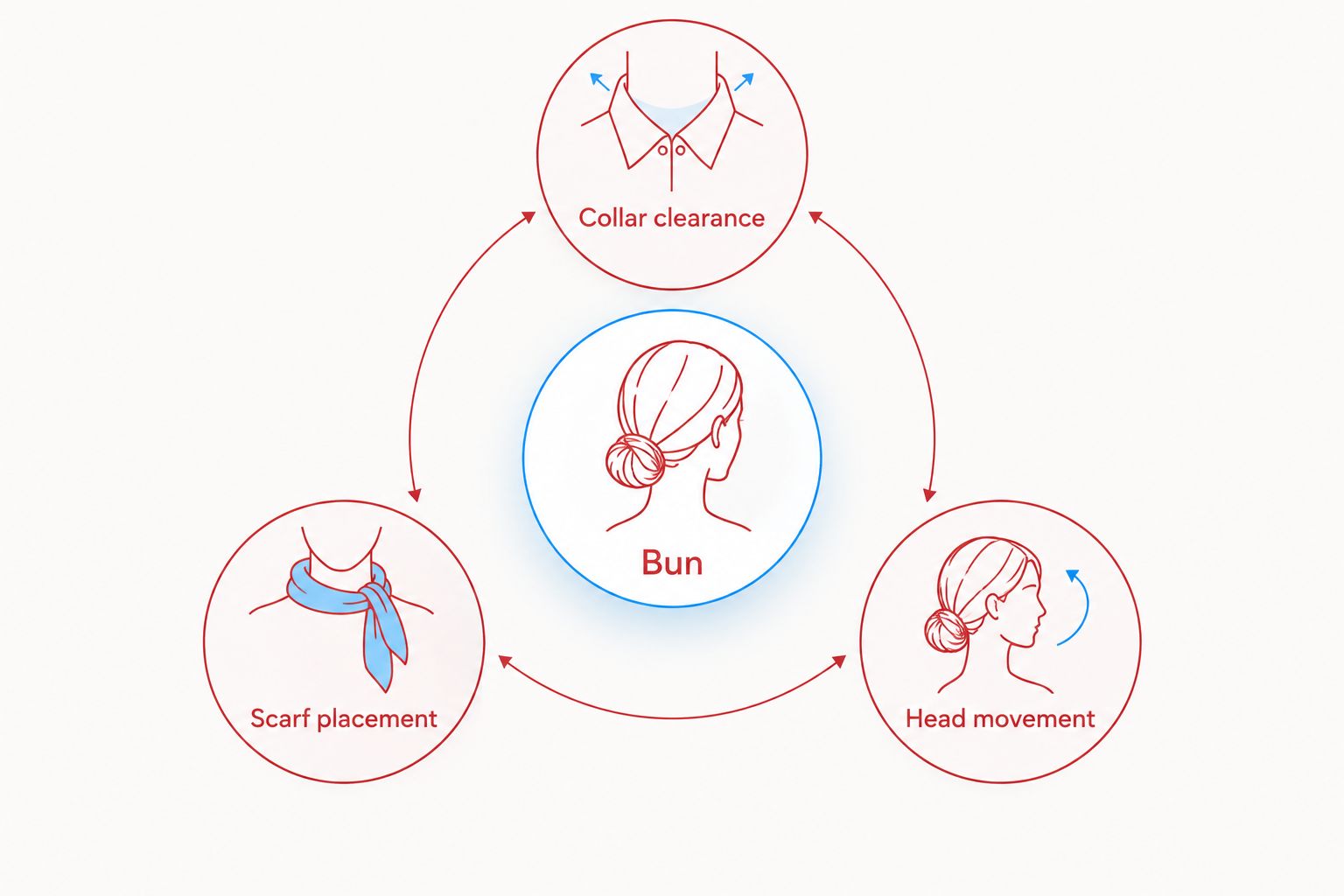
For a 2026 wardrobe with several collar shapes, keep a separate placement in mind for each outfit. A soft cardigan and a structured coat do not leave the same space behind your head. Make 3 movement checks: look left, look right and lower your chin. Reposition the base if the collar pushes it upward.
- Collar clearance: Leave the bun free of pressure from the top edge.
- Scarf placement: Arrange the scarf before deciding where to secure your hair.
- Head movement: Check the position while turning and looking down.
- Bun shape: Keep fullness above or beside the base, not hanging into fabric.
Build a comfortable base with your own hair
Try a natural low bun first. Gather your hair with your fingers or a brush, secure a small ponytail, then twist or fold the lengths into a compact base. This manual option shows you how much extra fullness you actually want before adding a hairpiece.
Start with 1 hair elastic that holds without pulling. If the base slips, remake it rather than repeatedly tightening it. Fine hair does not need aggressive backcombing to qualify for an updo, and thick hair does not need extra volume unless you want it.
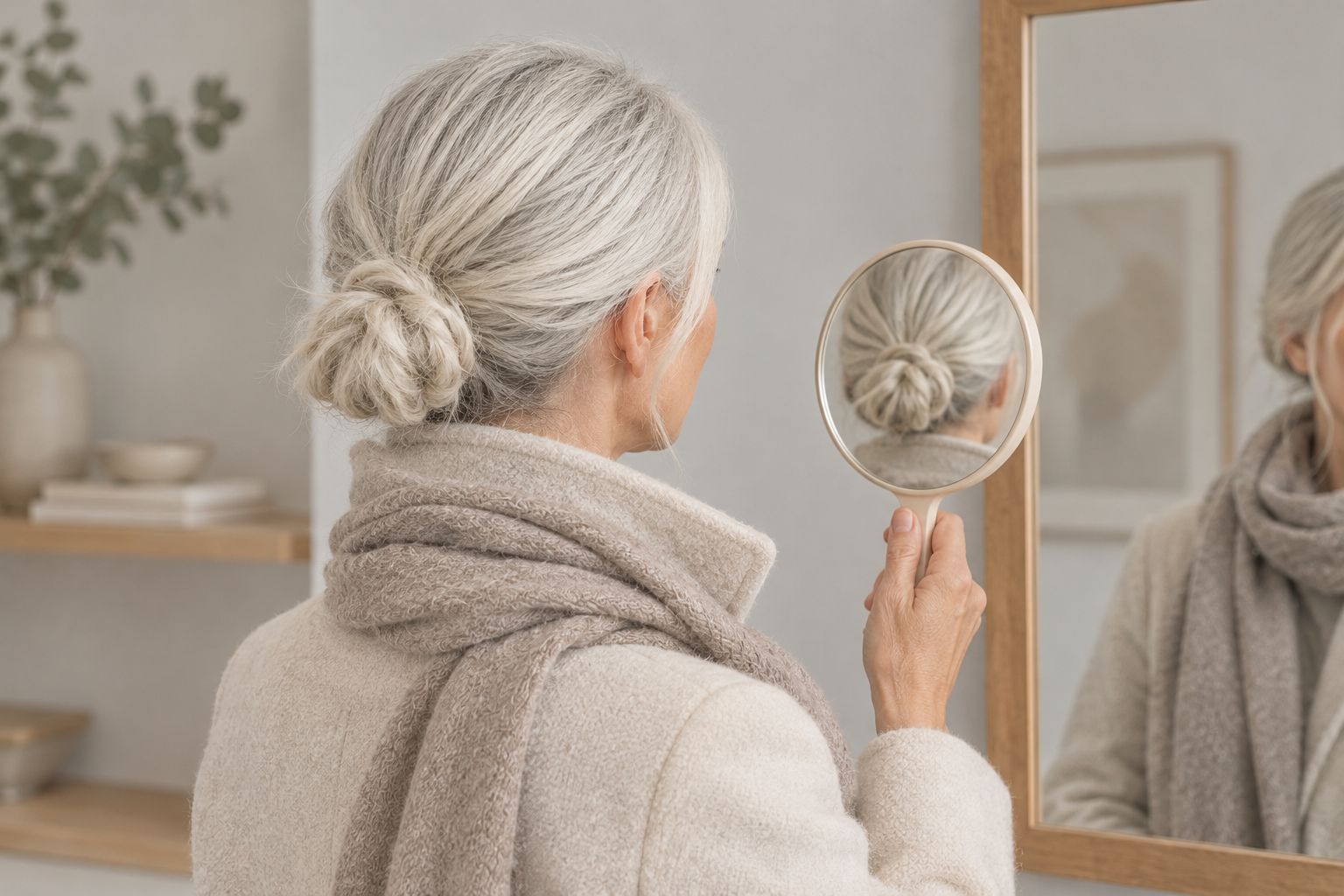
Use 2 mirrors to inspect the back and sides. Look for gaps, exposed fastenings and short layers that catch beneath the elastic.
- Gather the hair without pulling the hairline tight.
- Keep your natural bun compact enough to cover with the chosen piece.
- Tuck short ends into the base rather than leaving them under the collar.
- Stop and loosen the style if you feel discomfort.
Choose a hairpiece that suits the finished shape
Choose the silhouette before choosing extra volume. A bun scrunchie adds hair around your existing base; a clip-in bun uses a different fastening approach. A ponytail extension creates a hanging style and needs its own clearance check against scarves and coat backs.
For a tousled finish, the Apexhairs Synthetic Messy Bun Hairpiece Scrunchie is a clip-free synthetic option described as adding volume to fine or thinning hair. It is best for women who want a fuller-looking, textured bun. The limitation is practical: added volume still needs a secure base and a shape that clears your collar.
Do not assume a ponytail extension can be twisted into a bun. Follow the instructions for that specific piece.
- Choose a bun scrunchie when you want fullness around a bun base.
- Choose a clip-in bun when you prefer that attachment method.
- Choose a ponytail extension when you want loose, hanging lengths.
- Compare the finished outline with your coat collar before committing.
Match the shade to your gathered hair
Check the color beside the hair where the piece will sit, not only beside your fringe. Hair gathered into a low bun can show a different mixture of shades from the front of your head. Compare in indirect daylight, then check again indoors.
Grey describes a mixture that can include darker and lighter strands. Silver usually describes a lighter, cooler-looking finish, but shade names are not standardized across products. Salt-and-pepper hair needs attention to the balance of dark and light strands, not just the lightest highlight.
If your color has changed during 2026, make a fresh comparison rather than relying on an older purchase. A product photograph is a starting point, not proof of an exact match.
- Compare the piece with the gathered mid-lengths and ends.
- Check whether your hair looks warm, cool or mixed.
- Look at the darker strands as well as the brightest ones.
- Inspect the join from the back before adjusting the surface texture.
For a smooth alternative to a tousled bun, Apexhairs also offers a straight synthetic bun scrunchie described as adding fullness with a smooth finish. Choose between these textures based on your own hair and the outline you want, not on a promise that either will match everyone.


Attach the piece without tightening your whole hairstyle
Follow the attachment instructions supplied with your hairpiece. For a bun scrunchie, establish the secure natural base first, then fit the scrunchie around it as directed. Do not use the added piece to compensate for a loose ponytail underneath.
For a clip attachment, check that the fastening holds suitable hair rather than pressing painfully against your scalp. Attachment methods differ, so a technique that works for a scrunchie is not automatically suitable for a clip-in piece.
A gentle head turn should not make the whole style shift. If it does, remove the piece and reset the base instead of adding tension everywhere.
- Open and close any fastening before wearing it so you understand the mechanism.
- Keep loose hair away from moving attachment parts.
- Check that the base stays still when you turn your head.
- Remove the piece immediately if the attachment hurts.
Blend the surface without making the bun bigger
Use your fingertips to arrange the outside of the bun and conceal the join. Spread the added hair around the base rather than pulling every section outward. A wider silhouette is not always a more natural-looking one.
For fine hair, protect the coverage you already have at the sides; pulling strands out for softness can expose more scalp than intended. For thicker hair, tuck your own ends neatly so they do not create a second outline beneath the hairpiece.
Keep face-framing strands short enough to avoid trapping them under scarf folds. Finish with another movement check while wearing your outerwear.
- Cover the join before adding decorative looseness.
- Shape the bun with fingertips rather than forceful brushing.
- Tuck uneven ends away from the collar.
- Check the side profile as well as the back.
Remove and care for the piece after wear
Take off the hairpiece before undoing your natural base. Support your hair as you release the attachment, and never pull the entire bun off as one bundle. Separate any strands caught around the fastening before lifting it away.
Make care part of your 2026 styling routine rather than waiting until the piece becomes tangled. Follow the product's washing and drying instructions, and do not assume synthetic fibers tolerate heat. Heat styling requires explicit permission in the care directions.
Store the piece where its shape will not be crushed beneath scarves or accessories. A tidy attachment is easier to inspect before the next wear.
- Release clips or elastic loops deliberately, without tugging.
- Separate tangles gently according to the care instructions.
- Keep hot styling tools away unless the product explicitly permits them.
- Let a washed piece dry as directed before storing it.
Compare your low-updo options
The best choice is the smallest addition that gives you the shape you want. These options solve different styling needs; none removes the need for a comfortable base and collar clearance.
| Option | Best for | Main benefit | Key limitation |
|---|---|---|---|
| Natural low bun | Women happy with their existing fullness | Uses your own hair without an added attachment | The shape depends on your hair length and density |
| Synthetic Messy Bun Hairpiece Scrunchie | Women wanting a fuller-looking, tousled updo | Adds textured volume with a clip-free attachment | Needs blending and enough room above neckwear |
| Straight Synthetic Hair Bun Scrunchie | Women wanting a smoother bun outline | Adds fullness with a smooth finish | A texture mismatch remains visible even with a close color match |
| Clip-in bun | Women who prefer a clip attachment | Offers an alternative to a scrunchie fastening | Clip position needs checking for comfort and concealment |
| Ponytail extension | Women wanting a hanging style instead of a bun | Adds a different silhouette to gathered hair | Loose lengths can rest against collars and scarves |
Apexhairs hair bun pieces are best for women seeking fuller-looking updos without relying on their own hair for volume. Choose the texture and fastening you can blend comfortably; added hair is optional, not a requirement for an everyday updo.
Common mistakes when styling buns with neckwear
Positioning the bun before putting on the coat
A bare-neck mirror check misses the main obstacle. Put on the outerwear first, then test the bun while looking down and turning your head. If a collar pushes it upward, change the position rather than tightening the attachment.
Adding fullness where the scarf already sits
Pulling the lower edge of a messy bun outward puts more hair into the contact area. Direct the shape above or beside the base instead. Keep the lower outline compact when neckwear is bulky.
Matching only the lightest grey strands
A very light piece can stand apart from salt-and-pepper hair even when it matches individual silver strands. Compare the overall mix at the attachment point. Check the transition between your hair and the piece before deciding the match works.
Using tension to fix every problem
Tightening a ponytail does not fix an oversized hairpiece, a misplaced collar or a poorly concealed clip. Identify the source of movement first. If your scalp feels sore or your hairline pulls, remove the style and rebuild it more loosely.
FAQ
What's the best hair bun position for a high coat collar?
Place the bun above the collar's top edge where it remains free from pressure. Put the coat on first and check the position while turning your head and lowering your chin.
Can I wear a low bun if I have thin hair?
Yes, you can wear a low bun with thin hair when you can create a comfortable, secure base. A bun hairpiece adds visible fullness, but it does not treat thinning hair or replace scalp coverage elsewhere.
Is a bun scrunchie better than a clip-in bun?
Neither attachment is best for everyone. Choose a scrunchie when you prefer an elastic-based attachment, or a clip-in bun when that fastening suits your hair and feels comfortable.
How do I match a grey bun to salt-and-pepper hair?
Match the overall balance of dark and light strands at the bun's attachment point. Compare in indirect daylight rather than matching only your brightest silver strands.
Can I turn a synthetic ponytail extension into a bun?
Use a ponytail extension as a bun only when its instructions support that styling method. Twisting or pinning an unsuitable piece can expose the attachment or strain the fibers.
Why does my low bun move when I wear a scarf?
Check whether the scarf is pushing the bun or the natural base is loose. Remove the piece and correct the position or base rather than repeatedly tightening the whole hairstyle.
Can I use a curling iron on a synthetic bun hairpiece?
Use heat only when the specific product's care instructions explicitly permit it. Synthetic hair is not automatically heat-safe, so arrange the texture with your fingers when heat compatibility is unconfirmed.
One last thing
Before you repeat your favorite 2026 bun placement, check it with today's outerwear. A different scarf can require a different bun position even when the hairstyle itself has not changed. Take the scarf off once more before judging a loose base: fabric pressure and attachment problems need different fixes.


Leave a comment